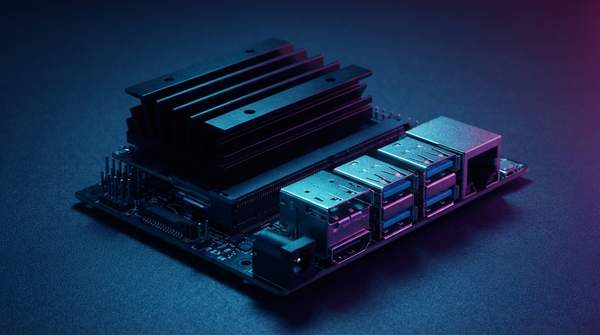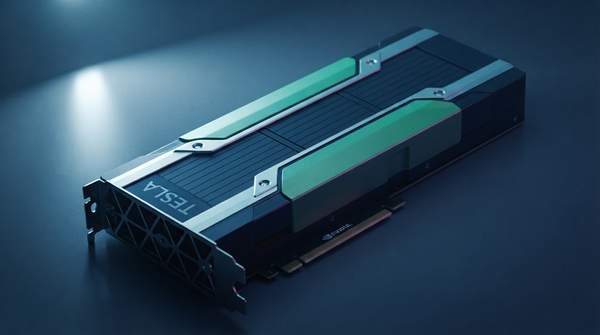
The evolution of artificial intelligence hardware has been a relentless march from general-purpose processors to highly specialized chips, each designed to meet the escalating computational demands of AI. This progression began with the Central Processing Unit (CPU), the versatile heart of traditional computing, before moving to the massively parallel Graphics Processing Unit (GPU), and finally to custom-built AI accelerators. This shift was driven by the need for greater speed, energy efficiency, and the ability to handle the sheer complexity of modern AI models, fundamentally shaping the capabilities of AI today.
The Dawn of AI: CPUs and Their Limitations
In the early days of artificial intelligence, the Central Processing Unit (CPU) was the default engine for all computational tasks. Designed for flexibility, CPUs excel at sequential processing, executing a wide variety of instructions one after another. This architecture, however, proved to be a bottleneck for the complex, multipart tasks inherent in AI. As AI workloads grew, particularly those involving neural networks, the CPU's method of completing tasks consecutively became a significant performance constraint. According to an analysis by IBM, this sequential approach is fundamentally different from the parallel computing required for modern AI.
By the mid-2000s, the performance gains from CPUs began to plateau for these highly parallelizable workloads, as noted in a historical overview on the Paperspace blog. The computational structure of emerging deep learning techniques demanded a different approach. The need to perform thousands or even billions of calculations simultaneously exposed the inefficiency of using a general-purpose, sequential processor for a task that was inherently parallel. This limitation created an opening for a new class of hardware to emerge and dominate the nascent field of large-scale AI.
The Rise of Parallel Processing: GPUs Enter the AI Arena
Originally designed to render complex graphics for video games, Graphics Processing Units (GPUs) possessed an architecture uniquely suited for AI. Unlike CPUs, which have a few powerful cores, GPUs feature hundreds or thousands of smaller cores designed to perform many calculations at the same time. This massive parallelism, essential for rendering pixels on a screen, turned out to be a perfect match for the mathematical operations, such as matrix multiplications, at the core of deep learning systems. IBM experts Josh Schneider and Ian Smalley note that GPUs excel at the parallel processing and floating-point calculations necessary for training machine learning models.
The pivotal moment for GPUs in AI came with the success of the AlexNet image recognition model. A report from Jon Peddie Research highlights this turning point, stating that "AlexNet demonstrated that the parallel nature of GPUs matched the computational structure of deep learning at a level no other hardware platform then available could match." This breakthrough solidified the GPU's role as the primary tool for AI research and development. While more expensive and complex to program than CPUs, GPUs are well-optimized for popular machine learning frameworks, making their power accessible to developers and researchers.
Specialization for Efficiency: The Era of AI Accelerators
While GPUs provided a massive leap in performance, the drive for even greater efficiency and speed led to the development of domain-specific hardware. This new phase in AI hardware evolution saw the emergence of Application-Specific Integrated Circuits (ASICs), chips designed from the ground up to perform a narrow range of tasks with maximum efficiency. These AI accelerators, which include prominent examples like Google’s Tensor Processing Units (TPUs) and Apple’s Neural Engine, are built to handle the specific computational patterns of neural networks.
The primary motivations for creating this specialized hardware were to boost performance, improve energy efficiency, and manage the growing size and complexity of AI models. By tailoring the hardware to stable, predictable workloads like the linear algebra common in AI, designers could achieve significant gains that were no longer possible with more general-purpose architectures. This specialization represents a trade-off: what is gained in performance and efficiency for specific AI tasks is lost in general programmability. The result is a new class of hardware that can execute AI-related tasks far more effectively than even the most powerful GPUs.
AI Hardware Comparison: CPUs, GPUs, and Specialized Accelerators
Understanding the architectural differences between CPUs, GPUs, and specialized accelerators is key to grasping why certain hardware is chosen for specific AI tasks. Each type of processor represents a different point on the spectrum between general-purpose flexibility and specialized efficiency. Their distinct designs dictate their ideal workloads and inherent trade-offs.
| Hardware Type | Architectural Approach | Best For (Workload) | Key Trade-off |
|---|---|---|---|
| Central Processing Unit (CPU) | Uses a few powerful cores to execute tasks sequentially, one step at a time. | General computing, tasks requiring flexibility, and workloads that are not easily parallelized. | Offers high flexibility but is inefficient for the massive parallel computations required by modern AI. |
| Graphics Processing Unit (GPU) | Utilizes thousands of smaller cores to perform many computations simultaneously (parallel processing). | Deep learning model training and inference, which involve large-scale matrix and tensor operations. | Provides high parallel performance but is more expensive, less available, and more complex to program than a CPU. |
| Specialized ASICs (e.g., TPUs) | Custom-designed silicon built to execute a narrow range of AI-specific operations with maximum efficiency. | Optimized for specific AI workloads, such as tensor operations, delivering superior performance and energy efficiency. | Offers the highest performance for its intended task but lacks the general-purpose flexibility of CPUs and GPUs. |
Hardware's Impact on AI Capabilities and Infrastructure
The rapid evolution of AI hardware is a primary driver behind the explosive growth in the capabilities of AI models. More powerful and efficient processors directly enable the creation of larger and more complex neural networks. According to research from Epoch AI, the amount of computing power used to train frontier language models has increased fivefold each year since 2020. This scaling is achieved by deploying more chips, training for longer periods, and using increasingly powerful processors.
This exponential growth in computational demand has profound consequences for infrastructure. Training costs are climbing by an estimated 3.5 times annually, and the largest AI data centers are now approaching a gigawatt of power capacity, enough to power a small city. An IDC survey cited by IBM indicates that AI is quickly becoming the largest workload in enterprise computing, yet many organizations lack the infrastructure strategy to support it. This trend underscores the co-evolution of AI algorithms and the hardware they run on, where advances in one domain create new demands and possibilities in the other.
The Future of AI Hardware: Continued Specialization and Scale
As artificial intelligence models continue their trajectory of increasing size and complexity, the demand for more powerful, efficient, and specialized hardware will only intensify. The historical progression from general-purpose CPUs to parallel GPUs and finally to domain-specific ASICs illustrates a clear and ongoing trend: tailoring hardware to the unique demands of AI workloads unlocks new levels of performance and capability. This cycle of innovation, where AI progress fuels the need for better hardware and hardware breakthroughs enable more advanced AI, is set to continue, pushing the boundaries of chip design and data center infrastructure.
For those tracking the future of artificial intelligence, the key indicators of progress will be found in both software and silicon. The most telling metrics to monitor are the annual increase in AI model parameter counts and the corresponding energy efficiency improvements, often measured in floating-point operations per second (FLOP/s) per watt, of new AI accelerators. These figures will signal not only the growing power of AI systems but also the industry's ability to manage the escalating computational and energy costs associated with them.
Sources
- CPU vs. GPU for Machine Learning — IBM
- What can the history of supercomputing teach us about ARM-based deep learning architectures? — Paperspace by DigitalOcean Blog
- Part III: The evolution to AI GPUs — Jon Peddie Research
- Trends in AI — Epoch AI
- What is AI Hardware? — IBM