
Quantum Computing
20 articles
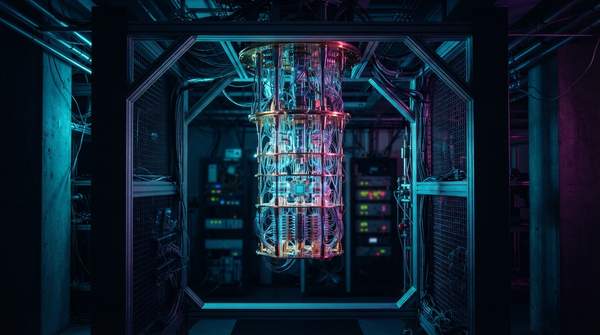
Four Interlocking Walls: Why Scaling Quantum Computers Beyond 100 Qubits Is a Systemic Problem, Not a Parts Count
Scaling quantum computers beyond a few hundred qubits is a systemic problem, not just a parts count issue. Four interdependent challenges—qubit fragility, error correction, control complexity, and interconnectivity—must be addressed holistically for progress.
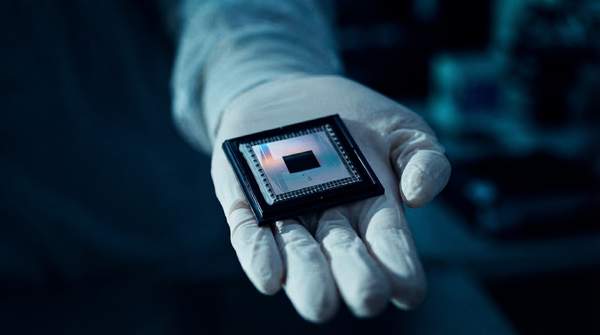
Speed, Coherence, and Scale: How the Leading Qubit Architectures Trade Against Each Other
No single qubit architecture currently dominates for fault-tolerant quantum computing due to inherent trade-offs between coherence, gate speed, connectivity, and scalability. Leading platforms like superconducting qubits, trapped ions, and silicon spin qubits each resolve these tensions differently, with improvements in one area often costing another.
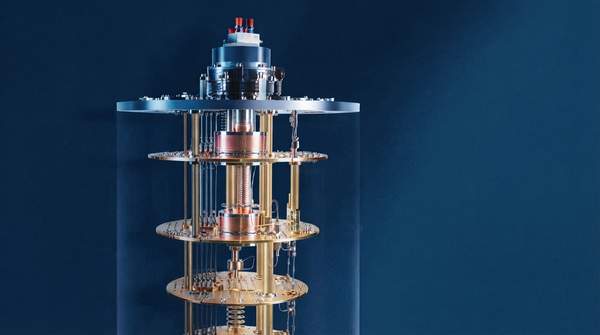
Extending Qubit Lifetimes: A Comparison of Material Science and Advanced Control Techniques
Researchers are tackling the "structure-coherence problem" in quantum computing by improving qubit materials and refining control techniques. This article compares niobium surface encapsulation for material enhancement with advanced iterative tuning for control, highlighting their complementary roles in extending qubit lifetimes.

IBM advances quantum error correction for fault-tolerant computing
Researchers have dramatically increased logical qubit survival rates from below 90 percent to more than 96 percent per error-correction cycle, according to The Quantum Insider .

IBM Connects First Modular Cryogenic Systems for Quantum Computing
Standing over eight feet tall and wide, IBM's first two operational modular cryogenic systems were successfully joined and cooled to 4 Kelvin in under five days, marking a significant engineering feat

Quantum Superposition & Entanglement in Quantum Computing
In a groundbreaking experiment, clusters containing over 7,000 atoms were observed to exist in multiple locations at once, their center-of-mass position delocalized by more than ten times their own di

Oracle Cloud Integrates Quantinuum's Helios Quantum Computer
In a monumental leap bringing the future of computing into today's enterprise, Oracle will physically install Quantinuum's 98-physical-qubit Helios quantum computer directly inside a US Oracle Cloud I

AI and quantum computing partnership accelerates discovery
Researchers have developed an AI framework that generates quantum circuits for molecular simulations thousands of times faster than previous methods, successfully executing them on a Quantinuum quantu

Top 9 Quantum Computing Research Institutions for 2026
By 2026, a single quantum computing breakthrough from one of the top institutions could render current cryptographic standards obsolete, fundamentally reshaping global data security.

How Do Quantum Heat Engines Work? Reaching 0.7 Carnot Efficiency
Experimental quantum dot heat engines have already achieved an astonishing 70% of the theoretical maximum efficiency, a benchmark that challenges traditional thermodynamic limits.

What Are Diamond NV-Centers in Quantum Computing?
A refrigerator-sized quantum computer prototype, operating at room temperature, is already being tested by the DLR QCI project.

Top 3 Quantum Computing Developments and Challenges
Quantinuum's new H2-1 quantum computer recently shattered performance expectations, achieving a Quantum Volume record of 65,536.

IBM unveils Nighthawk quantum processor, pushing quantum limits
IBM's new Nighthawk quantum processor now packs 120 qubits, enabling circuits 30% more complex than its predecessor.

Quantum Computing vs. Classical: Understanding Qubits vs. Bits
In 2019, Google announced it had achieved 'quantum supremacy,' performing a calculation in just 200 seconds that would have taken even the most powerful classical supercomputer an estimated 10,000 yea

How Multi-Qubit Entanglement Powers Future Quantum Networks
In 2020, researchers achieved an extraordinary feat: they entangled two ensembles of rubidium-87 atoms.

Why Qubits and Classical Bits Lead to Two Fundamentally Different Machines
The fundamental difference between classical bits and qubits, rooted in superposition and entanglement, dictates the distinct capabilities, hardware, and use cases of quantum computers. These specialized machines are poised to complement, rather than replace, classical computing for specific complex problems.

Microsoft Majorana 2 chip achieves unprecedented qubit stability
Microsoft's new Majorana 2 quantum chip has shattered expectations, achieving qubit lifetimes exceeding 20 seconds, with some measurements soaring past a minute, according to The Quantum Insider .

Scientists explore quantum jamming causality mysteries for 2026
An external party could subtly alter the entanglement between communicating particles, potentially breaking quantum cryptography without leaving a detectable trace, according to quantumzeitgeist .

Topological Qubits: The Quest for an Error-Resistant Quantum Computer
Topological qubits represent a novel approach to quantum computing, encoding data in collective properties of matter to overcome the inherent fragility and high error rates of conventional qubits. This inherent robustness offers a potential path toward stable, scalable quantum computers capable of tackling complex global challenges.

New technique fixes neutral-atom quantum computer flaw
For the first time, a neutral atom quantum computer has demonstrated 'better-than-physical' error rates, meaning its logical qubits are more stable than the individual atoms they are built from.