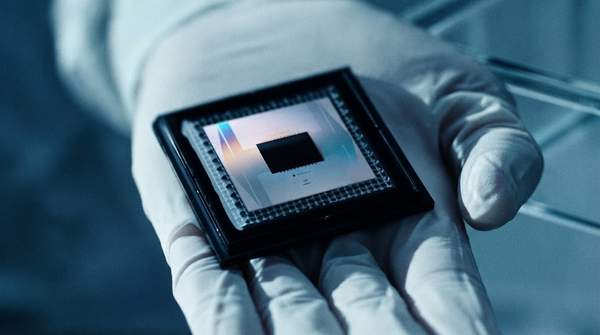
For the first time, a neutral atom quantum computer has demonstrated 'better-than-physical' error rates, meaning its logical qubits are more stable than the individual atoms they are built from. Quantum computers are notoriously susceptible to errors, but new research shows they can now achieve these rates with specific encoding, making them more reliable than their raw components. This advancement, detailed in a recent preprint, implemented the Bernstein-Vazirani algorithm with up to 28 logical qubits. It pushes neutral-atom quantum computers closer to practical computation by 2026, addressing a long-standing flaw and fundamentally altering the timeline for fault-tolerant quantum computing. Therefore, neutral-atom quantum computers appear to be a more viable and accelerated path towards practical, fault-tolerant quantum computation than previously anticipated, potentially shifting the landscape of quantum hardware development.
A Leap in Fault Tolerance
- A neutral atom quantum processor with 256 Ytterbium atom qubits demonstrated the entanglement of 24 logical qubits using the distance-two 4,2,2 code, according to Arxiv.
- Fault-tolerant quantum computation was also demonstrated through repeated loss correction for both structured and random circuits encoded in the 4,2,2 code, according to Arxiv.
These findings show neutral-atom platforms can not only scale but also actively mitigate quantum information fragility. The ability to perform repeated loss and error correction using distance-two codes marks a shift from static error mitigation to continuous fault tolerance.
The Codes That Make It Possible
Beyond the 4,2,2 code, repeated loss and error correction was demonstrated using the distance-three 9,1,3 Bacon-Shor code, according to Arxiv. This successful implementation of sophisticated quantum error correction codes is central to moving quantum computing from theoretical promise to practical reality, as logical qubits achieve 'better-than-physical error rates'—meaning encoded information is more stable than its individual atomic components.
Hardware Innovations Pave the Way
The study utilized a quantum processor based on reconfigurable neutral atom arrays, according to Nature. Key hardware upgrades were leveraged, proving that continuous innovation in physical qubit control is as vital as theoretical algorithmic progress.