
Qubits
6 articles
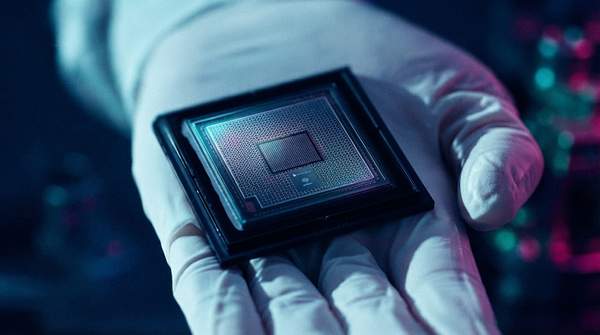
Qudits Explained: More States Per Particle, More Control Problems
Qudits, quantum information units with more than two states, offer potential advantages in information density and error correction over qubits. However, their practical implementation faces significant challenges in control, characterization, and noise management.
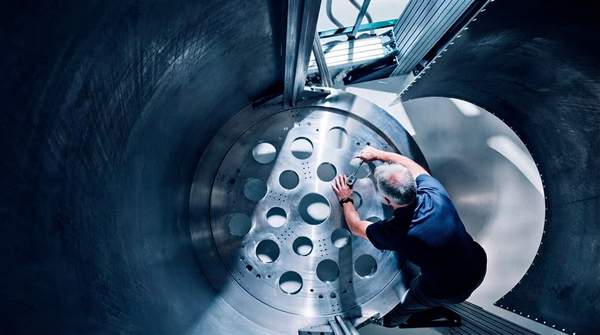
How Quantum Computers Get Cold: The Multi-Stage Descent to Millikelvin
Quantum computers require extremely low temperatures, near absolute zero, to prevent decoherence and maintain qubit stability. Achieving these millikelvin temperatures involves a multi-stage cooling process, starting with pulse tube cryocoolers and culminating with dilution refrigerators.

IBM advances quantum error correction for fault-tolerant computing
Researchers have dramatically increased logical qubit survival rates from below 90 percent to more than 96 percent per error-correction cycle, according to The Quantum Insider .

Qubits vs. Bits: Why Quantum Computers Aren't Replacing Your Laptop Any Time Soon
Quantum computers use qubits, which leverage superposition and entanglement for specialized computations, unlike classical bits that are strictly 0 or 1. Currently in the experimental NISQ era, these machines are prone to noise and errors, positioning them as complements to, rather than replacements for, classical computing.

How Researchers Entangled Six Qubits Across Two Quantum Nodes—and Why It Matters for Scaling Quantum Computers
Researchers have successfully entangled six qubits across two separate quantum nodes, a critical step demonstrating how future quantum computers can be built from networked modules rather than single processors.

Why Qubits and Classical Bits Lead to Two Fundamentally Different Machines
The fundamental difference between classical bits and qubits, rooted in superposition and entanglement, dictates the distinct capabilities, hardware, and use cases of quantum computers. These specialized machines are poised to complement, rather than replace, classical computing for specific complex problems.