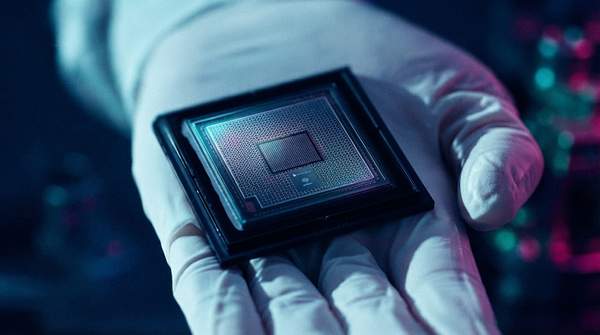
A qudit is a quantum unit of information that can occupy three or more distinct states at once, rather than the two states available to a qubit. That extra dimensionality is the source of both its promise and its difficulty: a single qudit can carry more information than a qubit and may ease the path to error-corrected quantum computing, but controlling, benchmarking, and characterizing these higher-dimensional systems is substantially harder than working with their binary counterparts.
What are Qudits? Beyond the Binary Qubit
Quantum computing has, as Davide Castelvecchi reported in Nature, "so far nearly always involved calculating with qubits"—quantum objects that take the value 0 or 1, like ordinary bits, but that can also exist in combinations of the two. A qudit generalizes this idea. According to the glossary maintained by the quantum computing company QuEra, a qudit is a quantum system that can realize more than two possible outcomes or states upon measurement. A three-state version is called a qutrit; higher dimensions follow the same naming logic, and researchers at Innsbruck University have already run simulations using qutrits and ququints, as Castelvecchi's reporting describes.
The motivation is partly a matter of matching hardware to nature. As the physicist Machiel explained to The Quantum Insider, many physical systems are not naturally binary: atoms, molecules, vibrational modes, and quantum fields often contain multiple accessible states. Qudit research asks whether using more of the states that already exist within the hardware—rather than restricting each particle to two levels—could yield advantages for quantum simulation, error correction, and future architectures.
Qubit vs. Qudit: A Comparative Overview
The clearest way to understand the trade-off is to place the two units side by side. The table below juxtaposes a two-level qubit system against a d-level qudit system, translating the abstract notion of dimensionality into concrete implications for information storage and operational difficulty. The pattern that emerges is consistent: qudits gain logarithmic information capacity and potential error-correction advantages, but at the cost of more complex state control and characterization.
| Property | Qubit | Qudit |
|---|---|---|
| Basic unit of information | A quantum object representing a superposition of two states, 0 and 1 | A quantum system in a superposition of d states, where d is greater than two |
| Number of states | Two computational basis states (0 and 1) | d possible states; d can be 3 (qutrit), 4 (ququart), or higher |
| Information capacity | One two-level system per unit | Stores log2(d) bits per unit—one d=4 qudit can replace two qubits, per QuEra's glossary |
| Potential for error correction | Encoding logical qubits typically requires many physical qubits | Encoding more information per particle may reduce the physical particles needed for error correction |
| Control complexity | Mature gate, benchmarking, and characterization tooling | Harder-to-implement universal gates, benchmarking, and gate characterization, per a 2020 review by Wang, Hu, Sanders, and Kais |
One analogy from the field captures the architectural difference well. Machiel compares qubit-based architectures to a sprawling, low-rise city of many small buildings, while qudit-based architectures resemble a dense, high-rise skyline that accommodates more information in the same footprint. The comparison is not a verdict on which city is better—it is a statement about density versus sprawl.