Microsoft Majorana 2 chip achieves unprecedented qubit stability

Microsoft's new Majorana 2 quantum chip has shattered expectations, achieving qubit lifetimes exceeding 20 seconds, with some measurements soaring past a minute, according to The Quantum Insider .

DK
Daron Krikorian

June 3, 2026 · 3 min read

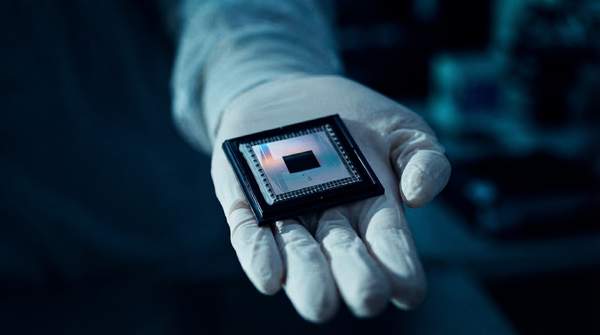
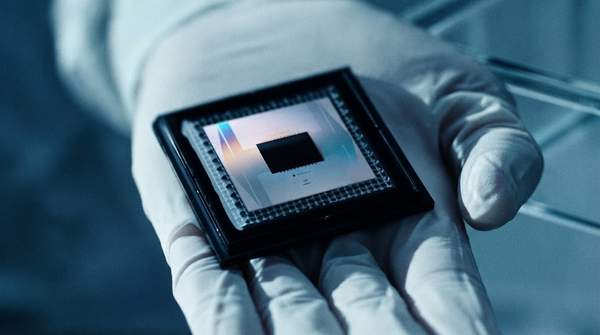
Close-up of the advanced Microsoft Majorana 2 quantum chip, showcasing its intricate design and glowing quantum elements, symbolizing a major breakthrough in qubit stability.

Microsoft's new Majorana 2 quantum chip has shattered expectations, achieving qubit lifetimes exceeding 20 seconds, with some measurements soaring past a minute, according to The Quantum Insider. The level of stability achieved by Majorana 2, once a distant dream, now propels quantum computing into an exhilarating new era.

For too long, qubit instability has shackled the promise of practical quantum computing. Yet, Majorana 2 has obliterated this barrier, demonstrating a staggering 1,000-fold improvement in reliability and fundamentally reshaping the future of quantum processors.

The unprecedented qubit stability of Majorana 2 dramatically accelerates the journey toward fault-tolerant quantum computers. Powerful quantum applications, once confined to distant horizons, now appear poised for commercial viability within the next decade.

Unpacking Majorana 2's Astonishing Stability

The numbers are nothing short of breathtaking. Microsoft's Majorana 2 chip boasts qubit lifetimes averaging around 29 seconds, with some individual qubits holding their quantum state for an incredible minute, as reported by Tech Times. While Quantum Zeitgeist cites a mean of 20 seconds, this minor variation likely stems from differing measurement approaches or specific chip batches. What truly resonates is the consistent reporting of minute-long coherence across multiple sources, a testament to its robust, high-performance design.

This isn't just an incremental step; it's a quantum leap. The Majorana 2 is about 1,000 times more reliable than its predecessor, according to Tech Times. Such metrics redefine qubit performance, transforming fleeting quantum states into durations long enough for complex, sustained computations. Majorana 2's monumental reliability, paired with coherence times measured in tens of seconds, dramatically simplifies the monumental challenge of error correction for topological qubits. It means practical fault-tolerant systems could emerge far sooner than the quantum community ever dared to hope.
Topological Qubits: A Shield Against Chaos

At the heart of Majorana 2's resilience lies a profound engineering triumph: the topological gap protecting its quantum states has more than doubled, now soaring to approximately 70 microelectronvolts, according to The Quantum Insider. The expanded topological gap acts as an impenetrable shield, providing unparalleled protection against the environmental noise that typically devastates qubit coherence. A larger gap means quantum states are not just stable, but virtually impervious to external disturbances, directly translating into those astonishingly long coherence times.

Microsoft's strategic doubling of this topological gap isn't merely an incremental improvement; it's a declaration of architectural superiority. Majorana 2's singular advantage could fundamentally redefine the quantum landscape, potentially rendering other, less stable qubit technologies obsolete for fault-tolerant applications. Competitors now face a stark choice: embrace topological innovation or risk being left in the dust of this new quantum frontier.

Microsoft's Unwavering Quantum Vision

With the unveiling of Majorana 2, Microsoft solidifies its long-term, unwavering commitment to topological qubits, building upon the legacy of its Majorana 1 chip, as reported by WinBuzzer. This isn't just a new product; it's the culmination of years of dedicated research and development, proving the profound wisdom behind their chosen, error-resistant architecture. The company proudly asserts that Majorana 2 elevates qubit reliability by an astounding 1,000-fold compared to its predecessor, a generational leap confirmed by WinBuzzer.

The staggering 1,000-fold reliability improvement, echoed by Tech Times and WinBuzzer, when combined with qubit lifetimes soaring past 20 seconds, as detailed by The Quantum Insider, signals a pivotal moment. The quantum computing industry's focus must now decisively shift. The foundational stability challenge for topological qubits appears largely conquered, freeing researchers to concentrate on scaling these marvels and developing truly practical algorithms.

The Dawn of Fault-Tolerant Quantum Computing

Microsoft's Majorana 2 chip, with its astounding 1,000-fold improvement in qubit reliability, as reported by Quantum Zeitgeist, isn't just an advancement; it's a direct pathway to truly fault-tolerant quantum computers. Firstpost confirms the unprecedented stability of these qubits, bringing the industry dramatically closer to constructing the robust quantum machines essential for tackling problems far beyond classical capabilities.

Majorana 2's leap fundamentally alters the very nature of quantum computation. While other approaches grapple with coherence times measured in mere milliseconds, Majorana 2's minute-long stability unlocks an entirely new class of problems. We are moving beyond highly constrained, short-duration computations to the realm of complex, multi-step algorithms demanding sustained quantum states. Imagine the breakthroughs in drug discovery, materials science, and artificial intelligence that become possible!

If Microsoft can successfully scale this groundbreaking topological architecture, the era of practical, fault-tolerant quantum computing appears tantalizingly close, promising to reshape our technological future in ways we can only begin to imagine.