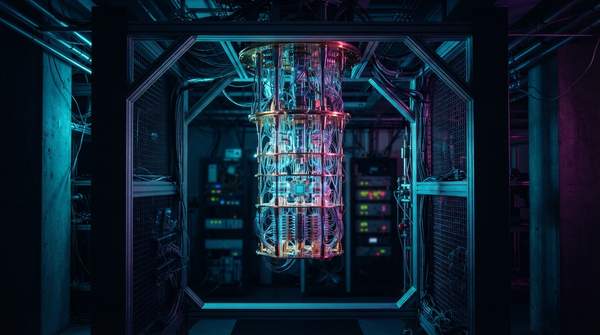
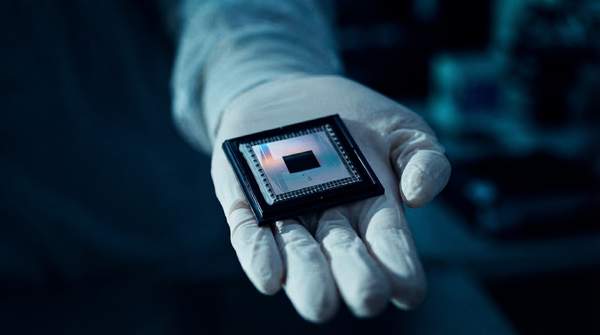
A refrigerator-sized quantum computer prototype, operating at room temperature, is already being tested by the DLR QCI project. A dramatic shift from the mainframe-scale, super-cooled systems typically imagined at the cutting edge of quantum computing is marked by the prototype. Imagine a device no larger than your kitchen appliance, humming quietly, unlocking computational powers that once demanded an entire specialized laboratory. The project aims to construct two demonstrator systems with at least four qubits and a simple user interface, with the prototype already challenging established norms, according to DLR Quantum Computing Initiative.
Historically, quantum computing has been confined to super-cooled, lab-bound mainframes, demanding infrastructure that limited widespread access and deployment. However, diamond NV-centers are enabling mobile, room-temperature quantum devices, fundamentally altering this restrictive paradigm. Diamond NV-centers promise to bring quantum capabilities out of specialized labs and into practical, field-deployable applications, transforming how we interact with quantum technology.
Companies and governments are increasingly investing in diamond NV-center research, anticipating a future where quantum capabilities are integrated into everyday technology rather than remaining an exotic scientific pursuit. The increasing investment in diamond NV-center research bypasses traditional infrastructure barriers, making advanced quantum technology a practical, everyday tool for specific industries like automotive and defense. It’s a leap towards quantum ubiquity.
What Are Diamond NV-Centers?
Nitrogen-vacancy (NV) centers are specific atomic defects within a diamond's crystal lattice, acting as tiny quantum systems. These centers form when a nitrogen atom substitutes for a carbon atom adjacent to a vacant lattice site. Diamond quantum devices, utilizing these NV centers, can operate at room temperature for computation and sensing, differentiating them from architectures requiring mainframes or dilution fridges, as described in Nature. The inherent stability of diamond NV-centers at ambient temperatures offers a profound advantage for practical deployment.
These unique defects function as deterministic single-photon sources and solid-state quantum memories. Their ability to maintain quantum properties without extreme cooling is a breakthrough, enabling unprecedented stability. For instance, spin coherence times up to hundreds of microseconds at room temperature have been observed for a single spin of an N-V center, according to PMC. The extended coherence time of an N-V center allows for more stable and reliable quantum operations, crucial for complex computations.
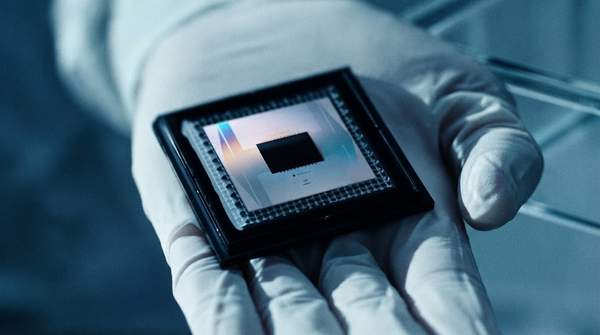
The electron spin of an NV center can be manipulated and read using microwaves and lasers. The ground-state spin splitting, around 2.88 GHz, corresponds to a specific electron spin resonance dip. The precise control and measurement capability of NV centers allows them to serve as robust qubits, the fundamental building blocks of quantum computers. The addressability of these centers at room temperature makes them viable for practical quantum applications, moving quantum processing closer to real-world scenarios and out of theoretical confines.
Beyond the Lab: Scaling and Error Correction
The DLR QCI project plans to develop larger systems, with the expectation of having two scalable and error-correctable 32-qubit quantum computers by the end of the project. The DLR QCI project's ambitious goal carves a clear path toward more powerful diamond NV-center quantum technology. Repeated quantum error correction further proves NV centers are suitable for scalable quantum computation, according to PMC, paving the way for truly fault-tolerant systems.
Achieving these larger, fault-tolerant systems, however, hinges on overcoming significant manufacturing hurdles. Atom-scale fabrication, a bottom-up process requiring sub-nanometre spatial precision, is necessary to overcome scalability barriers in NV center fabrication, as reported in IOPscience. Atom-scale fabrication precision ensures that individual NV centers can be placed and interconnected with the exactness needed for complex quantum circuits, a monumental engineering challenge.
Despite the theoretical framework for scalability and error correction existing, practical manufacturing capabilities still present a significant bottleneck. The bottleneck in practical manufacturing capabilities implies that while the promise of scalable NV-center quantum systems is strong, their widespread adoption relies heavily on advancements in fabrication technology. The path to building larger, fault-tolerant NV-center quantum computers is becoming clearer, but it demands continued innovation in hardware manufacturing, not just quantum physics. The future of quantum computing may well be forged in the cleanroom.
Quantum Sensing: A Parallel Revolution
Diamond quantum sensors based on NV centers have already found practical applications, such as electric vehicle battery monitors, performing comparably to conventional sensors. The real-world deployment of diamond quantum sensors offers an immediate, tangible benefit of NV-center technology beyond pure computation, according to PMC. These sensors offer ultra-precise monitoring capabilities that can optimize battery performance and safety, directly impacting consumer technology.
NV centers are employed as nanoscale quantum sensors for magnetic fields, electric fields, and temperature due to their long spin coherence time at room temperature, as detailed in Nature. Their ability to detect minute changes in these physical properties makes them invaluable for a range of industrial and scientific uses. For example, a 20 μm by 20 μm photoluminescence (PL)-image with several resolution-limited features can be obtained using a room-temperature confocal microscope, demonstrating their utility in high-resolution imaging applications, opening new frontiers in material science and medicine.
The advanced sensing capabilities of NV centers offer a near-term avenue for quantum technology to deliver immediate benefits, even as quantum computing matures. Industries with immediate needs for ultra-precise sensing, such as automotive and defense, are becoming unexpected early beneficiaries of quantum technology. This dual-track path to commercialization, encompassing both computing and sensing, provides a more robust development trajectory for NV-center technology compared to traditional quantum computing approaches, ensuring broader impact sooner.
Democratizing Quantum: Accessibility and Development
The accessibility of diamond NV-center quantum technology is expanding beyond specialized research institutions, reaching a broader community of developers and students. For example, students have utilized the Amazon Braket service with cost-effective ml.p3.2xlarge instances, leveraging a single NVIDIA GPU for testing and development. Cloud-based access significantly lowers the entry barrier for engaging with quantum systems, igniting a new wave of innovation.
The availability of such cloud platforms for NV-center development accelerates innovation and fosters a wider talent pool. It allows researchers and developers to experiment with quantum algorithms and applications without needing to build and maintain expensive, specialized hardware. Democratizing access is critical for moving quantum technology from theoretical lab experiments to deployable, field-ready quantum devices, bypassing the need for specialized quantum physicists on-site for every project. This shift could rapidly expand the quantum workforce.
This shift towards more accessible development environments ensures that more minds can contribute to the advancement of diamond NV-center quantum computing. It fosters rapid prototyping and iterative design cycles, which are essential for overcoming the remaining challenges in scalability and practical application. The ease of access helps integrate quantum capabilities into existing computational workflows and educational programs, broadening the impact of this emerging technology across disciplines.
The Bottom Line
If atom-scale manufacturing precision can match the rapid quantum innovation, diamond NV-center technology will likely redefine both quantum computing and sensing, making quantum capabilities ubiquitous in our future.