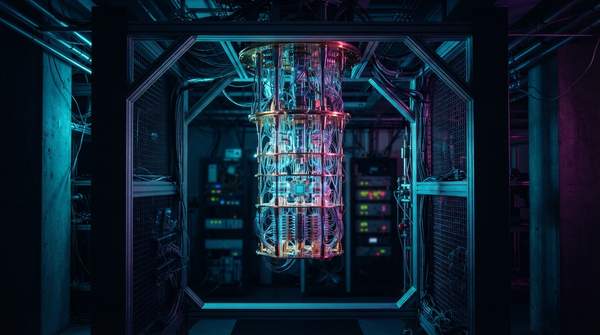
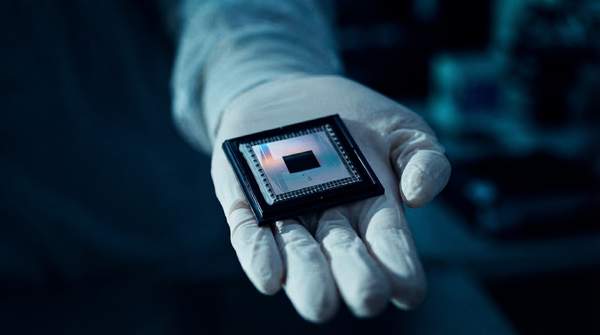
Quantinuum's new H2-1 quantum computer recently shattered performance expectations, achieving a Quantum Volume record of 65,536. Achieving a Quantum Volume record of 65,536 showcases the rapid advancement in raw quantum power, pushing the boundaries of what current quantum hardware can accomplish in laboratory settings.
However, quantum computers are achieving unprecedented performance benchmarks and expanding qubit counts, but the industry is still developing fundamental metrics to truly assess their practical utility and address persistent error challenges.
Therefore, while the quantum computing landscape is rapidly evolving with impressive hardware gains, widespread, fault-tolerant commercial applications are still contingent on breakthroughs in error correction and the establishment of universally accepted utility benchmarks.
Quantinuum's H2-1 now boasts 32 qubits, a significant leap in raw processing power. Yet, this expansion occurs within a broader quantum landscape still heavily focused on research. Globally, 200 Quantum Processing Units (QPUs) exist: 40 are commercially available (10 on-premise), 30 are prototypes, and 90 are merely planned, according to qir. The distribution of 200 Quantum Processing Units (QPUs) — 40 commercially available, 30 prototypes, and 90 merely planned — confirms the industry's deep research phase, far from a commercialization boom.
Innovations in Hardware Integration and Error Mitigation
Quantum Benchmarking: Standardized benchmarks are crucial for quantum computing's scientific maturity, according to Arxiv. DARPA’s Quantum Benchmarking program and the IEEE P7131 Standard are actively developing new metrics to assess long-term utility, as reported by DARPA and Moody's. The concerted effort by DARPA’s Quantum Benchmarking program and the IEEE P7131 Standard signals a shift towards measuring practical value over raw processing power, a vital step for the industry's evolution.
Future Applications: The true promise of quantum computing lies in its potential to solve problems intractable for conventional machines. Experts hypothesize these systems will simulate inherently quantum mechanical challenges like quantum chemistry and protein structure prediction, or tackle combinatorial complexities in classification and nonlinear dynamics, according to Arxiv. Such breakthroughs could accelerate drug discovery, advanced materials, and cleaner energy technologies, as noted by HPCwire. Critically, these economically-impactful computations are expected to arrive before cryptographically-relevant ones, according to DARPA, shaping the immediate commercial focus.
Superconducting Qubits: Superconducting qubits remain a leading platform, yet scaling them demands over a million physical qubits, each with individual control lines, according to Nature. Achieving practical quantum computation will require error rates below 10^-10, states arxiv.org. Innovators like Seeqc Inc. are tackling this by integrating superconducting qubits and control electronics on a single millikelvin stage, as reported by Nature. Assistant Professor Han Zhao is pushing boundaries further, combining superconducting systems with nanomechanical devices to enhance noise and error resistance, according to HPCwire. The efforts by Seeqc Inc. and Assistant Professor Han Zhao underscore that hardware integration and error suppression are paramount for scalability.
Error Mitigation & Fault Tolerance: Beyond raw qubit counts, the focus shifts to error mitigation. New approximate methods — variational algorithms, error mitigation, and circuit knitting — could unlock practical quantum computing soon, according to arxiv.org. Professor Han Zhao's pioneering work on fault-tolerant entanglement, using superconducting systems and nanomechanical devices, directly addresses noise and error resistance, as reported by HPCwire. Professor Han Zhao's relentless pursuit of stable, reliable operations confirms that true utility transcends mere benchmark scores.
Maturity of Current Quantum Computers: Current quantum computers are not yet ready for large-scale, industrially-relevant problems, nor do they pose immediate security risks, according to arxiv.org. Their journey will likely see them perform economically-impactful computations long before they tackle cryptographically-relevant ones, setting a clear developmental roadmap.
Trapped Ions: Trapped ions offer a compelling alternative to superconducting qubits, consistently demonstrating the highest overall fidelity among platforms, according to qir. Trapped ions' robust performance highlights the value of diverse approaches in the race for quantum supremacy.
The Evolving Standards for Quantum Measurement
| Metric | Description | Significance |
|---|---|---|
| Quantum Volume | A single-number benchmark combining qubit count, connectivity, and error rates. | Historical measure of quantum computer capability, but less indicative of practical utility. |
| Error Per Layered Gate (EPLG) | Measures the average error rate of gates in a quantum circuit layer. | Focuses on the quality of operations in a layered architecture, introduced by IBM. |
| CLOPS h | Measures circuit layer operations per second, with 'h' for 'high fidelity'. | Quantifies the speed of useful quantum operations, also introduced by IBM. |
| DARPA Quantum Benchmarking | Program to create new benchmarks for long-term utility. | Aims to develop metrics that more accurately reflect practical application and progress, according to DARPA. |
Quantinuum's H2-1 may boast a Quantum Volume of 65,536, but the industry is already moving beyond this metric. IBM champions new benchmarks like Error Per Layered Gate (EPLG) and CLOPS h, while DARPA's Quantum Benchmarking program seeks entirely new utility-focused standards. The collective shift by IBM and DARPA confirms that raw Quantum Volume no longer fully captures practical value. Companies relying solely on outdated benchmarks risk misallocating vital resources in this rapidly evolving field.
Expanding Research Infrastructure
The University of Texas at Austin is significantly expanding its quantum research capabilities, adding new laboratories, state-backed infrastructure, and a growing roster of scientists, according to The Quantum Insider. The foundational investments by The University of Texas at Austin are crucial, creating fertile ground for the breakthroughs and talent development essential to quantum's future.
While the path to widespread, fault-tolerant quantum computing remains challenging, continued breakthroughs in error correction and the adoption of utility-focused benchmarks appear likely to unlock transformative applications in the coming decade, particularly in materials science and drug discovery.