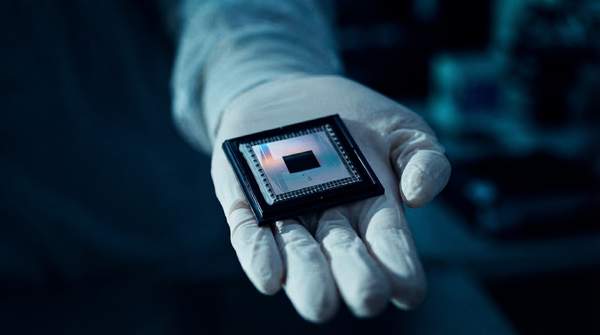
Experimental quantum dot heat engines have already achieved an astonishing 70% of the theoretical maximum efficiency, a benchmark that challenges traditional thermodynamic limits. This remarkable performance, observed in lab settings, hints at a future where energy conversion at the smallest scales could redefine our understanding of power generation. Imagine harnessing the subtle movements of individual particles to generate electricity; that is the promise these tiny machines whisper.
However, this efficiency comes with a significant caveat. Quantum heat engines are demonstrating remarkable efficiencies, but their current experimental designs are restricted by one-shot measurements and a theoretical focus that overlooks practical power and stability. The challenge lies in translating these dazzling single-shot demonstrations into continuous, reliable energy.
Therefore, while the fundamental principles are undeniably proven, the widespread utility of quantum heat engines in real-world energy solutions remains a distant, yet profoundly promising, prospect. Its realization hinges on significant engineering breakthroughs, particularly in the coming years, transforming these theoretical marvels into practical power sources.
Understanding Quantum Heat Engine Operation
At their core, quantum heat engines convert heat into work by leveraging quantum mechanical effects. Experimental quantum dot heat engines have already achieved an astonishing 0.7 times the Carnot efficiency, a benchmark reported in a guide to engineering quantum dot thermal machines and on Arxiv. This figure represents an impressive fraction of the theoretical maximum for any heat engine, a testament to their groundbreaking potential.
The Carnot efficiency itself is a theoretical upper limit for converting heat into work, calculated as (TH - TC) / TH, where TH is the maximum hot temperature and TC is the coldest temperature during the cycle, according to Galileo. Achieving such a high percentage of this limit at the quantum scale is a significant scientific achievement. It suggests that quantum systems can indeed operate as highly efficient heat engines, pushing the boundaries of what was previously thought possible at the nanoscale.

Such efficiency suggests quantum effects unlock energy conversion pathways beyond classical understanding. Manipulating energy flow at the atomic level could unleash entirely new possibilities, though these remain largely confined to the laboratory for now.
How Quantum Heat Engines Work
To grasp how quantum heat engines truly work, we must examine their diverse experimental designs. One groundbreaking demonstration involved a quantum heat engine executing a quantum Otto cycle within a superconducting circuit, detailed in an initial demonstration. This ingenious setup utilized a flux-tunable transmon qubit as its working medium and a Quantum Capacitance Refrigerator (QCR) as a tunable thermal reservoir.
Other pioneering research has explored different quantum systems. A study, according to Ricerca, showcased full electrostatic control of heat engine features within a thermally biased nanowire quantum dot. This proves precise manipulation over the engine's driving components is achievable.
Furthermore, a paper on quantum heat engines with complex working media investigated a quasi-static quantum Otto engine using two spins of arbitrary magnitudes coupled via an isotropic Heisenberg exchange interaction. Diverse experimental approaches, spanning superconducting qubits, quantum dots, and intricate spin models, demonstrate the remarkable versatility of quantum systems in realizing thermodynamic cycles.
The Roadblocks to Practicality
Despite their impressive efficiency, current quantum heat engines face significant roadblocks to widespread practical use. A primary limitation is that these engines are restricted to one-shot measurements, according to a recent study. This means they operate in discrete, isolated instances rather than continuously, unlike conventional engines that provide constant power.
This fundamental restriction means they cannot generate sustained energy output, a stark contrast to conventional engines. Moreover, for practical applications, metrics like maximum power, efficiency at maximum power, and noise stability far outweigh sole efficiency maximization, as highlighted in the guide to engineering quantum dot thermal machines. The current theoretical focus often overlooks these crucial real-world demands, leaving a substantial gap between laboratory demonstrations and usable energy solutions.
Pathways to Enhanced Performance
To propel quantum heat engines towards practical viability, we must directly confront their current limitations. One promising pathway involves mitigating passive heat flow within quantum dot heat engines, a strategy that could allow them to approach Carnot efficiency arbitrarily closely, as discussed in the guide to engineering quantum dot thermal machines. Drastically reducing these energy losses is paramount for elevating overall performance.
Researchers are also developing theoretical frameworks to better understand engine behavior. By analyzing extreme case scenarios, heuristics have been formulated to infer necessary conditions for engines with uncoupled and coupled spin models, leading to a connection between engine performance and majorization, according to research on quantum heat engines with complex working media. This theoretical work helps pinpoint optimal design parameters.
Future advancements will undoubtedly prioritize engineering solutions to minimize energy losses and refine theoretical frameworks that seamlessly link quantum properties to practical engine performance. These concerted efforts are designed to finally bridge the chasm between theoretical efficiency and robust, sustained power output.
Beyond Energy: Quantum Engines and Fundamental Physics
What are the basic principles of quantum thermodynamics?
Quantum thermodynamics extends classical concepts of heat and work to systems governed by quantum mechanics, often involving principles like quantum coherence and entanglement. It explores how these quantum properties influence energy transfer and efficiency at the nanoscale. This field also investigates the interplay between information and energy, a concept less prominent in classical thermodynamics.
What are the potential applications of quantum heat engines beyond energy conversion?
New quantum heat engines offer a practical alternative to Szilard's engine for realizing Maxwell's daemon, as discussed on arxiv.org. This goes beyond simple energy production, delving into fundamental physics and information theory. These engines could serve as experimental platforms to test the limits of thermodynamics and explore the relationship between information and energy.
The Future of Quantum Thermodynamics
Looking ahead, the next monumental advancements in quantum heat engine operation appear likely to emerge from institutions like the California Institute of Technology in the coming years, where their relentless research in superconducting circuits and quantum materials holds immense promise for overcoming current limitations and propelling these engines towards practical, world-changing applications.