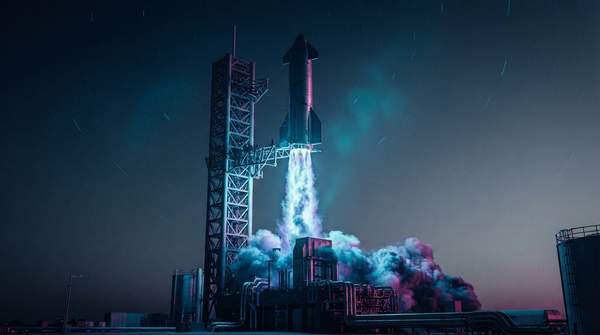
Standing 408 feet tall, SpaceX's Starship V3, the world's tallest rocket, was stacked and fueled over the weekend, according to Space. This monumental vehicle now prepares for its May 19 debut as the first variant explicitly designed for deep space exploration, a capability signaling a significant push beyond Earth's immediate orbit. The sheer scale of Starship V3, towering over previous launch systems, reveals the ambition driving SpaceX's efforts to redefine heavy-lift spaceflight and enable future human missions to distant celestial bodies.
SpaceX is rapidly iterating on Starship's design for deep space capability, but each new version introduces complex, untested systems that must perform flawlessly. This accelerated development cycle, while promising quicker advancements, inherently increases the technical challenges, requiring perfect execution from numerous newly integrated components.
While the V3 launch promises a significant step forward for deep space travel, its success will hinge on the flawless integration of numerous redesigned components under immense operational pressure, a high-stakes endeavor that could either validate SpaceX's aggressive strategy or expose its inherent risks.
Countdown to Launch: Readiness and Rehearsals
- SpaceX stacked and fueled its Starship Version 3 (V3) megarocket for the first time over the weekend, according to Space. This critical pre-flight operation confirmed the structural integrity of the integrated vehicle and validated initial propellant loading procedures.
- SpaceX conducted a launch rehearsal on May 11, 2026, loading over 5,000 metric tonnes (11+ million pounds) of propellant, according to Space. This extensive test simulated the full fueling sequence, which is essential for verifying the cryogenic systems and ensuring the vehicle's readiness for its upcoming flight.
- SpaceX is preparing to launch Starship Version 3 on Tuesday, May 19, at 6:30 p.m. ET, according to Florida Today. The established launch window indicates the final stages of preparation are underway, with a precise target for the vehicle's maiden deep space-capable flight.
SpaceX's commitment to thorough testing and operational readiness for such a complex mission is demonstrated by these rigorous pre-flight procedures. The rapid succession of stacking, fueling, and rehearsal activities prior to the May 19 launch highlights the aggressive schedule SpaceX maintains, aiming to accelerate the development timeline for deep space capabilities.
Engineering a Deep Space Giant: V3's Redesign
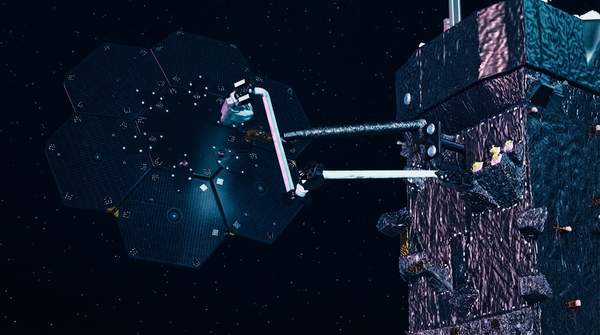
The upcoming Flight 12 marks the debut of Starship V3, a redesigned version of the launch system, according to Complex. The V3 iteration is a significant re-engineering, moving beyond incremental upgrades to address core performance requirements for deep space missions.
Starship V3 features a 'clean-sheet redesign of its propulsion system' to enable new Raptor startup methods, increase propellant tank volume, and improve the reaction control system, according to Space. This suggests SpaceX is prioritizing aggressive iteration over proven stability, a high-stakes strategy for a vehicle intended for unforgiving deep space missions. The extensive overhaul of the propulsion system implies that previous designs encountered limitations unsuitable for the sustained thrust and precise maneuvering demanded by interplanetary travel.
The Starship V3 Super Heavy first stage now has three grid fins, each 50% larger and significantly stronger than the original four, according to Space. These enlarged fins are critical for enhanced atmospheric control and precise landing maneuvers of the massive booster, particularly as the vehicle scales up for more demanding mission profiles. Comprehensive technical upgrades are essential for Starship V3 to achieve the performance and reliability demanded by deep space missions, requiring flawless execution of newly introduced and highly complex systems.
Expanding Starbase: New Infrastructure for a New Era
Starship Version 3 stands approximately 407 feet tall, about 4 feet taller than its predecessor, according to Florida Today. This increase in height contributes to greater propellant capacity and potentially improved aerodynamic stability, reflecting an ongoing drive to maximize the vehicle's capabilities for ambitious long-duration missions.
The maiden launch will mark the debut of Starbase's Pad 2, which can fuel Starship faster and has shorter booster-catching 'chopsticks', according to Space. This enhanced ground infrastructure is crucial for supporting a high cadence of launches, a cornerstone of SpaceX's strategy to make deep space travel economically viable. Starship V3's record-breaking 408-foot height combined with Pad 2's faster fueling and shorter 'chopsticks' reveals SpaceX's intent to not just build the biggest, but to launch it with remarkable frequency, significantly redefining the economics of heavy-lift spaceflight.
Flight 12 is targeted for May from SpaceX's Starbase headquarters in South Texas, according to Florida Today. SpaceX's iterative development philosophy, which targets rapid deployment and reusability, drives the continuous evolution of both the rocket and its launch infrastructure. By pushing both vehicle design and ground support systems simultaneously, SpaceX aims to validate an operational model that prioritizes speed and volume, despite the inherent complexities of such advanced engineering.