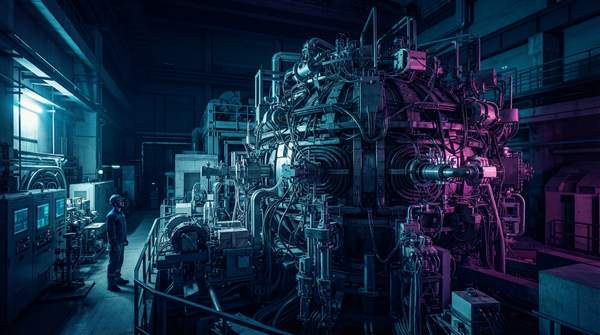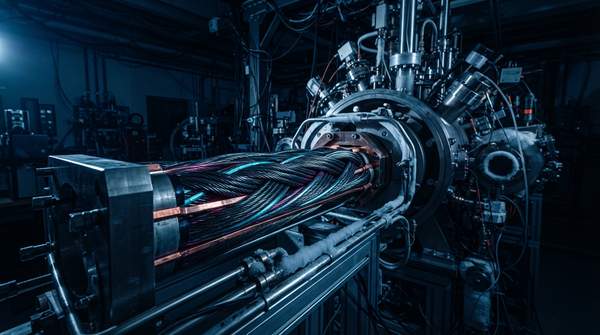
High-temperature superconductors (HTS) are the enabling technology behind a new generation of compact fusion reactors, because they can sustain magnetic fields beyond the reach of conventional low-temperature superconductors: where niobium-tin (Nb3Sn) magnets are limited to below 16 tesla, second-generation HTS materials can produce fields greater than 20 tesla at the magnet bore. That extra field strength matters enormously, since fusion power in a tokamak scales with the fourth power of the magnetic field — a relationship that turns modest field gains into dramatic reductions in reactor size. The trade-off is a demanding one: HTS magnets must survive intense mechanical stress and relentless neutron damage, and materials like REBCO tape and cable architectures such as VIPER and CORC are the engineering responses now being tested.
Introduction: HTS for Fusion Energy
Fusion reactors face a containment problem no physical container can solve: deuterium-tritium fusion requires temperatures on the order of 150 million degrees, far beyond what any known material could withstand, as Lawrence Berkeley National Laboratory's magnet program explains. The solution is magnetic confinement — using superconducting coils to hold the hydrogen plasma away from the reactor walls. Superconductors carry large currents without resistive losses, making them the only practical way to generate the enormous persistent fields a tokamak's toroidal field, central solenoid and poloidal field coils require.
What makes HTS materials distinctive is not that they run hot, but that they superconduct at far warmer temperatures than their predecessors — some, as the U.S. Department of Energy notes, above the temperature of liquid nitrogen at about -321°F. That higher critical temperature translates into more engineering headroom: more field, more current density, and simpler cryogenics. A National Academies assessment identifies high-current-density HTS magnets as particularly attractive for reducing the size of a fusion device, and especially beneficial for compact tokamaks, where space for interior plasma components is at a premium.