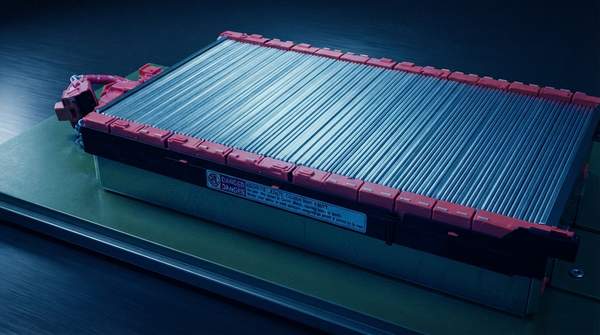
Solid-state batteries differ from traditional lithium-ion batteries in one fundamental way: they replace the cell's flammable liquid or gel electrolyte with a solid material such as a ceramic, polymer, or sulfide. That single substitution cascades through the entire architecture. Because the solid electrolyte is non-flammable and cannot leak, it can also do the job of the separator, and its stability makes a lithium metal anode practical. Those changes, in turn, drive the headline advantages: higher energy density, faster charging, and a much lower fire risk. What has not yet caught up is the factory — manufacturing scale and cost keep solid-state cells out of mass-market products.
Introduction: The Next Generation of Battery Technology
Lithium-ion batteries power the vast majority of electric vehicles in circulation today, and their architecture has been refined around a liquid electrolyte that shuttles lithium ions between the electrodes. An explainer from CAS, a division of the American Chemical Society, describes solid-state batteries as a major advancement with the potential to overcome several limitations of that design, citing energy densities that reach up to 500 Wh/kg compared with roughly 250 Wh/kg in conventional systems. The choice of electrolyte is not a minor ingredient decision: it dictates whether the cell needs a separate separator, which anode materials survive contact with it, and how much heat the battery can tolerate before it becomes dangerous.
That makes solid-state technology best understood not as a list of improved specifications but as a single architectural change with cascading consequences. This article walks through the component-level differences — electrolyte, separator, and anode — then connects each one to the performance outcomes it produces, and closes with why a design this promising remains confined to development labs and pilot lines rather than dealer showrooms.
Core Architectural Differences: Electrolyte, Anode, and Separator
In a conventional lithium-ion cell, the liquid electrolyte conducts ions between the anode and cathode, but it brings structural obligations. Because the liquid is flammable and can leak, the cell requires a polymer separator to keep the electrodes apart, and the liquid must form a solid electrolyte interphase (SEI) layer on the anode — a layer that, as technology writer Liam Critchley explains at EV Infrastructure News, "can lead to uncontrolled 'dead lithium' growth." The liquid, in other words, forces the battery to carry dedicated protective hardware and chemistry just to manage its own hazards.
A solid electrolyte dissolves those obligations. With no liquid to contain, the solid material "dual functions as a separator," in Critchley's phrasing, maintaining ion flow while preventing direct contact between the electrodes. The anode changes as well: where lithium-ion cells typically use graphite or silicon-graphite composites, solid-state designs often use lithium metal or a lithium alloy, whose higher theoretical capacity is a principal source of their energy density advantage. The cathode, by contrast, stays familiar — usually a metal oxide such as NMC, as Laserax's comparison notes. One qualification matters here: lithium metal's compatibility depends on a stable interface with the solid electrolyte, so the anode gain is conditional on materials science, not automatic.
Solid-State vs. Lithium-Ion Batteries: A Fundamental Comparison
The table below executes the comparison systematically: for each component and metric, it pairs the two technologies and states the causal reason for the difference. Read it as a chain rather than a checklist — the electrolyte swap is the root change, the separator integration and lithium metal anode are its architectural consequences, and the performance gains flow from those consequences.
| Component / Metric | Lithium-Ion Battery | Solid-State Battery | Reason for Difference |
|---|---|---|---|
| Electrolyte | Flammable liquid or gel | Non-flammable solid (ceramics, polymers, or sulfides) | Solid material removes leakage and fire risk at the source |
| Separator | Polymer separator required | Solid electrolyte serves as the separator | No liquid to keep apart; one component performs both functions |
| Anode | Graphite or silicon-graphite composite | Lithium metal or lithium alloy | Higher theoretical capacity of lithium metal raises energy density |
| Energy density | Roughly 160–250 Wh/kg | Potentially 250–800 Wh/kg | Lithium metal anode plus more compact, integrated cell design |
| Charging speed | Limited to 0.5–2C by heat generation | Reported 2–5C+, fast charging in 10–15 minutes | Inherent thermal stability permits higher rates with less heat |
| Safety | Overheating and flammability risk from liquid electrolyte | Significantly reduced fire risk | Non-flammable electrolyte removes the fuel for thermal runaway |
The evidence-derived result of this comparison is a clear causal story: the solid electrolyte fundamentally alters cell design by eliminating the separate separator and enabling a lithium metal anode, and those two changes — non-flammability plus a higher-capacity anode material — produce the safety and energy density outcomes. Charging speed follows the same logic, since thermal stability relaxes the heat constraints that throttle liquid-electrolyte cells.
Performance Advantages: Energy Density, Safety, and Charging Speed
The energy density figures vary by source, which itself signals an immature technology. CAS cites up to 500 Wh/kg for solid-state against 250 Wh/kg conventional; Laserax's comparison lists 160–250 Wh/kg for lithium-ion and 250–800 Wh/kg for solid-state; a WES technical comparison summarizes the gap as 17–40 percent higher. The ranges overlap and diverge because they mix projections with prototype-stage results, but every source agrees on direction: solid-state packs more energy per kilogram, chiefly because lithium metal stores more energy than graphite and the integrated separator permits more compact designs.
Safety is the most direct advantage. Because the electrolyte cannot burn, fire risk "becomes negligible" in the WES comparison's wording, and fewer protective safety mechanisms are needed around the cell. The advantage is not absolute: lithium dendrite growth remains a potential failure mode in solid-state designs too, so "safer" means removing the fuel for thermal runaway, not eliminating every risk.
Charging speed follows from the same thermal stability. The WES comparison reports lithium-ion charging limited to 0.5–2C by heat generation, requiring significant thermal management infrastructure, while solid-state cells reportedly charge at 2–5C+, with fast charging in 10–15 minutes and standard charging in 20–30 minutes — a 3–6x speedup by its summary. Signicent's comparison likewise lists long charging times among the core lithium-ion limitations that solid-state technology targets. These are industry-reported figures rather than independent laboratory benchmarks, so the specific numbers should be treated as claims awaiting verification as products mature.
The Road Ahead for Solid-State Batteries
While solid-state batteries offer significant theoretical advantages in safety and energy density, their widespread commercial adoption is currently hindered by manufacturing challenges and high production costs. The advantages documented above are, for now, largely laboratory and prototype achievements; the sources describing them consistently frame solid-state technology as emerging rather than shipping, and none presents a mass-market product. The gap between a design that works and a cell that can be produced by the millions is the defining constraint on adoption.
For readers tracking this space, the practical step is to monitor advancements in manufacturing scalability and reductions in production costs for solid-state battery technology. That is the measurable indicator that will convert architectural promise into purchasable products: when credible reporting shows solid-state cells being produced at volume and approaching cost parity with lithium-ion, the safety, density, and charging advantages in the comparison above will start appearing in vehicles and devices rather than in specification sheets. Until that milestone, lithium-ion remains the chemistry actually being manufactured at scale, and solid-state remains the design waiting for the factory floor to catch up.
Sources
- How solid-state battery technology is changing energy storage — CAS
- Solid-State Batteries vs. Lithium-Ion: A Comparison - Signicent LLP
- Solid State Battery vs Lithium Ion: Complete Technical Comparison — High-Discharge LiPo Packs for Drones & RC | OEM Factory | WES
- Solid-state vs lithium-ion batteries: EV timeline compared — EV Infrastructure News
- Solid State Batteries Vs. Lithium-Ion: Which One is Better? — Laserax