Enhanced Geothermal Systems, or EGS, generate electricity from underground heat by building a reservoir that nature did not provide: engineers inject fluid into hot rock that lacks natural water or permeability, re-opening fractures so the fluid can circulate, absorb heat, and return to the surface to drive a turbine. The U.S. Department of Energy describes the approach as human-made geothermal energy and the next frontier for geothermal deployment, because it can theoretically work wherever hot rock lies within practical drilling depth. A 2006 MIT study cited by the agency projected 100 gigawatts of cost-competitive EGS capacity in the United States within 50 years. The catch is that EGS remains a frontier technology, with economic and technical hurdles still standing between that promise and widespread commercial power plants.
Introduction to Geothermal Energy and EGS
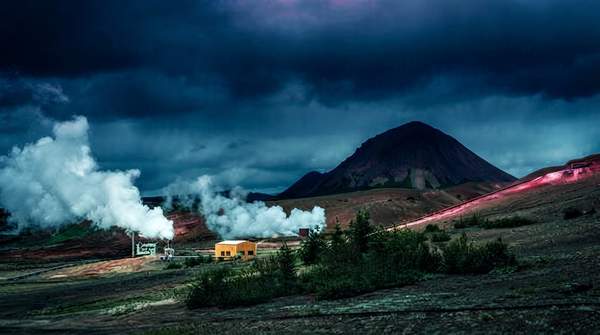
Conventional geothermal electricity depends on a rare geological coincidence. According to the Department of Energy, a naturally occurring geothermal system, known as a hydrothermal system, requires three key elements at depth: heat, fluid, and permeability, meaning fluid can move freely through the underground rock. Where all three align, as at The Geysers in California, power plants can tap naturally superheated water and steam.
Much of the country's underground rock, however, is hot but dry, or too impermeable for fluid to flow. That leaves an enormous energy resource effectively locked in place. EGS is the engineering answer to this gap: rather than waiting for nature to assemble heat, water, and open fractures in one spot, engineers manufacture the missing elements. Berkeley Lab scientists frame the distinction as tapping natural hot spots versus creating engineered pathways to access heat in more locations, which is why the technology attracts attention as a potential source of abundant power far beyond traditional geothermal regions.
How Enhanced Geothermal Systems Work
The core of the technology is reservoir creation. In the Department of Energy's definition, an EGS is a man-made reservoir, created where there is hot rock but insufficient or little natural permeability or fluid saturation. Fluid is injected into the subsurface under carefully controlled conditions, causing pre-existing fractures to re-open and creating permeability where none was economically useful before.
Once the rock is fractured, the engineered permeability allows fluid to circulate throughout the now-fractured formation and transport heat to the surface, where it can be used to generate electricity. The injected water travels through the hot rock, absorbs its thermal energy, and is produced back through wells; at the surface, the hot fluid spins a turbine, as Princeton Engineering describes in its account of the process. Every stage of this loop, from drilling to stimulation to circulation, is an engineered substitute for what hydrothermal sites offer for free, and that substitution is both the technology's great advantage and the source of its hardest problems.
EGS vs. Conventional Geothermal: Key Differences
The clearest way to understand EGS is to place it side by side with the hydrothermal systems that defined geothermal power for decades. The table below juxtaposes the two across four dimensions: what the geology must supply, where each can be built, how each produces power, and how mature each technology is today. The pattern that emerges is a fundamental trade-off: conventional geothermal is geographically constrained but commercially proven, while EGS trades established maturity for near-universal geographic potential.
| Attribute | Conventional Hydrothermal | Enhanced Geothermal Systems (EGS) |
|---|---|---|
| Resource requirement (geology) | Requires all three natural elements: heat, fluid, and permeability at depth. | Requires only hot rock; fluid and permeability are engineered into a man-made reservoir. |
| Geographic accessibility | Limited to regions with natural superheated reservoirs, such as The Geysers in California. | Potentially deployable anywhere hot rock lies close enough to the surface, including regions previously considered unsuitable. |
| Core technology / process | Taps existing underground hot water and steam reservoirs to generate electricity. | Injects fluid under carefully controlled conditions to re-open fractures, creating permeability that carries heat to the surface. |
| Current maturity | Established commercial technology operating in naturally endowed regions. | Frontier status: the first pilot-scale commercial U.S. project came online only a few years ago, with research and demonstration still underway. |
Read across the rows and the value proposition becomes concrete. EGS removes the geological lottery that confines conventional plants to a handful of locations, but it does so by taking on engineering tasks that hydrothermal sites perform naturally, which is precisely why its maturity column lags behind.
The Vast Potential and Advantages of EGS
The scale of the opportunity is what drives government investment. The Department of Energy's fact sheet calls EGS an enormous, domestic, clean energy resource, citing the 2006 MIT study's projection of 100 gigawatts of cost-competitive capacity in the United States over 50 years. To pursue that resource, the agency's Geothermal Technologies Office invests in industry, academia, and the national laboratories to develop and demonstrate EGS throughout the country.
Three advantages recur across the sources. First, location independence: because EGS engineers its own reservoir in hot, dry rock, it can theoretically be deployed far from existing hydrothermal sites, a point Berkeley Lab scientists emphasize when describing engineered pathways to access heat in more locations. Second, resource size: a comprehensive technology guide notes that the heat within a few kilometers of the Earth's crust contains more energy than the world's fossil fuel reserves. Third, reliability: unlike solar and wind, the same guide observes, EGS offers consistent, 24/7 output, positioning it as firm, dispatchable renewable power rather than an intermittent supplement. Princeton Engineering adds that despite this profile, the technology has been overlooked in most energy systems models, partly because commercial activity is so recent.
Key Challenges for Widespread EGS Deployment
The obstacles fall into two intertwined categories, economic and technological, as the technology guide summarizes. The most fundamental is reservoir creation and control. An EGS reservoir exists only because engineers injected fluid under carefully controlled conditions to re-open fractures, and the resulting permeability must allow fluid to circulate and transport heat efficiently. Every project must therefore succeed at a subsurface engineering problem that conventional plants never face: manufacturing and managing the reservoir itself, in rock whose fracture behavior is difficult to observe directly.
Compounding the engineering risk is the economics of a frontier technology. Because EGS substitutes engineered processes for natural advantages, projects must bear the cost of drilling, stimulation, and reservoir development without the certainty that a proven hydrothermal site provides. The maturity gap is visible in the deployment record: Princeton Engineering notes that the first pilot-scale commercial project in the United States came online only a few years ago, which helps explain why energy systems models have largely overlooked the technology. The Department of Energy's response has been sustained research, development, and demonstration investment across industry, academia, and the national laboratories, an acknowledgment that commercial viability has not yet been reached at scale.
The Path Forward for EGS Deployment
Continued investment in research and development is essential to overcome the technological and economic hurdles for widespread EGS deployment. The Department of Energy is already structured around this premise, funding industry, academic, and national laboratory efforts to develop and demonstrate EGS throughout the United States, while the resource case rests on projections like the MIT study's 100 gigawatts of potential cost-competitive capacity.
For readers tracking whether the frontier becomes mainstream, progress in EGS commercial viability will be indicated by successful pilot demonstration projects and reductions in drilling and reservoir creation costs. Those are the concrete markers to watch: each new demonstration that proves an engineered reservoir can sustain heat circulation, and each cost reduction that narrows the gap between EGS and the conventional plants it aims to complement, moves the technology closer to unlocking the heat beneath regions that geothermal power has never reached.
Sources
- Enhanced Geothermal Systems — Energy.gov
- Newscenter
- Princeton Engineering - Enhanced geothermal systems: An underground tech surfaces as a serious clean energy contender
- ENERGY
- Enhanced Geothermal Systems EGS A Comprehensive Guide Unlocking The Plan’s Vastest Power Potential — Associated Clinic of Psychology