No single quantum computing architecture wins on every axis that matters. Superconducting circuits bet on raw gate speed and chip-style manufacturing, accepting near-absolute-zero cooling and limited qubit connectivity. Trapped ions bet on qubit quality and unrestricted connections, accepting slower gate clocks. Neutral atoms bet on room-temperature operation and sheer qubit count, using laser "tweezers" to rearrange connections on the fly. Which approach leads depends on which of these trade-offs a given algorithm and budget can absorb.
That conclusion is not incidental. A 2017 head-to-head experiment by N. M. Linke and colleagues found that performance on identical tasks tracked the hardware's connection topology, and a recent survey of qubit modalities by Arun Govindankutty argues the field's plurality is structural: different technologies trade off speed, coherence, connectivity and manufacturability in ways that favor different roles. Here is how the three leading bets actually stack up.
Introduction to Quantum Architectures
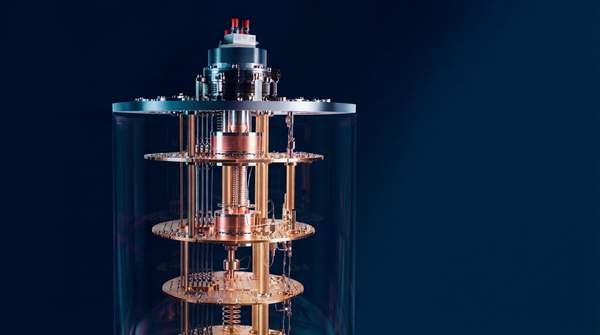
Superconducting machines build their qubits from Josephson junctions — tiny superconducting circuit elements fabricated on two-dimensional surfaces, in a process that resembles semiconductor manufacturing. That industrial familiarity is the architecture's quiet advantage: chips can be patterned with the tooling of the existing electronics industry. The price is severe. According to a comparison article by Valérian Giesz for the quantum technology company Quandela, superconducting qubits must operate near absolute zero, at roughly -450°F, and their quantum states last under 300 microseconds.
Trapped-ion systems take the opposite approach to qubit identity. Instead of engineered circuits, they use individual atomic ions, confined by electromagnetic fields and manipulated with laser controls. Because every qubit is literally the same kind of particle, the platform produces what the Linke team called superior qubits, and Quandela's comparison reports readout fidelity above 99.9% with quantum states lasting from 0.2 to 600 seconds — a coherence window thousands of times longer than the superconducting one.
Neutral-atom machines sit closer to trapped ions in spirit but differ in one decisive respect: the atoms carry no electric charge, so they are held in optical tweezers rather than electromagnetic traps. QuEra Computing, a neutral-atom hardware maker, describes arrays of individually identical atoms that can be expanded to thousands of sites, with its 256-atom Aquila system available through Amazon Braket since 2022. Quandela's comparison lists the platform as operating at room temperature.
Govindankutty's survey, published in Discover Quantum Science, frames these three paths as complementary rather than mutually exclusive: superconducting and trapped-ion platforms presently lead in industrial deployment and demonstrated qubit quality respectively, while neutral atoms bring distinct advantages of their own. Notably, he observes that the community's attention has already shifted from maximizing raw physical qubit counts toward improving the end-to-end utility of quantum processors.
Qubit Connectivity and Algorithm Performance
The clearest experimental evidence on why connectivity matters comes from the 2017 comparison by Linke and colleagues, which ran a selection of algorithms on two state-of-the-art 5-qubit machines: a publicly accessible superconducting transmon device with limited connectivity, and a fully connected trapped-ion system. Running identical tasks on radically different technologies, the team found that the performance of each system reflected the topology of connections in the base hardware — direct evidence that a quantum computer's wiring diagram shapes what it can compute efficiently.
The same study crystallized the core trade-off. Whereas the superconducting system offered faster gate clock speeds and a solid-state platform, the ion-trap system featured superior qubits and reconfigurable connections. The authors' conclusion was not that one architecture defeated the other, but that quantum applications and hardware should be codesigned — an algorithm's demands should be matched to the machine that naturally satisfies them.
The practical stakes are concrete. Limited, nearest-neighbor connectivity in superconducting chips can increase circuit depth for algorithms requiring long-range interactions, because distant qubits must communicate through chains of intermediate ones. All-to-all connectivity, by contrast, simplifies algorithm mapping and reduces gate count. QuEra reports that the all-to-all connectivity of neutral atoms greatly simplifies circuit design for algorithm developers, and adds a capability the other platforms lack: a process called qubit shuttling, which moves atoms individually around during the computation itself, reconfiguring the effective connection pattern on the fly.
Quantum Architecture Trade-offs at a Glance
Juxtaposing the defining characteristics of the three architectures — drawn from the Linke team's experimental comparison, Govindankutty's survey, Quandela's published comparison and QuEra's own architectural description — makes the trade-offs visible in one place:
| Characteristic | Superconducting | Trapped-Ion | Neutral-Atom |
|---|---|---|---|
| Qubit type | Josephson junctions fabricated on 2D surfaces | Ions confined by electromagnetic fields, laser-controlled | Individual atoms held by optical tweezers |
| Connectivity | Limited; nearest-neighbor on the chip | All-to-all within a trap; reconfigurable connections | All-to-all, reconfigurable via qubit shuttling |
| Operating temperature | Near absolute zero (about -450°F) | Not specified in the surveyed comparison | Room temperature |
| Coherence time | Under 300 microseconds | 0.2–600 seconds | Relatively long lifetimes; no figure given |
| Key advantages | Fast gate operation; semiconductor-style manufacturing | >99.9% readout fidelity; long-lasting quantum states | Identical qubits; arrays expandable to thousands of atoms |
| Scaling approach | Solid-state chips; current leader in industrial deployment | Strength demonstrated in qubit quality rather than raw count | Aquila's 256 atoms on Amazon Braket since 2022; same architecture can hold thousands |
Read across the rows, the table reveals the central pattern: the architecture with the fastest gates has the shortest coherence and the most restrictive wiring, while the architectures with unrestricted or reconfigurable connectivity pay for it in gate speed or in the engineering of moving atoms. No column dominates another — each represents a different resolution of the same underlying tension between speed, qubit quality, connectivity and manufacturability.
Operational Requirements and Coherence
The superconducting platform's operational burden is its cryogenics. Its qubits require extremely low temperatures in the millikelvin range — near absolute zero, pegged at about -450°F in Quandela's comparison — which necessitates complex and expensive cooling infrastructure. That infrastructure is a fixed cost of the architecture, independent of qubit count, and it pairs with a demanding timing constraint: with coherence under 300 microseconds, algorithms must complete within a window that the platform's fast gates exist to exploit.
Trapped-ion systems invert that arithmetic. With coherence times ranging from 0.2 to 600 seconds and readout fidelity above 99.9%, they can afford comparatively slower operations and still execute deeper logical sequences before decoherence intervenes. Their qubits are controlled by lasers rather than wired circuits, which removes the fabrication constraints of a 2D chip — though the surveyed comparison does not specify their operating temperature, so no direct cooling comparison with superconducting systems can be drawn from it.
Neutral-atom machines are listed by Quandela as operating at room temperature, eliminating the dilution-refrigerator requirement entirely. QuEra reports that the relatively long lifetimes of neutral-atom qubits allow more operations to be performed and deeper circuits to be executed, and that the same architecture holding hundreds of atoms can hold thousands. The platform's distinctive operational requirement is instead optical: precise control of the tweezer arrays and the shuttling process that gives the architecture its flexible connectivity.
Trade-offs and Future Outlook
Each architecture's scaling story follows from its physical character. Superconducting chips scale through the manufacturing playbook of the semiconductor industry, which is consistent with their current lead in industrial deployment. Trapped-ion systems scale on the strength of qubit quality — their demonstrated fidelity — rather than raw count. Neutral atoms scale by simply adding atoms to the array: QuEra's 256-atom Aquila system, available on Amazon Braket since 2022, uses an architecture the company says can hold thousands.
What unites all three, per Govindankutty's survey, is a change in what scaling means. The community's attention has shifted from maximizing raw physical qubit counts to improving end-to-end utility — a reframing that rewards whichever architecture best converts its qubits into useful computation, not merely whichever accumulates the most of them. The Linke team's codesign finding points the same direction: the match between an algorithm's connectivity demands and a machine's topology is itself a performance variable.
Two boundaries on this comparison deserve emphasis. It synthesizes architectural descriptions, an experimental study and stated roadmaps; it does not provide independent benchmarks or verify any vendor's performance claims. And the companies cited are illustrative of their respective architectures, not an exhaustive survey of the market — nor does this comparison cover photonic or silicon spin qubits, which Quandela's own table shows bring further trade-offs to the wider field.
Navigating the Quantum Landscape
For readers evaluating these architectures, the decision should start from the algorithm, not the headline qubit count. Workloads requiring long-range interactions between many qubits favor the all-to-all connectivity of trapped ions or the reconfigurable arrays of neutral atoms, which simplify mapping and reduce gate count; workloads sensitive to gate speed favor superconducting circuits, provided the cryogenic infrastructure and short coherence window fit the deployment. Resource constraints — cooling, lasers, optical control — belong in the decision alongside performance.
The measurable indicator to watch going forward is the continued development of modular scaling techniques and improvements in qubit fidelity across all three architectures. Whichever approach advances that combination fastest — connecting more qubits while making each one better — will define the next phase of the race.
Sources
- Experimental Comparison of Two Quantum Computing Architectures — arXiv.org
- A study of qubit modalities in contemporary quantum computing - Discover Quantum Science — SpringerLink
- Exploring Types of Quantum Computers: Which Technology Leads? — Quandela
- Key Advantages of Neutral-atom Quantum Computer Architectures — QUERA