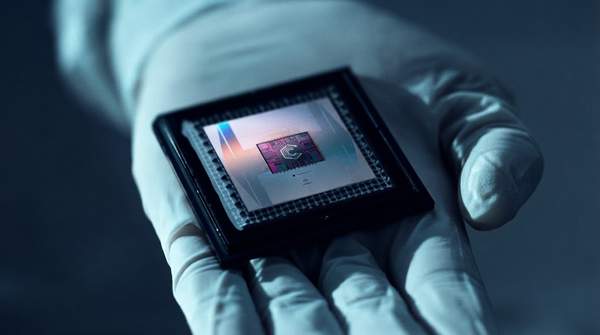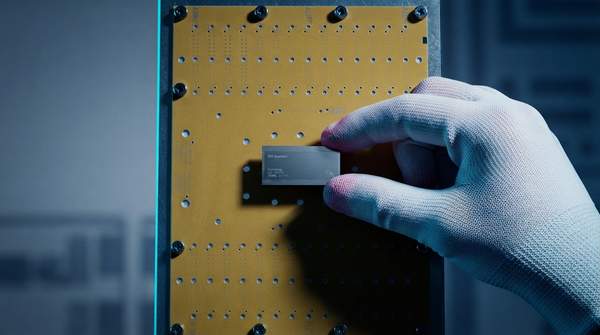
IBM's Nighthawk r2 processor, now available on the IBM Quantum Platform and deployed within the modular IBM Quantum System Two, is the company's fastest quantum processor to date—and its design is a deliberate bet that speed, connectivity, and fast reset, rather than raw qubit count, will carry quantum computing toward practical error correction. According to IBM, the processor pairs 120 programmable qubits with a high-speed qubit reset architecture capable of executing over 100,000 circuits per second, roughly 25 times the circuit throughput of the IBM Quantum Heron fleet. The significance lies less in the headline number than in what each architectural element is built to enable: error-correction experiments today and multi-chip, fault-tolerant systems tomorrow.
Introduction to IBM Quantum System Two and Nighthawk r2
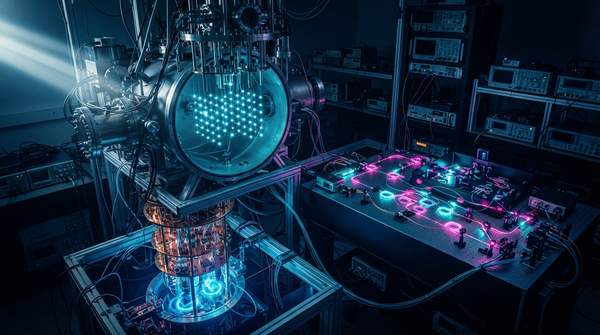
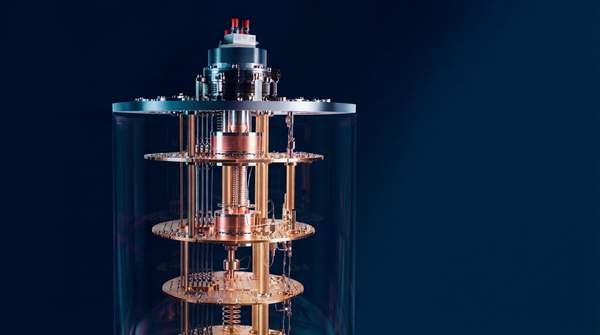
Nighthawk r2 sits inside IBM Quantum System Two, a system conceived from the outset around modularity. IBM's own hardware documentation frames scaling as a question of components: running billions of gates, the company argues, requires multiple quantum chips working together, and that in turn demands modular components sharing a single cryogenic environment. Nighthawk r2 is the current flagship chip within that architecture, succeeding the Heron family—not by stacking more qubits, but by changing what each qubit can do. IBM presents the Nighthawk generation as the chip architecture that "advances our chip architecture" with 120 programmable qubits and four-degree connectivity designed to scale workload complexity. Understanding why that particular trade-off was made requires looking at how IBM's earlier processors were built.
Nighthawk r2 Processor: Key Specifications and Performance
The core numbers, as reported by IBM in its technical publications and blog coverage, are as follows: 120 physical qubits, 218 tunable couplers, and 120 reset elements, for a total of 458 physical quantum elements on the chip. The connection topology is a square grid, with up to four neighbor connections per qubit. In throughput terms, IBM credits Nighthawk r2 with more than 100,000 circuits per second—compared with 3.9 kHz-class throughput for the Heron generation—and demonstrated computations with more than 7,500 two-qubit gates. IBM lists quality, measured as EPLG, at 3.7 E-3, on par with the Heron family's figure rather than trading it away for speed.
Caveats matter here. As igor'sLAB's reporting on the launch notes, the throughput and circuit-depth figures describe performance characteristics under specific conditions and are not universal benchmarks for all quantum algorithms. The actual execution time of any computation still depends on the circuit structure, the measurements required, and the error-correction or error-mitigation techniques in use. The 25x figure is a circuit-throughput comparison—valuable because many quantum experiments repeat the same circuit many thousands of times to obtain statistically reliable measurements—rather than a 25-fold acceleration of arbitrary computations.
Architectural Innovations: Connectivity and Qubit Reset
The most consequential design change is topological. IBM's earlier processors, from Eagle through the Heron generation, were built on the heavy-hex lattice—a honeycomb-like arrangement IBM's researchers had long championed for its error-reduction properties, in which qubits connect to only two or three nearest neighbors. Nighthawk abandons that geometry for a square lattice in which most qubits connect to four neighbors, an arrangement IBM describes as "four-degree connectivity."
Four connections per qubit is more than a marketing statistic. Surface-code-style error correction, the dominant framework for quantum error correction research, presumes a checkerboard pattern of data and measure qubits—exactly the square lattice Nighthawk provides. The move also carries a real cost, however. Q-CTRL, writing about performance optimization on an ibm_miami Nighthawk device, notes that the increased connectivity "increases an existing challenge: crosstalk"—unwanted residual interactions between qubits, a major source of error, that can spread rapidly through a circuit precisely because of the high density of connected qubit pairs. Square lattices trade easier error correction for harder error suppression.
The second innovation addresses time rather than space. Nighthawk r2's high-speed reset architecture allows qubits to be cleared and re-initialized rapidly between—and, critically, during—computations, without disturbing their neighbors. IBM describes these as neighbor-safe reset elements, one per qubit. In conventional processor generations, resetting a qubit mid-circuit was impractical; Nighthawk's reset speed is the mechanical foundation of its 100,000-circuits-per-second rating.
Nighthawk r2 Processor: An Explanatory Model
To see how the pieces fit together, it helps to map each hardware feature against the scaling problem it is designed to attack. The table below consolidates IBM's specifications and the independent context reporting around them.
| Design element | Specification | Scaling problem it targets |
|---|---|---|
| Square-lattice connectivity | Up to four neighbors per qubit | Matches the checkerboard layout that surface-code error correction presumes; raises workload complexity, at the price of increased crosstalk |
| Tunable couplers | 218 on the chip | Fine-grained control over qubit interactions, suppressing the residual crosstalk a dense square grid can amplify |
| High-speed, neighbor-safe reset | 120 reset elements | Clears non-computational leakage states quickly and enables mid-circuit re-initialization—the basis of the 25x throughput gain |
| Throughput | 100,000+ circuits per second | Statistical reliability: many algorithms require repeating one circuit thousands of times, so cycle speed directly accelerates research |
| System integration | Deployed in modular Quantum System Two | Path from single chips to multi-QPU systems via L-couplers and shared cryogenic infrastructure |
The model's core insight is that no single specification carries Nighthawk; the lattice, couplers, and reset elements operate together. Four-degree connectivity only helps error correction if crosstalk is controllable, and fast reset only helps throughput if it does not corrupt neighboring qubits. Each element compensates for a weakness introduced by another.
Nighthawk's Role in Scaling Quantum Computing
Within IBM's roadmap, Nighthawk r2 is a scaling vehicle rather than an endpoint. The company's hardware documentation describes scaling as proceeding on three fronts in parallel: multiple chip designs researched simultaneously inside its 300mm fabrication facility; qubit control that keeps pace with processor complexity through multi-layer wiring and tunable couplers, including a low-loss wiring layer in development for the distant qubit connections that IBM's qLDPC error-correcting code requires; and, most distinctively, chips that work together. L-couplers—microwave cables that enable computation across chips, modules, and systems—extend processing power in multi-QPU systems and are intended to do the same for future fault-tolerant architectures. Nighthawk's tunable-coupler architecture is the on-chip precondition for that off-chip connectivity.
IBM's researchers, including Jay Gambetta, Jerry Chow, and colleagues writing on the fault-tolerant roadmap, have described quantum advantage with the help of classical high-performance computing partners by the end of 2026, with larger fault-tolerant systems such as IBM Quantum Starling to follow. Nighthawk r2, at 458 physical quantum elements, is the experimental substrate on which the techniques those systems will need are being developed and validated.
Advancing Quantum Error Correction with Nighthawk
The clearest evidence that the architecture works as intended comes from outside IBM. In late October 2026, researchers at the University of Sydney published results on an ibm_phoenix device—a 120-qubit Nighthawk r2 processor—demonstrating multi-qubit logical entanglement and stable error-corrected memory over 170 rounds of repeated measurement. The experiment reported memory error rates below 1% per round at code distances d = 3 and d = 5, maintaining logical memory suppression below commonly cited fault-tolerant thresholds.
The mechanism matters as much as the result. By swapping functional roles at each time step, every physical qubit in the active patch was measured and hardware-reset every two rounds—clearing non-computational leakage states, in the researchers' framing, before they could spread into uncorrectable correlated logical faults. That protocol is only possible because of Nighthawk's fast, neighbor-safe reset: the hardware feature and the error-correction technique are two ends of the same design decision. The Sydney results are demonstrations on a research device, not a deployed fault-tolerant computer, but they validate the specific hypothesis embedded in the chip's design.
Nighthawk r2: A Foundation for Future Quantum Systems
For researchers and developers, the decision Nighthawk r2 supports is concrete: the Nighthawk r2 processor, with its advanced architecture, serves as a critical platform for researchers and developers to explore and validate techniques for scalable and error-corrected quantum computing within the IBM Quantum System Two. It is available today through the IBM Quantum Platform, and its 25x throughput advantage is most valuable for workloads—statistical sampling, iterative error-mitigation, and error-correction experiments—that repeat similar circuits many times.
The measurable indicator to watch is equally concrete: continued research publications and platform updates from IBM detailing advancements in quantum error correction and multi-chip integration using Nighthawk r2. The Sydney group's 170-round stability demonstration shows the trajectory has already begun. The next milestones IBM itself has dated are quantum advantage by the end of 2026 and, beyond it, fault-tolerant systems whose multi-chip plumbing—the L-couplers and modular cryogenics Nighthawk now plugs into—is being proven in the same laboratory chassis.