Synthetic biology is giving environmental cleanup a programmable toolkit: researchers can now design microorganisms that detect hazardous compounds, degrade stubborn pollutants like PET plastic, and convert simple gaseous carbon sources into useful materials. The core idea is to treat microbes as engineerable systems, rewriting their metabolic pathways so they perform cleanup jobs no natural organism does well. But the engineering strategy changes fundamentally depending on what the pollutant is: a solid, chemically inert polymer demands one set of solutions, while a gas like methane demands another.
Introduction to Synthetic Biology and Bioremediation
Bioremediation harnesses the fact that microbes already metabolize an enormous range of chemical compounds. What synthetic biology adds is design control. As a 2023 review by Thi Duc Thai, Wonseop Lim and Dokyun Na in Frontiers in Bioengineering and Biotechnology explains, the field applies engineering principles similar to those used in electronics to create and build synthetic organisms. Those advances have enabled microorganisms to scavenge and biodegrade a wide range of hazardous compounds, including aromatic compounds, pesticides, microplastics and greenhouse gases.
A review by Tian Jiang and colleagues in Biotechnology for the Environment frames the field as three connected capabilities: biodetection, bioremediation and biomanufacturing. Synthetic biology, they write, offers many characterized parts and design principles that have enabled novel biosensors to detect pollutants such as heavy metals and organic contaminants, while the metabolic diversity of microbes provides potential to detoxify contaminants and convert waste streams into value-added products. Detection and degradation are therefore not separate goals but parts of one design space.
Engineering Principles: Microbial Cell Factories and Gene Editing
The practical unit of this work is the "microbial cell factory": a chassis organism whose metabolism has been deliberately reorganized around a task. A review of key technologies in industrial microbiology published through the National Library of Medicine describes how researchers design and construct microbial cell factories with tailored functions, with applications spanning biomanufacturing, healthcare, energy and environmental remediation.
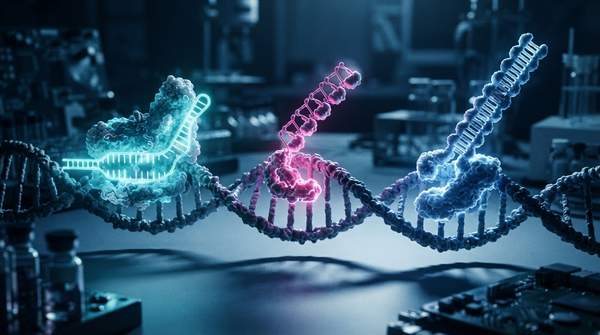
Two technical capabilities make this possible. The first is metabolic engineering, which the same review defines as optimizing and reconstructing the metabolic pathways of microorganisms to enable efficient synthesis of target products. The second is gene editing at scale: high-throughput screening and automated platforms now allow large-scale gene editing experiments, while synthetic genomics promises microbes with highly customized functions. In bioremediation terms, that means engineers can insert the genes for a pollutant-degrading enzyme, tune the surrounding pathway so the cell actually benefits from the reaction, and build in control circuits that govern when and where the organism works.
Targeting Plastic Pollutants: The Case of PET
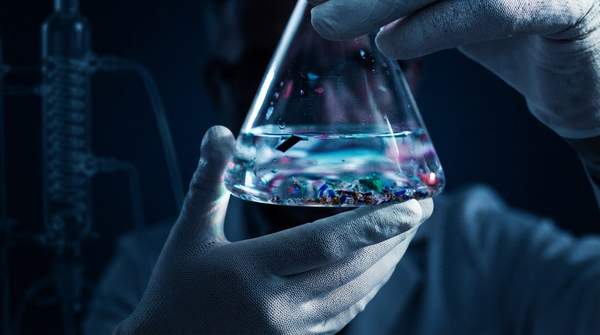
Plastic illustrates the hardest version of the biodegradation problem. PET, the polymer used in water bottles and countless consumer products, is a solid, chemically stable material that most microbes cannot meaningfully attack. The engineering response is to give them the tools to do so.
A U.S. EPA risk assessment document describing an open-release bioremediation project lays out one concrete design. Researchers chose PET as an example bioremediation target precisely because it is widely used, and planned to integrate PET-degrading enzymes directly into the genome of an Escherichia coli strain using a CRISPR-Cas12a recombineering system, alongside a kill-switch circuit. The enzymes in question are hydrolases, which break the polymer's chemical bonds.
Work published in npj Systems Biology and Applications by Iqra Mariam and colleagues points to how this approach can be refined. Their analysis of polymer degradation in the environment identified the hydrolase gene as the key determinant of microbial community structure specific to each polymer type, and they argue that synthetic biology can leverage this information to engineer microbes or microbial communities designed to efficiently degrade plastics. They further note that optimizing enzyme efficiency using machine learning and CRISPR-based protein engineering can elevate bioremediation beyond what conventional directed-evolution methods achieve.
Comparative Strategies for Pollutant Bioremediation
The contrast between solid plastics and gaseous one-carbon (C1) compounds shows how the pollutant's physical state dictates the engineering strategy. For a solid polymer, the challenge is breaking a chemically resistant material apart, so the design centers on surface-acting degrading enzymes. For a gas like methane, the challenge is capturing a volatile carbon feedstock, so the design centers on metabolic pathways that assimilate it into biomass or products rather than simply destroying it. The table below compares the two approaches side by side.
| Pollutant Class | Example Pollutant | Engineering Strategy / Metabolic Modification | Intended Outcome |
|---|---|---|---|
| Solid plastic | PET (e.g., water bottles) | Integrate PET-degrading hydrolase enzyme genes into a chassis genome via a CRISPR-Cas12a recombineering system; optimize enzymes with machine learning and CRISPR-based protein engineering | Break down microplastic waste; the engineered cell dies after the task via a kill-switch circuit |
| Gaseous C1 compound | Methane and other one-carbon feedstocks | Optimize and reconstruct metabolic pathways so the microbe converts abundant, low-cost gaseous carbon feedstocks into products | Convert waste gases into biomaterials, biofuels and other value-added products rather than leaving them as pollutants |
One qualification matters here. The evidence on C1 compounds, as summarized by Jiang and colleagues, primarily supports their microbial conversion into useful products such as biomaterials and biochemicals, rather than degradation in the way PET is degraded. The gaseous strategy is closer to biomanufacturing pressed into environmental service: the pollutant becomes a feedstock.
Safety and Biocontainment: Engineered Kill-Switches
Releasing genetically modified microorganisms (GMMs) into the environment raises an obvious question: what stops them from persisting once the job is done? The EPA-described project addresses this directly by engineering an E. coli strain that will die upon completing its bioremediation task, allowing the researchers to test functional efficiency for both bioremediation and biocontainment simultaneously. The kill-switch circuit integrated alongside the PET-degrading genes is the mechanism: a genetic control system that terminates the organism deliberately rather than leaving its fate to chance.
This design reflects a broader principle in the field. Because engineered organisms are built from characterized, programmable parts, safety features can be designed into the same genome as the degradation machinery, rather than added afterward. The EPA document's stated purpose, determining the stability of engineered bacteria and their effects on native microbiota, also signals that open-release applications are being evaluated within existing regulatory frameworks before environmental deployment, though the details of those frameworks are beyond this article's scope.
Advancing Environmental Cleanup with Engineered Microbes
The field of synthetic biology is actively developing engineered microorganisms as a viable strategy for environmental remediation. The evidence reviewed here supports a clear pattern: the engineering strategy is dictated by the pollutant's chemical nature and physical state, from hydrolase-armed bacteria that dismantle solid PET to pathway-rewired microbes that assimilate gaseous carbon into valuable products, with kill-switch biocontainment built into open-release designs.
For readers tracking whether this technology matures from laboratory design to real cleanup, the concrete indicator is continued research and successful pilot projects demonstrating the effective and safe degradation or conversion of specific pollutants by GMMs in controlled environments. The EPA-described PET project, with its explicit plan to test both bioremediation efficiency and biocontainment in a single strain, is exactly the kind of milestone to watch.
Sources
- Frontiers | Synthetic bacteria for the detection and bioremediation of heavy metals
- Metabolic engineering and synthetic biology for the environment — SpringerLink
- Key Technologies of Synthetic Biology in Industrial Microbiology - PMC
- Engineering bioremediating bacteria for open-release application — US EPA