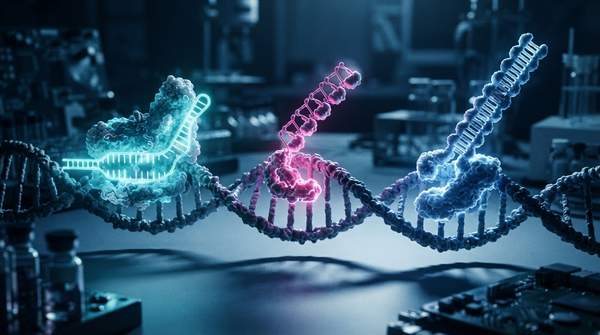
The rapid evolution of gene editing has provided scientists with an unprecedented ability to alter DNA, opening new frontiers in research and gene therapy. While CRISPR-Cas9 has become a household name for its relative simplicity and versatility, it is one of several powerful platforms available. Understanding the distinct mechanisms and trade-offs of CRISPR, Zinc Finger Nucleases (ZFNs), and Transcription Activator-Like Effector Nucleases (TALENs) is crucial for selecting the best tool for a specific scientific goal, balancing the need for speed against the demand for precision. These technologies all function as "molecular scissors" capable of making targeted cuts in the genome, but how they find their target distinguishes them.
According to a review of principal genome-editing platforms, these tools represent a pivotal advance in gene therapy. CRISPR relies on an easily programmed RNA molecule to guide its cutting enzyme, while ZFNs and TALENs use custom-built proteins. This fundamental difference creates a clear trade-off: CRISPR’s ease of use makes it ideal for large-scale experiments, whereas the protein-based systems, though more complex to design, can offer greater specificity for applications where avoiding errors is paramount.
ZFNs and TALENs: The Protein-Engineering Approach
Before CRISPR entered the scene, Zinc Finger Nucleases (ZFNs) and Transcription Activator-Like Effector Nucleases (TALENs) were the state-of-the-art in genome editing. Both technologies rely on fusing a DNA-cutting enzyme, or nuclease, to a protein domain specifically engineered to recognize a desired DNA sequence. For ZFNs, this recognition is achieved by assembling modules of zinc finger proteins, each designed to bind to a short stretch of DNA. Creating a ZFN capable of targeting a unique site requires a high level of expertise to design and implement, as noted by Applied Biological Materials. This complexity makes the process both expensive and time-consuming. TALENs operate on a similar principle but offer greater flexibility.
They use TALE proteins, where each protein repeat corresponds to a single nucleotide in the DNA sequence. This one-to-one recognition system provides a more straightforward design code than ZFNs and often leads to higher success rates in creating stable edits. However, like ZFNs, TALENs are challenging to scale due to the labor-intensive processes required for their assembly. While these traditional methods have been somewhat overshadowed by newer technologies, they remain critical tools for niche applications that demand unparalleled precision, such as in the development of therapeutics where accuracy is the highest priority.