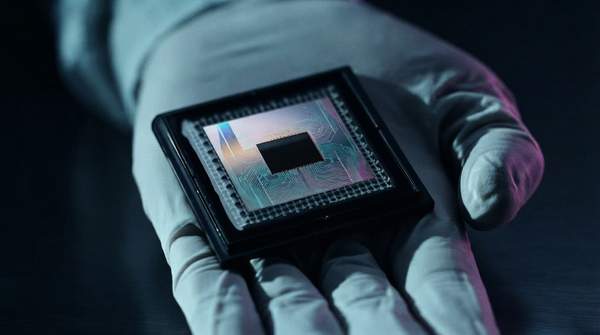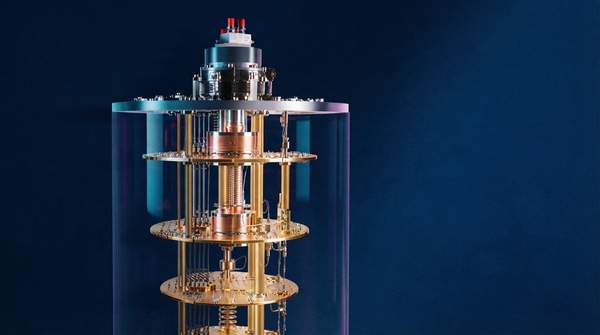
Building a quantum computer capable of solving meaningful problems requires overcoming a fundamental obstacle: the inherent fragility of its basic components. The physical quantum bits, or qubits, that perform calculations are highly susceptible to environmental noise, which introduces errors that can corrupt results. The solution is a fault-tolerant quantum computer (FTQC), a machine designed with a complex, multi-layered architecture that uses many error-prone physical qubits to create a single, robust "logical qubit." This is achieved through quantum error-correcting codes (QECC). While the goal is universal, the architectural philosophies for achieving it diverge based on the underlying hardware. Two leading approaches, one using trapped ions and another employing neutral atoms, reveal distinct strategies for tackling the challenges of scale, connectivity, and error correction on the path to fault-tolerant quantum computation.
The Foundation of Fault Tolerance
The leap from today's noisy, intermediate-scale quantum devices to a fully fault-tolerant machine is one of architectural depth. At the heart of this transition is the logical qubit. Unlike a physical qubit, which is a direct physical system like an ion or an atom, a logical qubit is an abstract computational unit whose quantum state is encoded across a large number of physical qubits. This redundancy allows the system to detect and correct errors that occur in its physical components without disturbing the overall computation. The process of encoding, operating on, and decoding these logical qubits is a profound scientific and engineering challenge.
Researchers must combine a wide array of QEC techniques with specific hardware considerations to create a functional system. According to a 2025 paper by Dolev Bluvstein and colleagues, understanding the physical principles for building these devices and integrating them into efficient architectures remains an "outstanding scientific challenge." This complexity means there is no single, universally agreed-upon blueprint. Instead, the choice of physical qubit platform—such as trapped ions or neutral atoms—heavily influences the entire design philosophy, leading to different solutions for managing connectivity, implementing logical operations, and scaling the system to the millions of physical qubits required for fault tolerance.