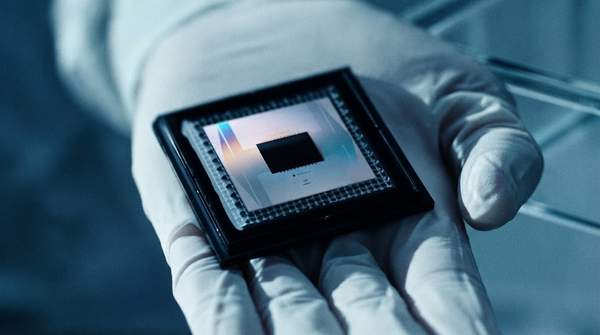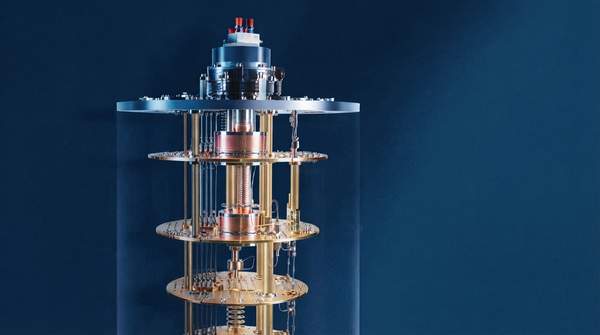
As quantum information science progresses into a new era of more complex computation, the primary obstacle to building more powerful quantum computers is no longer just device design but the fundamental quality of their constituent materials. According to reporting in Quantum Zeitgeist, the field is grappling with a "structure-coherence problem," where imperfections at the atomic level limit the stability and lifetime of quantum bits, or qubits. To overcome this challenge, researchers are pursuing two distinct but complementary strategies: directly improving the physical materials from which qubits are made and refining the methods used to control and operate them.
One approach focuses on materials science, intervening at the fabrication stage to eliminate the microscopic defects that cause qubits to lose their quantum state, a process known as decoherence. A second, parallel strategy involves advanced characterization and control, using sophisticated software and measurement techniques to fine-tune the performance of existing hardware. By examining a specific technique from each category—niobium surface encapsulation for materials and iterative frequency tuning for control—the principles, trade-offs, and impact of these methods become clear.
Material Science Intervention: Niobium Surface Encapsulation
A significant source of performance loss in superconducting qubits stems from dielectric loss, where energy dissipates from the qubit into its surrounding environment. Research has increasingly identified material defects, particularly at the surfaces and interfaces of the device, as a primary culprit. For qubits made from niobium, a common material in superconducting circuits, the natural formation of an amorphous surface oxide layer creates a lossy environment that shortens qubit coherence times.
To address this problem at its source, a team of researchers developed a fabrication technique called niobium surface encapsulation. Detailed in a peer-reviewed article in npj Quantum Information, this method involves protecting the surface of the niobium to prevent its lossy oxide from forming in the first place. By altering the fabrication process to encapsulate the material, the technique aims to build a qubit that is intrinsically more robust against a known and dominant source of decoherence. This represents a fundamental shift from designing around material flaws to eliminating them from the outset.
Impact of Niobium Encapsulation on Qubit Performance
The material science approach of surface encapsulation has yielded measurable and repeatable performance gains. The researchers behind the niobium encapsulation technique reported that it produces "systematic improvements in T1 relaxation times," a key metric for how long a qubit can retain its energy and, therefore, its quantum information. By directly mitigating the formation of lossy niobium oxides, the method enhances the inherent quality of the qubit hardware.
To validate the technique's scalability and reproducibility, devices using this method were fabricated in the Rigetti Computing quantum integrated circuit foundry. The results showed a clear and significant enhancement in qubit lifetime. According to the study, tantalum-capped devices, which use a similar encapsulation principle, exhibited a median T1 time of approximately 200 microseconds. This marked a substantial improvement over the baseline niobium qubits fabricated without the protective layer, which had a median T1 time of around 120 microseconds. These findings demonstrate that a targeted materials science intervention can produce a direct and quantifiable boost in qubit coherence.
Advanced Characterization and Control Methods
A different strategy for enhancing qubit performance focuses not on changing the physical hardware but on optimizing how it is operated. This approach relies on advanced characterization, control, and an iterative refinement process to get the most out of existing qubits. Rather than building a better qubit from scratch, this method seeks to understand and mitigate sources of decoherence through precise measurement and operational adjustments.
This process involves using sophisticated tools and software to fine-tune experimental parameters. For example, by processing two-tone spectroscopy data, researchers can accurately characterize a qubit's quantum state dynamics and make precise adjustments, such as fine-tuning its operating frequency. This iterative loop of measurement, analysis, and adjustment allows for the identification and mitigation of performance-limiting factors, thereby enhancing the qubit's coherence time. According to a review in a National Center for Biotechnology Information publication, such iterative advancements in both fabrication and control have been instrumental in extending qubit coherence times from the microsecond range to the order of seconds.
Comparing Qubit Coherence Enhancement Strategies
The two primary strategies for improving qubit coherence—intervening in the material science versus refining characterization and control—operate on different principles and offer distinct pathways toward fault-tolerant quantum computing. The material science approach addresses the intrinsic, physical limitations of the hardware, while the advanced control approach optimizes the operational performance of that hardware.
| Approach | Underlying Principle | Example Technique | Reported Outcome/Impact |
|---|---|---|---|
| Material Science Intervention | Mitigates intrinsic material defects, such as lossy surface oxides, that are a known source of decoherence. | Niobium surface encapsulation, a fabrication process that prevents the formation of lossy oxides on the qubit. | Systematic improvement in T1 relaxation times, with one study reporting an increase in median T1 from ~120 µs to ~200 µs. |
| Advanced Characterization and Control | Identifies and mitigates sources of decoherence through precise measurement, data analysis, and operational adjustments. | Iterative frequency tuning and processing of spectroscopic data to refine a qubit's operating parameters. | Contributes to a general and noteworthy extension in qubit coherence times, which have progressed from microseconds to seconds. |
Future Directions in Qubit Coherence
The development of fault-tolerant quantum computers depends critically on continued improvements in qubit coherence. The evidence from recent research indicates that progress will likely come from a combination of strategies rather than a single breakthrough. Therefore, researchers and engineers should consider both intrinsic material improvements and advanced control techniques as complementary strategies for achieving this goal. Building better hardware through materials science provides a higher-quality foundation, while sophisticated control methods can unlock the full potential of that hardware.
The most reliable signal of continued progress in the field will be the continued publication of peer-reviewed research demonstrating quantitative improvements in qubit coherence times (e.g., T1, T2) from both material science and control optimization studies. As these two avenues of research mature, their combined impact will be essential for pushing the performance of quantum processors toward the threshold required for practical, error-corrected computation.