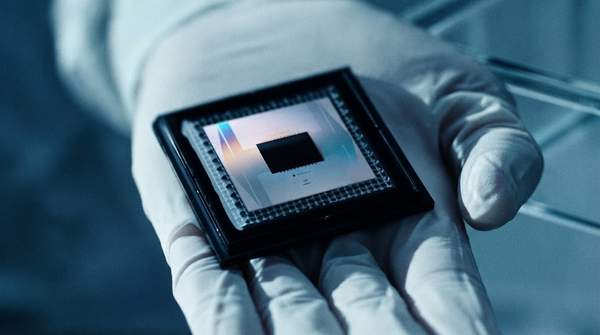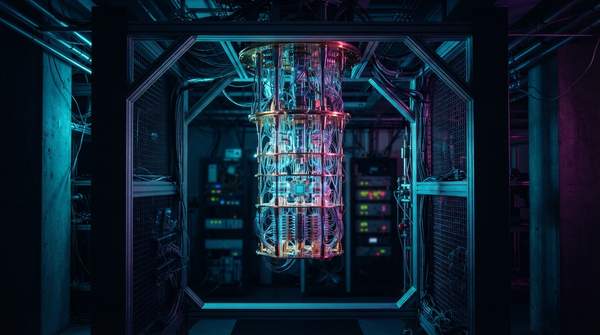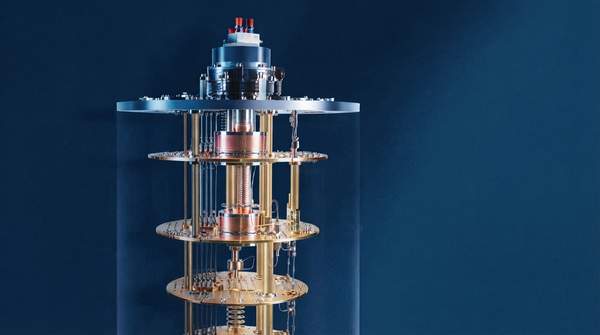
No qubit architecture currently wins on every dimension that matters for a fault-tolerant quantum computer, and the reason is structural rather than incidental. Each of the leading platforms—superconducting circuits, trapped ions, and silicon spin qubits—resolves the same central tensions between coherence, gate speed, connectivity, and manufacturability in a different way, and improving one property tends to cost another. A taxonomy of quantum computing modalities by Marin Ivezic puts it plainly: there is no consensus winner yet, because each approach addresses coherence, controllability, and scalability with its own trade-offs. This article walks through those trade-offs architecture by architecture, then condenses them into a comparison you can use to reason about the field.
Introduction to Qubit Architectures and Core Trade-offs
The three most mature platforms encode quantum information in physically very different systems: superconducting qubits store it in the energy states of tiny supercooled electrical circuits, trapped-ion qubits in the internal states of charged atoms held in electromagnetic traps and manipulated with laser pulses, and silicon spin qubits in the spin of electrons or nuclei embedded in chip-like structures. Because the encodings differ so fundamentally, their performance profiles diverge in ways that no amount of incremental engineering fully erases.
The most consequential relationship is the inverse one between coherence and speed. Ivezic's survey captures it in a single comparison: trapped ions have superb coherence—qubits can remain quantum for seconds or minutes—but their gates are slow, on the order of milliseconds, while superconducting qubits operate in nanoseconds but decohere in microseconds. A second relationship, connectivity versus scalability, cuts across the same platforms: some architectures naturally allow many qubits to interact globally, whereas solid-state qubits have mostly local interactions but might be easier to fabricate densely. Understanding these two relationships explains most of what follows.
Superconducting Qubits: Speed vs. Coherence
Superconducting qubits are the sprinters of the field. Their gate operations run in nanoseconds, which means a computation can pack many operations into a short window—an obvious advantage when an algorithm requires thousands or millions of sequential gates. According to Quandela's overview of quantum computer types, current quantum computers face error rates of roughly 0.1% to 1% per gate operation, meaning an error occurs in one out of every 100 to 1,000 operations; against that backdrop, raw speed is what makes long computations feasible at all.
The cost is coherence. Superconducting qubits maintain coherence for only about 30 microseconds, per the same comparison—several orders of magnitude less than trapped-ion systems, which show coherence times of several seconds. That short window forces a heavy reliance on error correction: as SpinQ's survey of qubit types notes, superconducting qubits have achieved high-fidelity gates, but implementing fault-tolerant computing requires sophisticated error-correction protocols that demand more physical qubits and overhead, complicating the overall system. The architecture's speed, in other words, is partly spent paying for its own fragility.
Trapped-Ion Qubits: Coherence and Entanglement Quality
Trapped ions take the opposite side of the trade. SpinQ describes their qubits as remaining in their quantum states for a long time—essential for running quantum algorithms that require multiple steps—and as capable of being entangled with high precision, enabling complex quantum operations. The platform is also known for very low error rates in its operations. In a field where every additional gate multiplies the chance of failure, that combination of long coherence and high-quality entanglement is a genuine engineering asset.
The price is speed. Trapped ions typically have slower gate operations than superconducting qubits, which limits the pace of computation even when each operation is individually excellent. This is a relative characteristic rather than an absolute ceiling, and work continues on faster ion gates, but the underlying physics of laser-driven manipulation makes it a persistent constraint. Choosing trapped ions is, in effect, prioritizing the quality and durability of each operation over how many operations can be performed per second.
Scalability Challenges: Connectivity and Physical Implementation
Connectivity is the non-obvious factor that separates the platforms most sharply. A 2017 experimental comparison of two five-qubit systems—one superconducting, one trapped-ion—published on arXiv showed that quantum algorithms and circuits employing more connectivity clearly benefit from a better-connected system of qubits, and identified qubit connectivity and gate expressivity as critical factors in scaling quantum computers. Trapped ions, whose shared trap environment lets any ion interact with any other, naturally offer that connectivity; superconducting chips are typically laid out with fixed, local couplings, so distant qubits must communicate through intermediate ones.
Yet connectivity and scalability pull in opposite directions. Ivezic's taxonomy notes that architectures with natural global interaction, such as ions, face harder physical scaling, while solid-state qubits with mostly local interactions might be easier to fabricate densely. SpinQ adds the specific mechanism: because each ion must be individually controlled with lasers, scaling trapped-ion systems to thousands of qubits is challenging. Superconducting systems scale more readily in chip fabrication but hit a different wall—Quandela points out that a fault-tolerant machine must control between 100,000 and 1,000,000 qubits simultaneously, requiring major improvements in control electronics and power efficiency. Silicon spin qubits sit at the dense-fabrication end of this spectrum, inheriting semiconductor manufacturing techniques, though their own control and uniformity challenges remain active research areas.
Qubit Architecture Trade-offs at a Glance
The table below juxtaposes the three architectures across the dimensions that drive the trade-offs. Reading across each row reveals the inverse relationships: fast gates pair with short coherence, long coherence pairs with slow gates, and high connectivity pairs with harder physical scaling. These are typical relative characteristics for explaining the trade-offs, not the latest record values, and research continues to improve every cell.
| Qubit Architecture | Typical Coherence Time | Relative Gate Speed | Qubit Connectivity | Primary Scalability Challenge |
|---|---|---|---|---|
| Superconducting qubits | Short—about 30 microseconds | Fast—nanosecond-scale operations | Mostly local, fixed couplings on chip | Error-correction overhead plus control electronics and power for 100,000–1,000,000 qubits |
| Trapped-ion qubits | Long—seconds or minutes | Slow—millisecond-scale gates | High; ions in a trap can interact globally | Individually controlling each ion with lasers as counts grow to thousands |
| Silicon spin qubits | Long relative to superconducting circuits | Not directly comparable in the cited evidence | Mostly local, like other solid-state qubits | Control and uniformity at density, though dense fabrication is a potential advantage |
The comparison makes the central pattern visible: no row dominates another. Superconducting qubits buy speed with coherence and cooling infrastructure; trapped ions buy coherence and connectivity with speed and physical manipulation complexity; silicon spin qubits lean on fabrication density while confronting solid-state control limits.
Navigating the Qubit Landscape: No Single Winner Yet
Readers should recognize that the choice of qubit architecture involves fundamental trade-offs, and no single platform currently dominates across all performance dimensions for building a fault-tolerant quantum computer. The evidence supports this directly: the 2017 head-to-head experiment showed that connectivity differences alone change how well identical algorithms run, while the platform surveys show each architecture's strengths and weaknesses locked in complementary pairs.
The measurable indicator to watch is continued research and engineering breakthroughs in coherence times, gate fidelities, and scalable control systems for each architecture. When one platform demonstrates a simultaneous advance—say, superconducting coherence extended well past the microsecond range alongside dense control electronics, or trapped-ion gates pushed toward faster operation at thousand-qubit scale—the trade-off structure described here will begin to shift, and that will be the signal worth following.