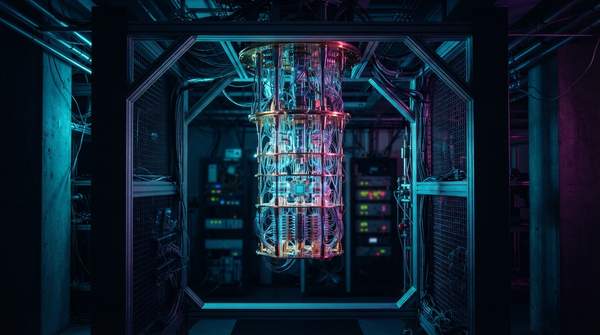
Scaling a quantum computer past a few hundred qubits is not primarily a matter of adding hardware. Four challenges dominate the effort—qubit fragility (decoherence), error correction, control complexity, and interconnectivity—and the decisive fact is that they are interdependent: a weakness in one directly raises the demands on the other three. Shorter coherence times force faster gates and more aggressive error correction, which in turn multiplies the burden on control electronics and interconnects. Understanding these couplings, rather than memorizing a list of obstacles, is what separates a realistic view of quantum scaling from a marketing brochure.
Introduction: The Promise and Hurdles of Quantum Scale
Over four decades, quantum computation has moved from intellectual curiosity to a potentially realizable technology, with algorithmic primitives now demonstrated on hundreds of physical qubits and proof-of-principle error correction achieved on a single logical qubit, as researchers including John M. Martinis and colleagues at Qolab describe it. Yet the same authors are blunt that the path toward a full-stack scalable technology remains largely unknown. A survey of scaling from hundreds to millions of qubits, published on arXiv, frames the problem starkly: much of today's practical know-how applies to NISQ-era machines, complemented only by theoretical work for larger scales. The reason is that the obstacles compound.
As an MDPI review of quantum scalability concludes, progress requires not just more qubits but better qubit quality, managed error rates, efficient interconnectivity, and suitable control mechanisms—advances spanning physics, engineering, materials science, and computer science simultaneously.
Challenge 1: Qubit Fragility and Decoherence
The foundational constraint is that a qubit's quantum state is extraordinarily fragile. As Plain Concepts' technical overview explains, any perturbation—a slight vibration or a change in temperature—can affect the qubit uncontrollably, causing the stored information to be lost. This loss of quantum information to the environment is decoherence, and it imposes a hard deadline on every computation: calculations must be completed before decoherence occurs, or errors accumulate faster than useful results can be extracted. This fragility is a fundamental property of quantum systems, not an engineering defect that a better refrigerator alone can eliminate.
It also explains why quantum machines are so much more sensitive to noise than classical computers, whose bits happily hold their values through vibration or temperature drift. The practical consequence is that every downstream design choice—gate speed, error correction scheme, control bandwidth—is shaped by the race against the decoherence clock.
Challenge 2: The Demands of Quantum Error Correction
Because qubits decohere and gates are imperfect, errors are unavoidable, and quantum error correction becomes essential. But QEC carries a steep price: encoding a single, reliable logical qubit requires a significant overhead of many physical qubits, a burden driven directly by high physical error rates. The effectiveness of error correction depends on keeping physical error rates below a specific threshold—if qubits are too noisy, adding redundancy makes things worse rather than better. This is where the interdependency bites. Qubit fragility and decoherence, as Plain Concepts notes, are precisely why quantum systems are prone to errors and why fault-tolerant structures, longer coherence times, and better error correction methods must improve together. The overhead also reshapes the whole machine: managing redundant qubits for correction expands the system's architecture and engineering complexity, which feeds directly into the next two challenges.
Challenge 3: Managing Control System Complexity
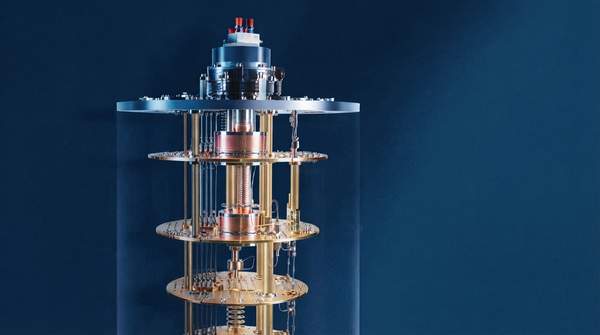
Every qubit must be individually manipulated with precise timing and individually read out, and the electronics that do this—high-bandwidth control circuits operating alongside cryogenic cooling systems—are themselves a scaling bottleneck, as Plain Concepts highlights among the hardware challenges requiring interdisciplinary cooperation. The arXiv scaling survey lists hardware control and calibration among the core challenges at every scale, from hundreds of qubits upward. The interdependency here is a cascading effect: decoherence demands faster gate operations, and error correction demands simultaneous, coordinated control of many redundant qubits. Each demand raises the required control bandwidth and precision, and the challenge is exacerbated by the need for low-noise environments in which the qubits sit.
Control electronics that are adequate for a hundred qubits do not simply get manufactured in larger batches for a million; the complexity grows with the precision and coordination the physics requires.
Challenge 4: Qubit Interconnectivity and Architecture
The fourth challenge is connecting the qubits to each other. Executing complex quantum algorithms requires efficient, reliable communication between large numbers of qubits, yet today's NISQ devices, as SIAM News describes, feature limited connectivity between qubits alongside small physical qubit counts and only moderate gate fidelity. Compact circuit design has become a workaround precisely because existing devices constrain which qubits can talk to which. Physical proximity and communication mechanisms become critical bottlenecks as qubit counts increase: not every qubit can sit next to every other, and routing quantum information across a large device adds operations, time, and error opportunities. Interconnectivity is also entangled with the other challenges—error correction schemes assume certain connectivity patterns, and control complexity grows with the wiring and signaling needed to link qubits across a growing architecture.
The Interdependent Nature of Quantum Scaling Challenges
The framework below maps the causal relationships among the four challenges, showing how each one's demands propagate into the others. Use it to trace any proposed hardware improvement through its system-wide consequences: better coherence relaxes error correction, which shrinks control and interconnect demands, and vice versa.
| Challenge | Core problem | How it drives the other challenges |
|---|---|---|
| Qubit decoherence | Fragile quantum states are lost to environmental noise—vibration, temperature shifts—so calculations must finish before decoherence occurs. | Shorter coherence times force faster gate operations and more extensive error correction, raising the burden on control electronics and interconnects. |
| Error correction | Essential to mitigate errors, but encoding one logical qubit requires many physical qubits, and it only works below a specific error-rate threshold. | The physical-qubit overhead expands system architecture, multiplying control complexity and interconnectivity demands for managing redundant qubits. |
| Control complexity | Each qubit needs precise, individually addressed manipulation and readout via complex, high-bandwidth electronics in low-noise environments. | Demands for speed (from decoherence) and simultaneity (from error correction) cascade directly into harder control and calibration problems at scale. |
| Interconnectivity | Efficient, reliable communication between many qubits is a major hurdle; current devices offer limited connectivity. | Physical proximity and communication mechanisms become critical bottlenecks as qubit counts grow, constraining error correction layouts and control wiring. |
Read as a loop, the framework explains why scaling is a systemic engineering problem rather than a matter of adding qubits. Improving qubit coherence reduces the physical-qubit overhead that error correction needs, which in turn simplifies the control and interconnectivity requirements; conversely, a shortfall in any one dimension inflates the requirements in all the others. That is why the MDPI review insists that scalability means enhancing qubit quality, managing error rates, ensuring interconnectivity, and developing control mechanisms together—not sequentially.
Scaling Across Eras: From NISQ to Fault-Tolerant Machines
The nature of the problem also changes with scale. The arXiv survey "How to Build a Quantum Supercomputer" organizes challenges by system size, from 100–1000 physical qubits up to beyond one million, and finds that at the intermediate scale the key difficulties involve individual qubits and gates operating within the system, along with fabrication and basic operation. That is the NISQ regime: devices with a small number of physical qubits, limited connectivity, and moderate gate fidelity, where compact circuit design matters because hardware is scarce.
Fault-tolerant, utility-scale machines are a different category of problem entirely—the survey notes that scaling from 100 physical qubits to beyond one million for fault-tolerant applications surfaces challenges that are untold or overlooked at smaller scales, spanning fabrication, control, calibration, error correction, and architecture. The transition from NISQ to fault tolerance represents a significant leap in engineering and scientific requirements, not just a quantitative increase in qubit count, especially given that error correction has so far been demonstrated only on a single logical qubit.
Navigating the Path to Fault-Tolerant Quantum Computing
To achieve large-scale, fault-tolerant quantum computing, researchers and engineers must pursue integrated solutions that address qubit coherence, error correction, control complexity, and interconnectivity as interdependent challenges, rather than optimizing them in isolation. The evidence supports qualitative relationships and general trends rather than precise numerical trade-offs, and no single qubit technology—superconducting, trapped ion, or otherwise—escapes the framework; as SIAM News reports, current architectures across these platforms all face scalability hurdles in qubit count and fidelity. The measurable indicator to watch is a reduction in the physical qubit overhead required per logical qubit, alongside demonstrations of increased logical qubit count and sustained coherence in larger, more complex systems. Each demonstration of a lower-overhead logical qubit is direct evidence that the four walls are being moved together rather than one at a time.