An antimatter rocket can achieve a specific impulse of about 0.58c, a theoretical efficiency that could slash a journey to Alpha Centauri from tens of thousands of years to mere decades, as reported by ScienceDirect. The astounding speed of 0.58c offers a tantalizing glimpse into a future where the vast distances of space might finally be conquerable within a human lifetime.
Antimatter propulsion promises to make interstellar travel feasible by dramatically cutting journey times, but the technology required to harness it safely and efficiently remains largely beyond our current capabilities. While the very concept of antimatter rockets for interstellar travel, even as envisioned in 2026, ignites our imagination, its practical application presents a monumental challenge.
Therefore, while antimatter rockets paint a compelling vision for future space exploration, significant breakthroughs in antimatter production, containment, and safety are absolutely essential before such missions can become a reality. The path to the stars is long, indeed, paved with complex scientific and engineering hurdles that demand our ingenuity.
The Promise of Antimatter: Unlocking Interstellar Frontiers
The theoretical efficiency of antimatter propulsion is truly staggering. Achieving a specific impulse of about 0.58c, an antimatter rocket promises velocities unimaginable with conventional methods. This extreme efficiency positions antimatter as the ultimate fuel for interstellar travel, fundamentally redefining our understanding of cosmic distances.
The concept of antimatter propulsion holds the potential to utterly transform space exploration. Antimatter propulsion harnesses the principle of mass-energy conversion: antimatter and matter annihilate upon contact, unleashing immense amounts of energy. This process, vastly more energetic than nuclear fusion, elevates interstellar travel from the realm of science fiction to a theoretical possibility, shattering the limitations of chemical and even nuclear rockets.
How an Antimatter Mission to Alpha Centauri Might Work
A proposed mission architecture envisions a two-stage approach to reach Alpha Centauri. The first stage of the spacecraft accelerates to an astonishing 0.1c, detaches, and then performs a precise burn towards the Alpha Centauri AB binary system, as detailed by NASA. The initial, powerful burst of speed to 0.1c would enable the primary vehicle to cover vast interstellar distances with unprecedented rapidity.
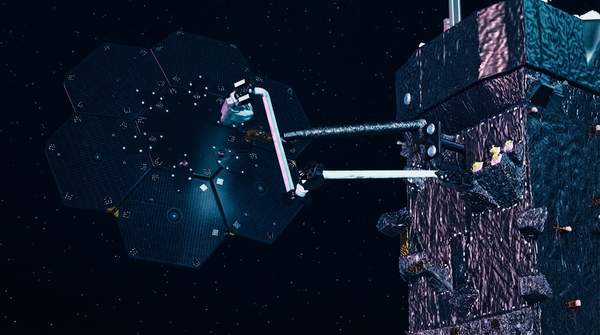
Following this acceleration, the second stage of the spacecraft would then decelerate a scientific payload, providing power for decades of exploration. The multi-stage architecture represents a sophisticated engineering strategy, crucial for managing the immense energy requirements of both rapid acceleration and precise deceleration across interstellar voids. Such a design implies that our first probes will not merely 'fly by,' but will establish a long-term scientific presence at humanity's nearest stellar neighbor.
The Immense Challenges of Harnessing Antimatter
Despite antimatter's theoretical specific impulse of 0.58c – a benchmark of ultimate efficiency – NASA's proposed mission architecture targets a peak spacecraft velocity of 0.1c. The staggering gap between theoretical maximum and practical application highlights profound, unaddressed challenges or safety constraints. It means even our most advanced conceptual designs face significant, inherent limitations, forcing a pragmatic compromise between potential and reality.
Achieving even 10% of light speed, while undeniably revolutionary, demands extraordinary energy and technological prowess. The requirements for achieving even 10% of light speed push the very limits of current and foreseeable engineering capabilities, revealing the sheer scale of innovation still needed. The dream of interstellar travel on a 'human timescale' remains an optimistic fantasy, far from a practical near-term goal.
Beyond the Main Engine: What Else Powers an Interstellar Journey?
How much antimatter is needed for space travel?
The theoretical amount of antimatter needed for interstellar travel is remarkably small, a testament to its unparalleled energy density. However, producing and containing even tiny quantities of antimatter, such as positrons, remains a monumental challenge. Current production rates are measured in nanograms, a stark contrast to the milligram-scale quantities required for a practical mission. The disparity between current production rates (nanograms) and required quantities (milligrams) implies that a fundamental shift in particle physics production methods is necessary, not just incremental engineering improvements.
Will antimatter rockets be possible in our lifetime?
While the theoretical principles are sound, the practical realization of antimatter rockets for human-scale travel remains a distant prospect. Significant breakthroughs are required across antimatter production efficiency, long-term storage, and, crucially, safe handling. These formidable challenges mean that large-scale antimatter propulsion for human missions is unlikely to be possible within the next few decades, pushing true manned interstellar voyages further into the future.
The Long Road to the Stars: A Vision for Future Exploration
Antimatter propulsion holds the key to enabling travel to distant locations once deemed utterly impossible. Antimatter propulsion offers the tantalizing prospect of transforming humanity into a truly interstellar species, fundamentally altering our understanding of our place in the vast cosmos.
The reliance on thousands of gram-scale chipcraft in proposed antimatter missions, as detailed by NASA, powerfully suggests that humanity's first 'interstellar travelers' will not be people. Instead, they will likely be swarms of tiny, expendable probes, each a beacon of scientific inquiry. The reliance on thousands of gram-scale chipcraft fundamentally redefines our aspirations for deep space exploration, shifting the immediate focus from human voyaging to maximizing scientific return through robotic pioneers.