New Frontier Magazine

NASA's Mars Missions Now Rely on Private Rocket Builders

In 2028, the Aeolus mission will launch to provide the first integrated, daily global view of Martian winds, with NASA providing the science instrument and Relativity Space supplying the spacecraft an

DK
Daron Krikorian

June 29, 2026 · 4 min read

A private rocket launching towards Mars, symbolizing NASA's new reliance on commercial partners for space exploration.

In 2028, the Aeolus mission will launch to provide the first integrated, daily global view of Martian winds, with NASA providing the science instrument and Relativity Space supplying the spacecraft and rocket. Imagine a daily weather report for Mars, a celestial forecast delivered with stunning precision, offering insights into the Red Planet's dynamic atmosphere.

NASA is investing heavily in ambitious Mars missions, but it is increasingly relying on private companies to build and operate critical components. This reliance blurs the lines of responsibility and control, a tension at the heart of modern space exploration. The future of Mars exploration will be characterized by a hybrid model where scientific ambition is met through commercial innovation, likely accelerating progress but also introducing new dependencies and shared risks that demand careful management. For more, see our Private Companies Win NASA Mars.

The New Era of Commercial-Led Mars Exploration

NASA has selected 41 proposals from 37 companies to advance technologies for long-term presence on the Moon and human exploration of Mars, a profound shift in its operational strategy. This isn't just a strategic move; it's a deep integration of commercial capabilities into NASA's long-term Mars and deep space exploration plans, moving beyond traditional procurement methods. The sheer volume of proposals reveals a vibrant, yet fragmented, private sector response to NASA's call for deep space innovation, requiring the agency to manage a diverse portfolio of specialized partners rather than relying on a few large prime contractors.

NASA announced a new public-private partnership to advance Mars science by combining the agency’s scientific leadership with commercial innovation, according to Nasa. This approach leverages the agility and speed of the private sector while maintaining NASA's scientific rigor. The agency is effectively outsourcing core mission infrastructure and operations, transforming its role from primary builder to primary customer and scientific overseer.

Aeolus and the Commercial Engine for Martian Science

Aeolus, set for launch in 2028, promises the first integrated, daily global view of Martian winds, temperatures, dust, and clouds. This mission stands as a prime example of NASA leveraging commercial partners for critical hardware and operations. Under this partnership, NASA provides the Aeolus atmospheric-science instrument payload suite, while Relativity Space supplies the spacecraft, rocket, and cruise operations, according to NASA. This strategic division allows NASA to focus on its core scientific instrument development for unprecedented Martian data.
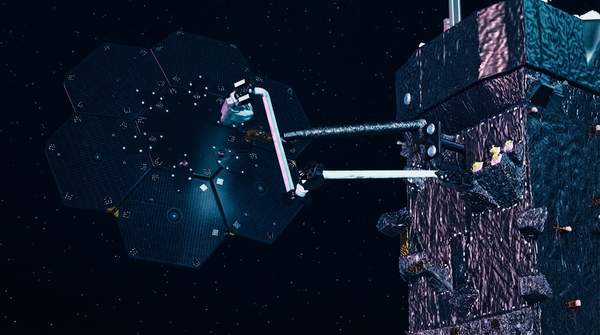

The Aeolus mission is not merely an isolated project; it serves as a template for how NASA structures future deep space missions. It offloads core infrastructure, including spacecraft, launch, and cruise operations, to private partners. This strategy enables NASA to retain scientific payload development, a model cemented by the agency's first six-year reimbursable Space Act Agreement, according to NASA. This framework predicts a future where commercial entities increasingly carry the logistical burden of deep space travel.

Balancing Public Investment with Private Innovation

Congress appropriated $700 million for the Mars Telecommunications Orbiter spacecraft, its launch, and its function as a communications relay from Mars to Earth, according to Ars Technica. Such significant funding affirms the public's unwavering commitment to Mars exploration. NASA also released a contract solicitation for a Mars-orbiting spacecraft, the Mars Telecommunications Network (MTN), with proposals due June 15 and a contract expected by October 1, according to Ars Technica.

The legislation funding the Mars orbiter specified that the spacecraft must be selected from US companies that received funding in FY2024 or FY2025 for commercial design studies for Mars Sample Return. These companies also needed to have proposed a separate, independently launched Mars telecommunication orbiter, according to Ars Technica. This highly specific requirement clearly aims to cultivate a particular, pre-qualified commercial ecosystem for deep space. This approach could limit broader market competition in favor of established, government-backed players, fundamentally shifting traditional procurement models.

The Evolving Landscape of Deep Space Development

NASA's Space Technology Mission Directorate (STMD) is seeking industry feedback to identify technology shortfalls hindering deep space habitation, according to SatNews Publishers. This proactive engagement solidifies NASA’s role as a facilitator and anchor customer, shaping the commercial deep space ecosystem rather than solely building it. This effort is supported under NASA’s first six-year reimbursable Space Act Agreement, according to NASA.

While NASA actively seeks commercial solutions for Mars, the STMD's call for industry feedback on deep space habitation shortfalls suggests the private sector is not yet independently capable of supporting long-term human presence. This demands continued significant public investment and guidance from NASA. The agency must bridge the gaps in complex areas like life support, radiation shielding, and in-situ resource utilization, ensuring commercial partners can eventually meet these formidable challenges.

How Commercial Partnerships Shape Future Mars Missions

The Aeolus mission structure explicitly states NASA provides only the 'atmospheric-science instrument payload suite,' while Relativity Space supplies the 'spacecraft, rocket, and cruise operations.' This isn't just collaboration; it's NASA ceding fundamental mission infrastructure and operational control. This structural shift could impact future mission adaptability or data integrity if issues arise with the commercial partner, posing new challenges for mission management.

This model, cemented by NASA's first six-year reimbursable Space Act Agreement for Aeolus, effectively outsources core mission infrastructure and operations. While it aims to accelerate exploration by leveraging private sector efficiencies, it also introduces profound dependencies. The success of future Mars exploration now hinges on the robust performance and reliability of these commercial partners, a significant departure from NASA's historical, self-reliant approach.

As the Aeolus mission prepares for its 2028 launch, it appears likely that the future of Mars exploration will be a testament to this hybrid model, where scientific discovery is increasingly propelled by commercial ingenuity, albeit with new shared responsibilities.