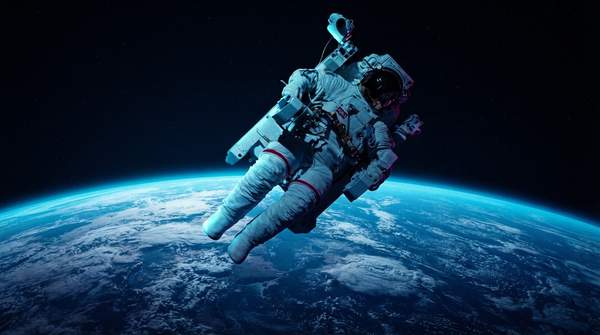
From 250 miles above Earth, NASA astronaut Jessica Meir captured a timelapse of the Southern Lights, revealing a vibrant, swirling spectacle caused by an M1.8-class solar flare. This stunning Southern Aurora footage, filmed from the SpaceX Dragon spacecraft, captivated audiences globally and underscored the sun's immense power.
The aurora offers a breathtaking display of natural beauty, but it is a direct consequence of powerful solar events that can threaten Earth's technology.
Therefore, these orbital views serve as both a reminder of cosmic beauty and a visual alert to the increasing frequency and intensity of space weather phenomena.
How Was the Southern Aurora Footage Captured?
The Southern Aurora footage originated from the SpaceX Dragon spacecraft, captured while docked with the International Space Station, according to Reuters Connect and NASA. Astronauts on both the Dragon capsule and the ISS have shared these new views, as reported by Orbital Today. This NASA-SpaceX collaboration provides unparalleled orbital perspectives, crucial for observing Earth's dynamic environment.
What Causes the Southern Aurora and Geomagnetic Storms?
The Southern Aurora's brilliance stems from powerful solar emissions. NOAA's Space Weather Prediction Center reported an M1.8-class solar flare from active region AR 4461 at 06/1401 UTC, as per CNBC TV18. This flare, coupled with a Coronal Mass Ejection (CME) on June 6th, triggered significant space weather events. An initial G2 (moderate) geomagnetic storm hit on June 5-6, followed by NOAA issuing G3 (strong) storm watches for June 8th and G2 for June 9th, according to Orbital Today. These escalating alerts confirm that the aurora's beauty is a direct indicator of potent, ongoing solar activity and potential geomagnetic disturbances.
Why Do Auroras Signal a Threat to Technology?
While breathtaking, the aurora's orbital spectacle directly manifests solar events powerful enough to trigger significant geomagnetic storm warnings. The M1.8 flare and subsequent CME generated G2 and G3 storm alerts, confirming a direct correlation between this observable beauty and potential technological disruption. The rapid succession of these events, from an initial G2 storm on June 5-6 to an M1.8 flare and CME on June 6th, signals a sustained period of heightened solar activity. This amplifies the cumulative risk to Earth's infrastructure. NOAA's G3 geomagnetic storm watch for June 8th underscores that the orbital aurora footage is a beautiful yet stark reminder: our interconnected world remains profoundly vulnerable to the sun's unseen, powerful forces.