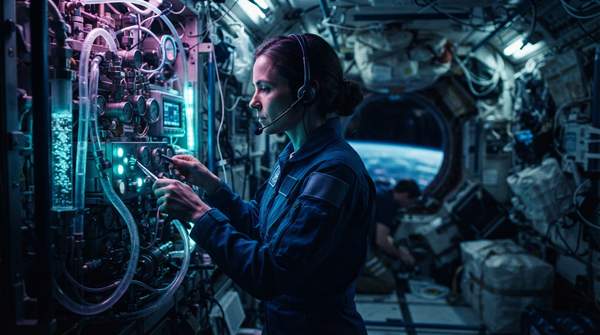
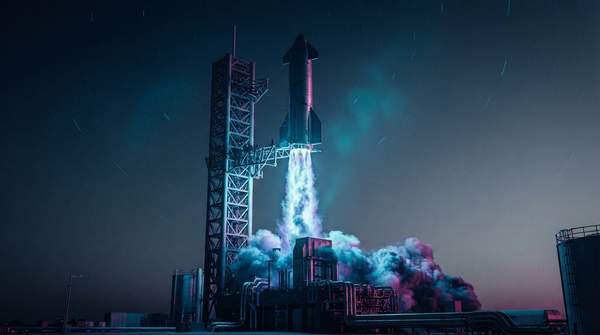
As of 2026, with thousands of active satellites and countless pieces of debris hurtling through space, the European Space Agency's Collision Risk Estimation and Automated Mitigation (CREAM) project, launched in 2020, is now in critical test phases. This initiative aims to automate collision avoidance, a vital step for the sustainability of space operations, and drastically cut the intense workload faced by human operators. Orbital traffic is rapidly increasing, with new mega-constellations adding thousands of spacecraft, but the capacity for human operators to manually manage collision risks is reaching its limits. The future of safe and sustainable space operations hinges on the successful development and widespread adoption of advanced automated space traffic management systems.
Automating the Orbital Lifeguard: The CREAM Project
The CREAM project, which began in 2020, has entered a critical phase involving ground systems test operations and in-orbit demonstrations. Its goal: reduce operator workload, decrease false alerts, and shorten response times for collision avoidance, all while improving mission safety, according to the European Space Agency. CREAM evaluates potential conjunctions, generates maneuver plans, and supports decision-making, coordination, and monitoring. CREAM's design tackles the inherent complexity of orbital probability calculations, a challenge highlighted by the NESC Academy, by automating the intricate assessment of close approaches. This automation is indispensable for establishing standardized, safe space traffic management, moving beyond human processing limits.
While CREAM significantly reduces human operator workload and improves response times, its explicit function to "support decision-making, coordination, and monitoring" means full, unsupervised autonomy for critical orbital maneuvers is not yet a reality. This design choice confirms the continued necessity of human oversight, even within advanced automated systems, ensuring immediate safety and accountability in space operations. Operators must interpret automated recommendations and make timely decisions, especially under pressure, introducing potential for human error at a different stage.
The process begins with constant monitoring of orbital paths. When two objects are predicted to come within a critical distance, CREAM initiates analysis. It rapidly processes trajectory data to calculate collision probability, factoring in uncertainties. Following assessment, CREAM generates various maneuver plans, optimized to minimize propellant usage while ensuring safe avoidance. This systematic approach allows rapid evaluation and proposal of solutions, a task that would overwhelm human operators given the sheer volume of daily conjunction warnings. By providing evaluated options, CREAM standardizes responses to collision threats, critical for consistent safety protocols across missions and operators.
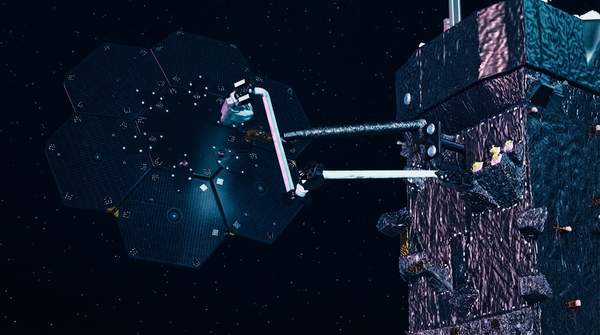
Accurate, up-to-date data, including precise orbital parameters and conjunction predictions, is paramount for collision avoidance. Inaccurate or incomplete data could lead to false alerts or, worse, missed collision warnings. Robust sensor networks and data sharing agreements across the space community are therefore critical.
For space operations to remain viable, companies and nations must recognize that standardized, automated collision avoidance tools like CREAM are becoming a non-negotiable requirement for compliance and safety. This is not merely an optional upgrade but a fundamental necessity, given the increasing complexity of orbital close approaches. Investing in these solutions directly addresses escalating orbital traffic and human operator limitations. Moreover, clear regulatory frameworks mandating automated collision avoidance and defining data sharing standards will be paramount, providing the structure for effective system operation and a safer orbital environment.
How do satellites navigate in orbit?
Satellites navigate in orbit primarily through precise tracking and the use of small engines or thrusters for trajectory corrections. While significant propellant is often reserved for initial orbit insertion, minor burns can adjust a spacecraft's path to maintain its intended orbit or avoid obstacles, according to NASA Science. Ground control stations continuously monitor their position and issue commands for these adjustments.
What are the basic principles of orbital mechanics?
The basic principles of orbital mechanics are rooted in Newton's laws of motion and universal gravitation, along with Kepler's laws of planetary motion. These principles describe how objects move under gravity, defining orbital parameters like period, velocity, and trajectory, as detailed by Robert Braeunig. Understanding these laws allows engineers to predict spacecraft paths and design maneuvers.
What are the challenges of spacecraft navigation?
Spacecraft navigation faces challenges including accurately predicting the effects of subtle gravitational perturbations, solar radiation pressure, and atmospheric drag on trajectories. The precision required for deep-space missions demands extremely accurate measurements and complex calculations to ensure a spacecraft reaches its distant target. Additionally, avoiding collisions in increasingly crowded orbits presents a growing challenge for all space operators.
The Intricate Dance: Principles, Pitfalls, and the Future of Space Traffic
The practical application of orbital mechanics principles faces real-world pitfalls, including the finite resources of spacecraft. Trajectory corrections consume propellant, a valuable resource often reserved for orbit insertion and primary mission objectives. Managing this balance between collision avoidance and mission longevity is a constant challenge for operators. CREAM's ability to optimize maneuver plans helps mitigate this, but the resource constraint remains a critical consideration.
The success of projects like CREAM is not just about operational efficiency; it is about the fundamental viability of future space operations. Without such automation, the sheer volume of orbital traffic will quickly render manual collision avoidance impossible. The industry, by designing systems like CREAM as human-in-the-loop, trades full autonomy for immediate safety and oversight in critical orbital maneuvers, a prudent approach for the near term.
As 2026 progresses, the continued testing and integration of CREAM by the European Space Agency promises to enhance orbital safety, though widespread adoption of similar automated systems will likely be crucial for any entity launching new constellations, ensuring compliance with emerging space traffic management standards.