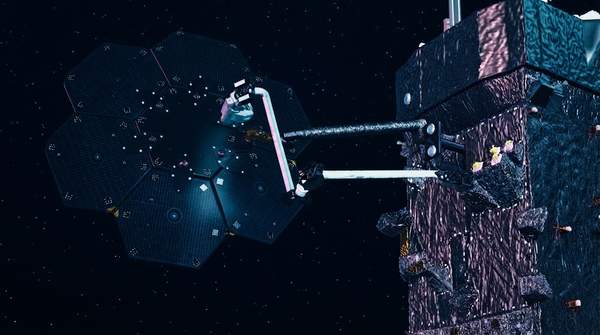
NASA's first crewed lunar landing of the Artemis era is now planned for Artemis IV in 2028, and it will ride on a commercial lander built by either SpaceX or Blue Origin. According to timelines NASA presented in October 2026, both companies must first prove their vehicles with uncrewed demonstrations: Blue Origin targets an uncrewed Blue Moon MK2 lunar landing in Q1 2028, while SpaceX's Starship program must show the same capability before NASA clears astronauts aboard. Which lander flies the historic mission remains an open decision.
Introduction to NASA's Artemis Program and Commercial Landers
Artemis is NASA's stepped program for returning astronauts to the Moon, and its architecture now leans on two commercial partners for the descent to the surface. SpaceX is developing Starship as a Human Landing System; Blue Origin is developing its Blue Moon lander, with a smaller uncrewed MK1 version preceding the crew-capable MK2. The Royal Museums Greenwich guide to the program notes that Artemis II already carried four astronauts around the Moon in April 2026, the farthest humans have traveled in space. The subsequent missions are in preparation, and their sequencing was reshaped in February 2026 to spread risk across more flights rather than attempting a landing on the third mission.
Revised Artemis Mission Roles: III, IV, and V
The February 2026 restructuring changed what each numbered mission is for. Artemis III, which previously carried the landing role, is now a crewed demonstration mission in low Earth orbit: Orion will dock with test versions of the commercial landers to prove rendezvous and docking operations before anyone trusts the vehicles with a landing. NASA's chart, as reported by Technology Org, places that flight in Q3 2027, while the agency's broader messaging still describes it as a mid-2027 launch. Artemis IV, planned as the program's first crewed lunar landing, follows in 2028. Artemis V, penciled in for late 2028, would land another two astronauts and begin building a Moon base, with NASA aiming for roughly annual missions thereafter.
SpaceX Starship HLS: Key Milestones to Lunar Landing
SpaceX's Starship reached orbit for the first time on its September 28 test flight, a milestone on the path toward the lunar variant. NASA's presentation, as reported by Space, places a key company milestone in Q4 2026, a timeline SpaceX has been vocal about maintaining, though a recent Reuters report suggests it may slip to early 2027. By early 2027, the company expects to complete the spacecraft's communications systems and finalize its flight software, with assembly, integration and testing continuing into Q2. Like its competitor, SpaceX will need to demonstrate that its lander can safely reach the Moon's surface, operate there, and return to lunar orbit before NASA clears it to carry astronauts.
Blue Origin Blue Moon: Path to Artemis IV
Blue Origin's near-term checklist is dense. NASA's timeline shows the company working through manufacturing and testing milestones in the last months of 2026, including continued BE-7 engine testing and qualification of Blue Moon's BT-7 maneuvering thrusters, alongside an Artemis III interim design review and a critical design review for the 2028 landing demonstration. The company is also restoring its pad at Cape Canaveral's Launch Complex-36 after a May explosion of its New Glenn rocket, and working to return that rocket to flight. In Q1 2027, the uncrewed Blue Moon MK1 is slated to launch to the lunar surface under NASA's robotic CLPS program. The crew-capable MK2 would then attempt its own uncrewed lunar landing in Q1 2028, around the same time as a third MK1 flight.
Comparative Timeline of Artemis Lander Milestones
The table below arranges the reported dates for NASA, SpaceX, and Blue Origin into a single chronological sequence, revealing how each company's demonstrations feed NASA's mission schedule and the decision on Artemis IV.
| Date | NASA Artemis Mission | SpaceX (Starship HLS) | Blue Origin (Blue Moon) |
|---|---|---|---|
| Late 2026 | — | Key milestone placed in Q4 2026 by NASA's chart; Reuters reports it may slip to early 2027 | BE-7 and BT-7 testing; Artemis III interim design review; critical design review for 2028 demo; LC-36 restoration and New Glenn return to flight |
| Q1 2027 | — | Communications systems and flight software completion; assembly and testing into Q2 | Blue Moon MK1 uncrewed CLPS lunar cargo flight |
| Mid-2027 / Q3 2027 | Artemis III: crewed low Earth orbit docking demonstration with commercial landers (not a landing) | Docking test participant | Docking test participant |
| Q1 2028 | — | Uncrewed lunar landing demonstration required before crewed flight | Uncrewed Blue Moon MK2 lunar landing demonstration; third MK1 flight |
| 2028 | Artemis IV: first crewed lunar landing of the program | Candidate lander; selection still open | Candidate lander; selection still open |
| Late 2028 | Artemis V: second crewed landing; Moon base construction begins | — | — |
Reading down the columns shows the dependency chain: engine and design work in late 2026 enables the 2027 test flights, which feed the Artemis III docking demonstration, which in turn informs NASA's still-open choice of lander for Artemis IV.
The Critical Path to Artemis IV: First Crewed Landing
The first crewed lunar landing since Apollo 17 in 1972 now hinges on two gates. First, Artemis III must confirm that Orion and the commercial landers can work together in orbit; NASA describes it as a risk-reduction mission intended to support Artemis IV. Second, each company must complete an uncrewed lunar landing demonstration proving its vehicle can reach the surface, operate, and return to lunar orbit. The Planetary Society's mission overview notes that Artemis IV, tentatively slated for 2028, would attempt to land SpaceX's Starship near the lunar south pole, though its date depends on several factors. Technology Org reports that the Artemis III results will feed NASA's lander choice, and that the presentation still lists that decision as open.
Outlook: Dynamic Timelines and Future Missions
These schedules are official targets as of October 2026, and they remain subject to change; Space's reporting notes there may be changes on the horizon. The Reuters-reported potential slip of SpaceX's Q4 2026 milestone to early 2027 illustrates how quickly the quarter-by-quarter plan can move. Beyond Artemis V, NASA aims to launch missions roughly once a year, with each successive landing contributing to a sustained lunar presence and, eventually, a Moon base.
Navigating the Path to Lunar Landings
Stakeholders can track the progress of commercial lunar lander development by monitoring key uncrewed test flights and NASA's Artemis mission readiness updates. The concrete markers to watch are the successful completion of uncrewed lunar landing demonstrations by SpaceX and Blue Origin, and NASA's formal selection for Artemis IV. Until those demonstrations fly and that selection is made, the 2028 crewed landing remains a target rather than a certainty.