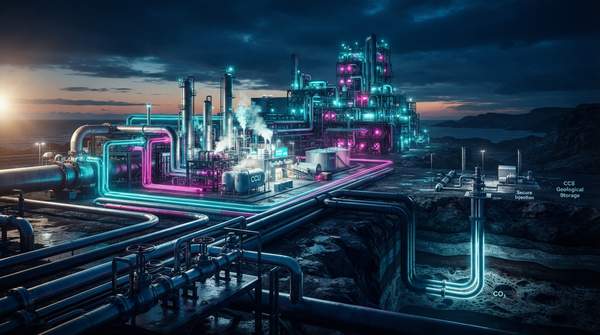
Once carbon dioxide has been captured at a power plant or industrial facility, it faces a fork in the road, and the path chosen determines whether the effort yields a climate benefit measured in decades or in millennia. The World Resources Institute, which explains the combined field of carbon capture, utilization and sequestration (CCUS), describes the choice plainly: captured CO2 is either permanently stored underground or incorporated into products such as concrete or chemicals. Understanding that split—utilization turns CO2 into a resource, storage treats it as waste to be disposed of—is the key to evaluating any carbon capture proposal. This article covers only what happens after capture; it does not assess capture technologies themselves, compare costs, or catalog global projects.
Carbon Capture Utilization (CCU): Transforming CO2 into Products
Utilization is, at its core, a manufacturing strategy. The captured CO2 becomes an industrial feedstock—a raw material that is chemically or physically transformed, or simply embedded, within a manufactured good. WRI notes that CO2 captured at emissions sources can be used in products ranging from concrete to chemicals to synthetic fuels, giving each molecule a second working life rather than treating it as pure waste.
The primary goal here is product creation, with any climate benefit arising as a secondary consequence of that product's lifecycle. A tonne of CO2 cured into concrete may stay locked in place for the life of a building; a tonne converted into synthetic fuel is, by design, re-released when that fuel is burned. Utilization therefore spans a wide spectrum of outcomes, and the CO2's ultimate destination is the product itself rather than any geological reservoir. Notably, some utilization pathways—such as enhanced oil recovery, in which CO2 is injected into oil fields, or certain construction materials—can also result in permanent storage, blurring the boundary between the two approaches rather than violating it.
Carbon Capture Storage (CCS): Permanent Geological Sequestration
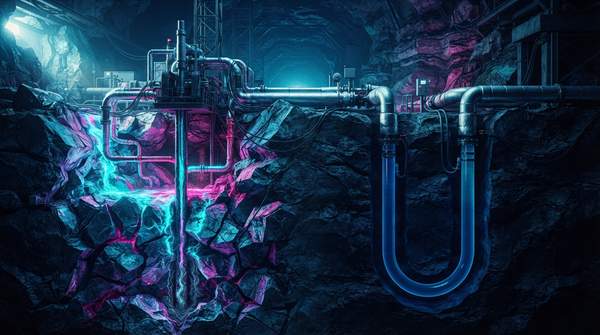
Storage takes the opposite view of captured CO2: its sole purpose is long-term carbon removal for climate mitigation. In this pathway, CO2 is pumped deep underground into geological formations selected for their capacity and integrity, where it is intended to remain isolated from the atmosphere. WRI describes this as permanent sequestration in certain geological formations, and the practical menu of sites includes deep saline aquifers and depleted oil and gas reservoirs.
The engineering logic rests on containment. Injected CO2 is held beneath impermeable caprock, and the industry's own account—nearly twenty years of observed projects, beginning with the Sleipner project in Norway, where operators closely monitor injected CO2—suggests the risk of leakage decreases significantly once injection stops, wells are sealed, and longer-term trapping mechanisms lock in a growing share of the gas. This is disposal by design: no product is made, no revenue-generating molecule changes hands, and success is measured by the CO2 staying put.