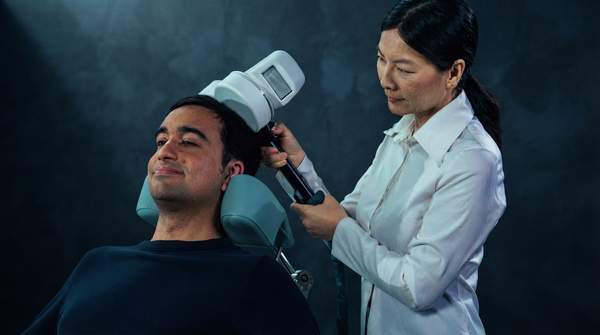
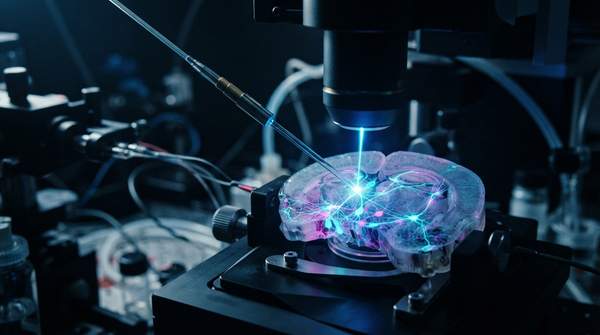
Non-invasive brain stimulation (NIBS) techniques differ in a fundamental way: some can directly make neurons fire, while others only nudge the likelihood that they will. That distinction is the clearest dividing line between transcranial magnetic stimulation (TMS), transcranial electrical stimulation (tES, most commonly in the form of transcranial direct current stimulation, or tDCS), and transcranial focused ultrasound (tFUS). Scientific descriptions of these methods show that TMS uses rapidly changing magnetic fields to induce electrical currents strong enough to trigger action potentials; tES applies weak, constant or alternating currents that shift neurons' resting membrane potentials below the firing threshold; and tFUS uses low-intensity ultrasound to modulate brain tissue through acoustomechanical effects. Below is a breakdown of each mechanism and how it shapes the resulting effects.
TMS, tES and Focused Ultrasound: Three Non-Invasive Brain Stimulation Techniques, Distinguished by Mechanism and Effect
Non-invasive brain stimulation techniques like TMS, tES, and FUS differ fundamentally in their mechanisms of action. TMS directly induces action potentials, tES modulates neuronal excitability, and FUS uses acoustomechanical effects, offering distinct approaches to brain modulation.
JC
Juliana Campos
November 20, 2026 · 5 min read