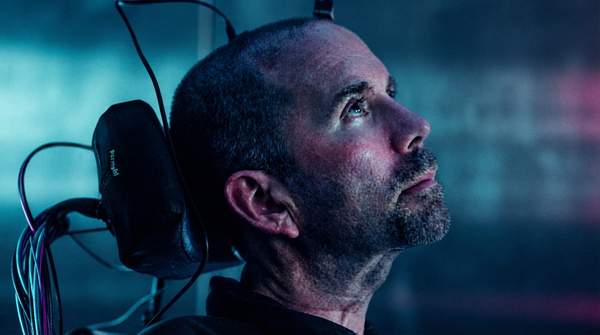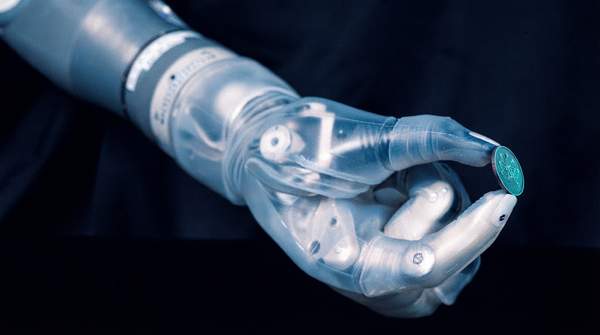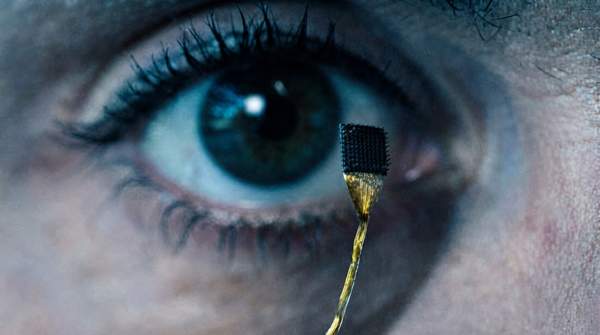
For a person paralyzed by cervical spinal cord injury or brainstem stroke, the signals that command movement still fire in the motor cortex — they are simply cut off from the muscles they once controlled. An invasive brain-computer interface (BCI) rebuilds that broken link by recording neural activity directly from the brain, decoding the intended movement, and converting it into commands for an external device such as a robotic limb or a muscle stimulator. The concept has been demonstrated in people with profound paralysis, but the technology remains experimental, limited by signal stability, decoding fidelity, surgical risk, and small, short clinical studies.
Understanding Brain-Computer Interfaces for Motor Restoration
A BCI is, at its core, a translation system. It reads the electrical language of the brain and rewrites it in a language a machine can act on. The BrainGate research consortium describes the clinical motivation plainly: in people with spinal cord injury or brainstem stroke, motor cortex signals have been "disconnected" from the limb, and the goal is to reunite them through BCI-driven muscle activation or device control.
Implantable BCIs occupy the invasive end of a spectrum that also includes scalp-recorded EEG and semi-invasive surface-of-the-brain electrodes. Invasive systems trade surgical risk for signal richness: electrodes placed inside the cortex pick up the fine-grained electrical activity of individual neurons and small populations, which carries far more detail about intended movement than signals filtered through the skull. A recent review of implantable BCIs for paralysis, published in the PMC library, frames these systems as a front-line application of neuroengineering, decoding cortical activity in real time and translating motor intent into commands for external effectors.
The Step-by-Step BCI Signal Pathway
Every motor BCI, regardless of laboratory or device, follows the same general pipeline. A review of BCI systems in neurological rehabilitation lays out the canonical stages: signal acquisition, signal processing, feature extraction, pattern recognition and classification, and finally device control — followed by a feedback pathway that returns information to the user, closing the loop. The stages are sequential, and each one depends on the quality of the one before it.
What follows is a stage-by-stage trace of that pathway, from the moment a user forms an intention to the moment a prosthetic limb moves.