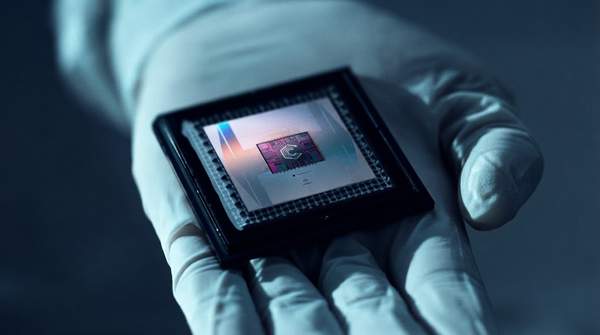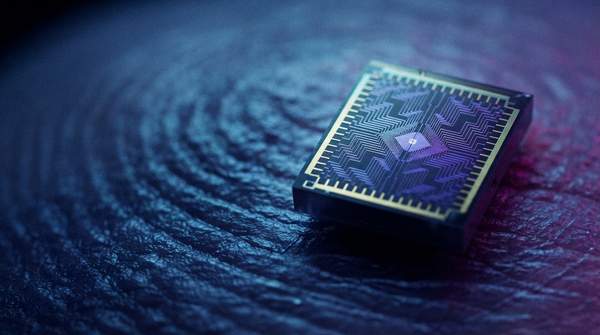
Quantum Motion has demonstrated a superconducting inductor built directly into a standard silicon chip, shrinking the footprint of qubit sensors by 10,000 times, the company says. The device replaces the bulky spiral inductor that today's silicon spin qubit readout normally depends on, and in doing so it removes one of the physical bottlenecks standing between today's small processors and the million-qubit machines required for fault-tolerant quantum computing. The superinductor also posts a minimum integration time of 1 ± 0.3 picoseconds, a sharp improvement over the previous 625-picosecond standard, according to the company.
The Quantum Scaling Challenge: Why Footprint Matters
Reading out silicon spin qubits requires a charge sensor, and the most widely used one is the radio-frequency single-electron transistor, or rfSET. To operate, that sensor needs a high inductance. On a CMOS chip, that inductance is normally supplied by a spiral inductor — a component so large that it can be seen by eye on a chip measuring just 3 by 3 millimeters. That single component is orders of magnitude larger than the nanometer-sized qubits it serves.
The mismatch matters because every qubit on a chip needs readout hardware, and the area consumed by each spiral inductor limits how many qubits can fit and operate on a single CMOS chip. Scaling up is not just a matter of adding qubits; the surrounding electronics have to shrink alongside them.
"In reality, we need to think about the scalability of the entire system and in particular how we might scale to a million-qubit system," Quantum Motion staff quantum engineer Tom Swift said, according to the company. "With that goal in mind, we need to consider how we can make all of the different aspects of a quantum computer, the readout, the control, smaller and if possible, as close in size to the qubits themselves."