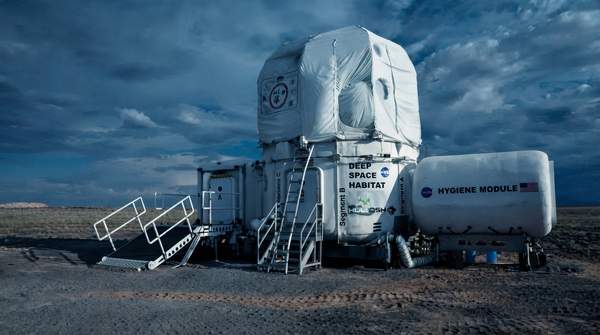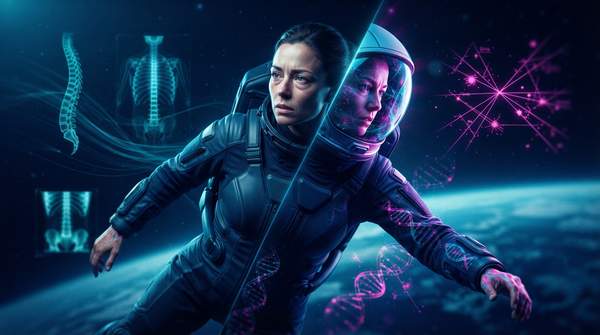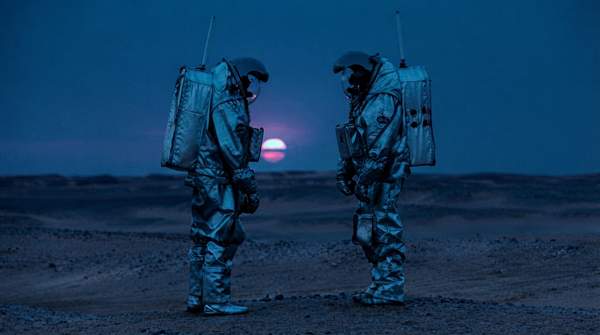
NASA organizes the health dangers of human spaceflight around five primary hazards: space radiation, isolation and confinement, distance from Earth, altered gravity fields, and hostile or closed environments. Each hazard produces its own constellation of physiological and psychological problems—cancer risk, bone and muscle loss, behavioral changes, altered immunity—and each is being met with a specific set of countermeasures, from exercise prescriptions and radiation shielding to autonomous medical capability and habitat design. NASA's own architecture work for Mars missions explicitly recognizes these five hazards and, as the agency's 2023 Moon to Mars architecture review put it, "balances risks with cost and design parameters."
This framework matters because a Mars mission compounds all five hazards at once, for longer than any human has ever been away from Earth. Understanding how each hazard maps to specific health risks—and what NASA is doing about each—offers the clearest picture of whether long-duration exploration is medically feasible today.
Space Radiation: Invisible Threat
Of the five hazards, radiation is the one scientists understand least. Beyond low-Earth orbit, crews are exposed to high-energy particles that can damage tissue, and the long-term consequences of that exposure remain largely unknown. Jeffrey Chancellor, who leads the aerospace medicine program at Texas A&M, has spent his career modeling these risks. Exposure to space radiation, he says, could significantly affect cardiovascular health, cause cognitive deficits, and even result in cancer—yet since the beginning of the spaceflight program, no documented health outcome in crew members has been attributed to space radiation.
That absence of documented harm is not the same as evidence of safety. Chancellor notes that current risk assumptions draw on terrestrial data, such as studies of atomic-bomb survivors, rather than on measured outcomes from deep-space crews. NASA is closing that gap with new radiation detectors to monitor and characterize the radiation environment, giving better estimates of the dose and type of radiation crews receive, and with ground-based research that analyzes the biological effects of simulated cosmic rays.
On the engineering side, NASA scientists and engineers are optimizing operational procedures that use available vehicle stowage and materials to reduce exposure. Shielding and pharmaceutical interventions are the leading countermeasures, but their effectiveness for missions lasting years rather than months is still under investigation.