
Signal Processing
2 articles
Neuroscience & Mind
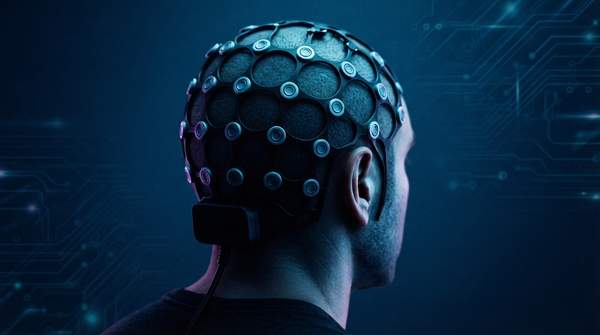
From Brainwave to Command: How a BCI Turns Neural Signals Into Action
A brain-computer interface (BCI) translates neural signals into device commands through a four-stage pipeline: signal acquisition, conditioning, feature extraction, and AI-driven decoding. Understanding this process, from capturing raw brain activity to providing feedback, is key to BCI functionality and its ongoing development.
Juliana Campos·November 1, 2026

Neuroscience & Mind
How Brain-Computer Interfaces Work: Four Steps From Brain Signal to Machine Action
Brain-computer interfaces (BCIs) create a direct communication channel between the brain and a machine, translating brain signals into commands for output devices. They operate through a four-step process: Measure, Interpret, Encode, and Deploy, with distinctions between invasive and non-invasive technologies.
Juliana Campos·July 1, 2026