A brain-computer interface does not read thoughts directly. It measures electrical activity from the brain, cleans and refines that noisy measurement, uses algorithms to infer what the user intends, and only then sends a command to a device. Understanding that four-stage journey—acquisition, feature extraction, translation, and output—is the key to seeing why BCIs work when they work, and why they stumble when they don't.
Understanding the BCI Signal Processing Pipeline
The clearest way to think about a BCI is as a relay race between hardware and software. A widely cited review of BCIs in medicine describes the system as four sequential components: signal acquisition, feature extraction, feature translation, and device output, all governed by an operating protocol that defines timing, processing details, and command structure. That protocol matters more than it sounds—it is what lets one system flexibly serve different users rather than being locked to a single behavior.
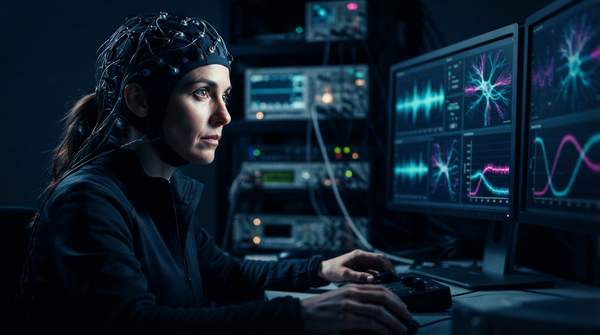
Other descriptions of the technology converge on the same loop. The University of Calgary's pediatric BCI program frames it simply: brain activity is recorded, processed to determine intent, a command signal is sent to the application, and feedback tells the user whether it worked. Arctop, a BCI developer, describes the same cycle as sense, process, and deliver feedback. The stages below unpack what actually happens inside each one.
Stage 1: Signal Acquisition – Capturing Brain Activity
Everything begins with neurons. Brain cells communicate through action potentials—electrical spikes across their membranes—and a BCI's first job is to capture that activity. As the implant developer Paradromics explains in its description of speech BCIs, some systems record single-neuron action potentials directly, while others can only measure the averaged activity of many neurons firing together. That difference in resolution shapes everything downstream.
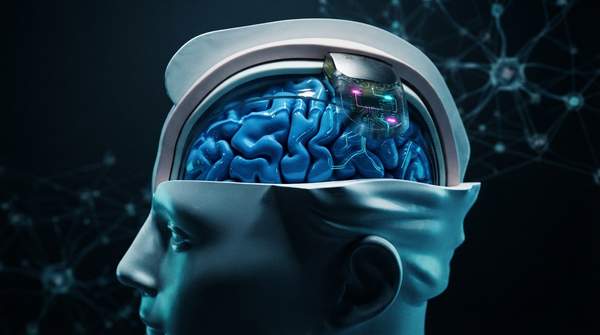
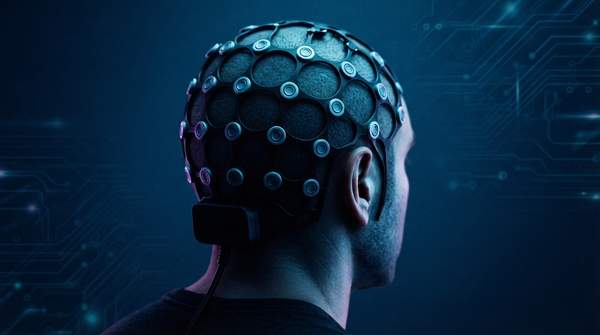
Signals can be captured through invasive, minimally invasive, or non-invasive interfaces, according to UnitedLex's analysis of the field. The U.S. Government Accountability Office adds that implanted BCIs, surgically attached directly to brain tissue, may be more appropriate for users with severe neuromuscular disorders or physical injuries—for instance, a person with paralysis using an implant attached to specific neurons to regain precise limb control. Wearable devices, such as EEG headsets, sit on the scalp instead. Whatever the interface, this stage produces the raw data input for the entire system.