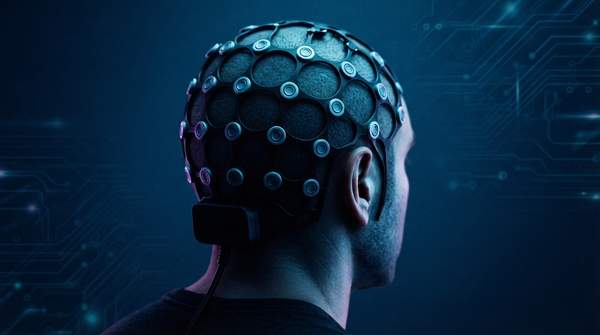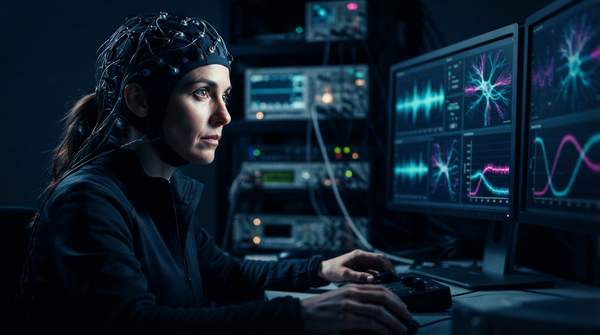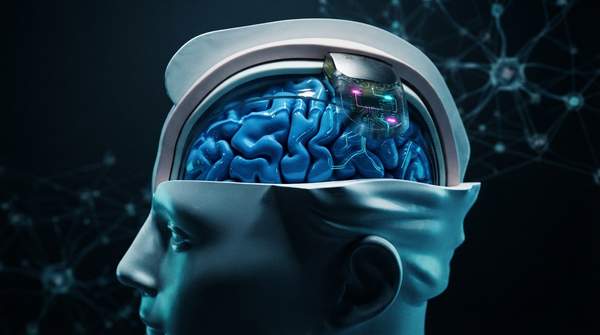
Every electrical brain-computer interface faces the same fundamental choice: how close to the brain do you place the electrodes? The three primary acquisition methods—scalp-based EEG, surface-of-the-brain ECoG, and penetrating intracortical arrays—sit on a single spectrum where invasiveness buys signal quality. Non-invasive EEG dominates consumer and research applications precisely because it requires no surgery; invasive methods, by contrast, are considered necessary for high-precision control such as multi-degree-of-freedom prostheses. Understanding this trade-off is the key to evaluating any BCI technology.
The Core Trade-off: Invasiveness vs. Signal Quality
The relationship is consistent across the literature: the closer an electrode sits to the neurons it records, the better the signal. EEG electrodes sit on the scalp, where the electrical activity they capture has already been attenuated and distorted by the skull and scalp tissue. The result is a lower signal-to-noise ratio and significant susceptibility to artifacts from muscle and eye movements, which means substantial signal processing is needed to extract usable control information.
Move the electrodes onto the exposed surface of the brain—as ECoG does—and the picture changes. A review of BCI technologies notes that ECoG offers higher spatial resolution, greater signal amplitude, and reduced susceptibility to muscle and eye-movement artifacts compared with EEG. ECoG captures synchronized postsynaptic potential activity from cortical pyramidal neurons directly from the cortex surface, though it requires a craniotomy without penetrating brain tissue itself.
Intracortical arrays go further still, recording from within the brain tissue itself. A BCI review published in PMC observes that motor recovery with non-invasive approaches has been limited by the need for higher-resolution brain signals, and that most researchers agree movement restoration through prostheses with multiple degrees of freedom can only be achieved through invasive approaches. The same review adds that it is unlikely the power of non-invasive modalities will be enhanced in the near future—meaning the trade-off, not a technical workaround, defines the field.