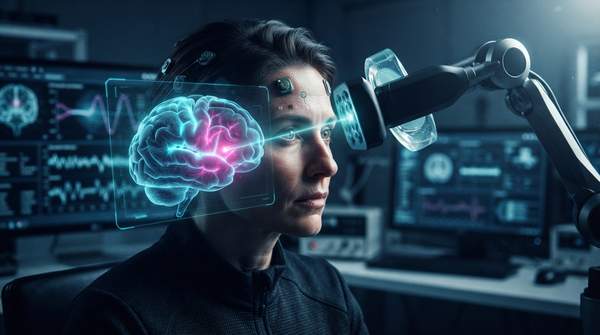
Brain-computer interfaces (BCIs) that enable users to control devices with their minds have long been a subject of intense research, but they face a fundamental trade-off between precision and safety. For decades, the most accurate methods required surgically implanting electrodes into the brain, a high-risk barrier for widespread use. Now, an emerging technology called transcranial focused ultrasound (tFUS) is showing potential to bridge this gap, offering a non-invasive way to interact with the brain at a much higher resolution than previously possible without surgery. By using sound waves to precisely target and modulate brain activity, tFUS addresses the key limitation of traditional non-invasive methods, which often struggle with spatial accuracy.
The Resolution-Invasiveness Dilemma in BCIs
The field of brain-computer interfaces is broadly split into two categories defined by a central compromise. On one side are invasive BCIs, which involve the surgical implantation of electrodes directly into brain tissue. Because these electrodes are in direct contact with neurons, they can record brain signals with exceptional precision and high signal resolution. This detailed neural activity allows for more accurate control of external devices, representing the gold standard in BCI performance. However, the necessity of surgery carries inherent risks and complications, limiting the application of these powerful tools.
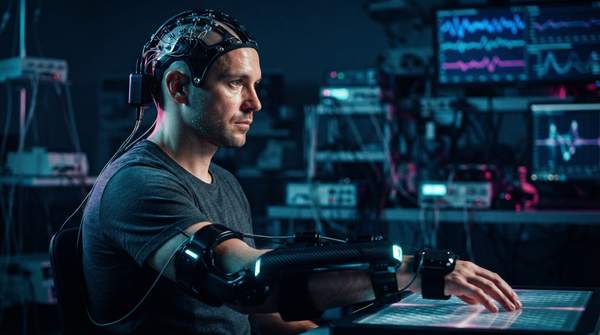
On the other side are non-invasive BCIs, which are prized for their safety and ease of use. Technologies like electroencephalography (EEG), which records electrical signals from the scalp, avoid surgery entirely. Despite these advantages, non-invasive methods have historically paid a steep price in performance. The signals they capture must pass through the skull, which weakens and scatters them, making them more susceptible to noise. This results in lower signal resolution and makes it difficult to pinpoint the source of brain activity, especially in deeper regions. According to Sumner Norman, a former researcher at Caltech, other non-invasive techniques like functional magnetic resonance imaging (fMRI) provide whole-brain access but are limited by sensitivity and resolution, not to mention being impractical for portable, real-time control.