Brain-computer interfaces, or BCIs, are helping to restore motor function for individuals with paralysis by creating a direct pathway between the brain and external devices. This technology works by measuring a person's brain activity, decoding their intention to move, and translating that intent into control signals for technologies like robotic limbs or exoskeletons. The development of BCIs offers a viable therapeutic option for people with severe motor impairment, with different approaches balancing the precision of surgically implanted devices against the safety of non-invasive systems.
The BCI Operational Workflow: From Thought to Action
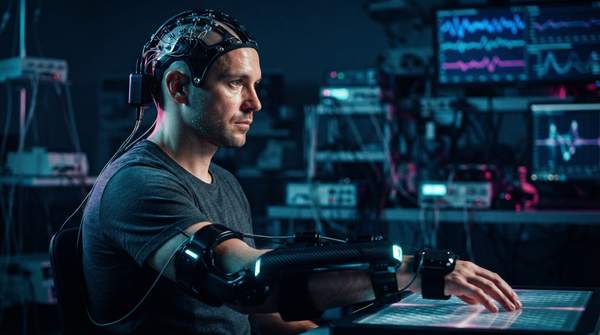
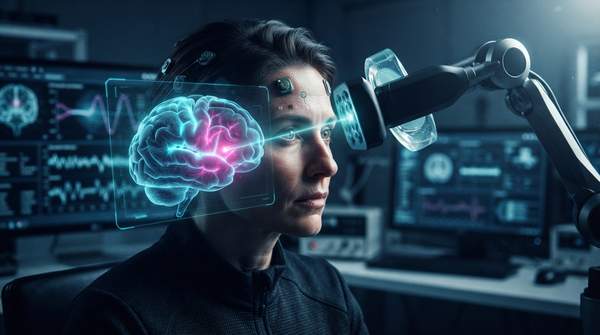
The fundamental process of a BCI system involves three key stages that transform neural signals into physical action. This operational flow allows a person to control an external device simply by thinking about the desired movement. First, the system must acquire the neural signal. This is done using electrodes that detect brain activity associated with motor intent. These sensors can be placed non-invasively on the scalp or surgically implanted directly on or within the brain's cortex. The goal is to capture the specific patterns of neuronal firing that occur when a person plans to move a limb. Next, the captured signals are sent to a computer for decoding.
This stage involves translating the complex, raw brain activity into a clear, actionable command. Through a process of signal processing, the system identifies the user's intended action, such as "move the arm up" or "close the hand." Steady improvements in this decoding process have enabled more precise and real-time control over external devices. Finally, the decoded command is sent to an external effector, which executes the movement. This effector could be a robotic manipulator, a prosthetic limb, a powered exoskeleton, or a functional electrical stimulation (FES) system that uses electrical currents to activate the user's own paralyzed muscles.
By completing this circuit from brain to device, BCIs can partially restore a user's ability to interact with their environment.
Invasive BCI Technologies: High Precision, Higher Risk
Invasive BCI systems require a surgical procedure to place electrodes in direct contact with the brain. This category includes technologies like microelectrode arrays (MEAs), which are implanted into the brain's cortical tissue, and electrocorticography (ECoG), where electrodes are placed on the surface of the brain. By directly sampling cortical neuronal activity, these devices capture high-quality signals with minimal interference. The primary advantage of this approach is precision. The high-fidelity signals allow for more sophisticated decoding of movement intent, which can translate into finer, more intuitive control over an external device.
This level of detail makes invasive BCIs a primary focus for clinical research aimed at restoring complex motor functions in patients with paralysis. However, the direct access to the brain comes with significant drawbacks. The surgical implantation carries inherent risks, and the long-term maintenance and potential removal of the devices present further challenges. Because of these factors, invasive BCIs are currently used mainly in clinical research settings for individuals with severe motor impairments where the potential benefits are considered to outweigh the risks.