Neuromorphic computing is an approach to computer engineering that mimics the brain's structure and function to build more efficient and powerful systems. By redesigning chips to operate more like biological neurons, this field directly confronts the fundamental energy and performance limitations of traditional computers, which are becoming increasingly strained by the demands of modern artificial intelligence. This brain-inspired architecture offers a path toward AI systems that can learn in real time while consuming a fraction of the power used by today's data centers, addressing a looming energy crisis in the tech industry.
The Von Neumann Bottleneck: Why Traditional Computing Falls Short for AI
For more than half a century, the dominant design for computers has been the von Neumann architecture, which physically separates the central processing unit (CPU) from memory storage. While this model has powered the digital revolution, it creates a significant and worsening problem for data-intensive applications like AI: a constant traffic jam known as the "von Neumann bottleneck." In this design, systems spend a vast amount of time and energy shuttling data back and forth between memory and processing units. This constant data movement is a primary source of the high power consumption and performance limitations that plague current AI hardware.
The inefficiency of this approach is staggering when compared to the biological computer inside our skulls. An overview of the field found that the world's most powerful supercomputers are eight orders of magnitude less computationally efficient than the human brain. While a top supercomputer can require 100 picojoules of energy for a single multiply-accumulate operation—a fundamental unit of computing—the human brain achieves the same for less than one attojoule, a unit thousands of times smaller. This incredible efficiency allows the brain to perform an estimated 1018 operations per second using just 20 watts of power, roughly the amount needed to illuminate a standard light bulb.
This enormous energy gap poses a critical challenge. According to a report in GEN - Genetic Engineering and Biotechnology News, the electricity consumption of AI is projected to double by 2026, creating an unsustainable demand on power grids and data center infrastructure. Neuromorphic computing emerges as a promising solution to this escalating crisis by fundamentally rethinking the relationship between memory and processing, aiming to close the efficiency gap and enable new forms of intelligent computation, particularly for real-time learning at the network's edge.
Neuromorphic Computing: Principles of Brain-Inspired Architecture
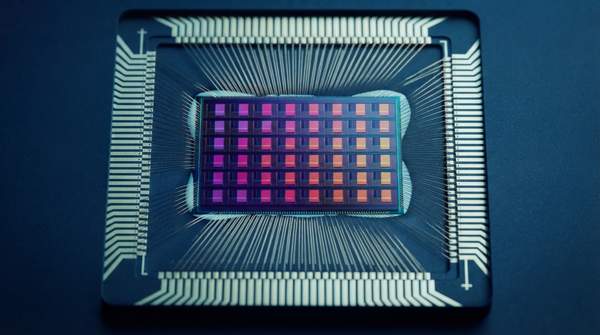
Neuromorphic computing tackles the von Neumann bottleneck by applying principles from neuroscience directly to the design of computer chips and systems. Instead of treating memory and processing as separate components, neuromorphic architectures seek to combine them, much like the brain's neurons and synapses process and store information in the same physical location. This approach, often called in-memory computing, dramatically reduces the need for constant data movement, which in turn saves both time and energy.
A defining feature of this architecture is its event-driven nature. Unlike traditional CPUs that are governed by a constant clock cycle, processing every tick whether there is new data or not, neuromorphic systems often operate asynchronously. They process information using "spikes," which are discrete electrical impulses analogous to those fired by biological neurons. In this model, computation and power are only consumed when a spike, or event, occurs. This makes the system inherently more efficient for tasks involving sparse or intermittent data, such as processing input from a sensor that only reports changes in its environment.
This design also enables massive parallelism, where a large number of simple processing units work simultaneously, mirroring the brain's vast network of interconnected neurons. A research collection published by Frontiers notes that the goal is to implement these brain-inspired learning mechanisms directly in hardware. By doing so, neuromorphic systems can overcome the limitations of traditional AI hardware and support real-time, continuous learning in devices like robots and sensors, far from the reach of centralized data centers.