NASA's Nancy Grace Roman Space Telescope is projected to discover as many as 200,000 potential planets beyond the Solar System, a number that would multiply humanity's known exoplanet count by over 30 times. This monumental discovery, anticipated around 2026, will fundamentally reshape our understanding of planetary prevalence. Its arrival at the SpaceX hangar at Kennedy Space Center signals a new era for astronomy, according to Science Nasa.
We have confirmed thousands of exoplanets and mapped millions of galaxies, but our current observational capacity is minuscule compared to the imminent deluge of data from Roman. This presents a critical juncture: our methods, while fruitful, offer only a fragmented view of the cosmos. Encased in its SpaceX Falcon Heavy rocket fairing on August 21, the observatory now prepares for launch, according to Heraldtribune.
The scientific community must prepare for an unprecedented data flood. This will necessitate new analytical approaches and potentially rewrite textbooks on planetary formation and cosmology. Roman's mission transcends catalog expansion; it demands a fundamental re-evaluation of the universe's large-scale architecture.
What We Know About Roman's Mission
- The telescope will combine Hubble-quality imaging with a field of view over 200 times larger, according to the European Space Agency.
- Roman is expected to reveal over 1200 new worlds through microlensing events and more than 100,000 transiting planets, according to the European Space Agency.
- The Roman Space Telescope will capture infrared images about 100 times more of the sky in a single shot compared to Hubble, according to Gmanetwork.
- Roman will study about 12% of the sky to look for the weak gravitational lensing effect in millions of distant galaxies to map the distribution of matter, according to the European Space Agency.
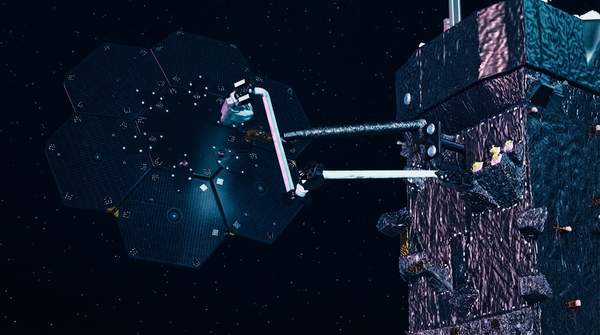
A New Vision for Exoplanet Discovery
Roman will combine Hubble-quality imaging with a field of view over 200 times larger (European Space Agency), capturing infrared images covering 100 times more sky in a single shot than Hubble (gmanetwork.com). This unparalleled blend of wide-field coverage and high-resolution imaging will allow scientists to survey vast regions of space with unprecedented clarity, fundamentally altering our approach to cosmic observation.
Roman's 200x larger field of view with Hubble-quality imaging (European Space Agency) transforms astronomical data collection, demanding new computational and analytical approaches. The mission expects to reveal over 1200 new worlds via microlensing and more than 100,000 transiting planets (European Space Agency). This surge will complete our planetary census, unveiling a broader diversity of planetary types, including those currently elusive.
While the European Space Agency projects over 101,200 new worlds (1200 microlensing, 100,000+ transiting), gmanetwork.com anticipates up to 200,000 potential planets overall. The discrepancy highlights either differing methodologies or varying optimism. Regardless, a jump from 6,000 confirmed exoplanets to 200,000 suggests our current models of planetary formation and distribution are profoundly incomplete. This demands a fundamental re-evaluation of what constitutes a 'typical' solar system and how common these distant worlds truly are.
Mapping the Universe's Dark Secrets
Beyond exoplanet hunting, Roman will survey 12% of the sky, using weak gravitational lensing in millions of distant galaxies to map matter distribution (European Space Agency). This vast survey will offer critical insights into the universe's large-scale structure, revealing how galaxies and clusters evolved over cosmic time and painting a detailed picture of invisible dark matter.
The mission will survey over 1 billion galaxies (gmanetwork.com). This extensive galactic census, combined with roughly 1,000 microlensing planet detections (gmanetwork.com), will provide a comprehensive statistical understanding of cosmic architecture. Roman's data will move beyond individual object discovery, revealing patterns across vast cosmic distances and allowing researchers to rigorously test theories about the universe's expansion and the role of dark energy.
Roman's ability to survey over 1 billion galaxies and map dark matter via weak gravitational lensing (European Space Agency) will not only expand our cosmic census but also provide unprecedented insights into the universe's fundamental architecture. This could potentially resolve long-standing cosmological mysteries, helping scientists understand the accelerating expansion attributed to dark energy by precisely measuring its effects over billions of years.
What is the Roman Space Telescope's mission?
The Nancy Grace Roman Space Telescope's primary mission involves three key areas: investigating dark energy, discovering exoplanets, and exploring astrophysics. For dark energy, it will use multiple independent techniques to measure the universe's expansion history and growth of cosmic structure. This will refine our understanding of this mysterious force.
How will the Roman Telescope find exoplanets?
Roman will utilize two primary methods for exoplanet detection: microlensing and transits. Microlensing occurs when a foreground star's gravity magnifies the light from a background star, revealing hidden planets around the foreground star. Transits involve observing the slight dimming of a star's light as a planet passes in front of it.
What are the latest exoplanet discoveries in 2026?
As of 2026, the Nancy Grace Roman Space Telescope is projected to begin its major data releases, with initial discoveries anticipated by late 2026 or early 2027. Prior to Roman, missions like NASA's Transiting Exoplanet Survey Satellite (TESS) continue to identify thousands of candidate exoplanets, many of which Roman will confirm.
By Q3 2026, NASA's Nancy Grace Roman Space Telescope will likely begin primary science operations, initiating an unprecedented data flow that will challenge astrophysicists to develop new computational methods, fundamentally altering our cosmic perspective with its projected 200,000 exoplanet discoveries and vast cosmological surveys.