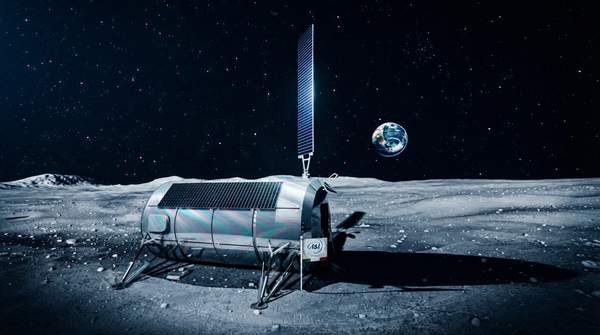
NASA is not building its Moon Base alone. On November 7, 2026, the agency announced a suite of awards and mission updates spanning commercial robotic deliveries, a nuclear-powered rover named PROMISE, launch and orbital transfer services, and surface infrastructure—all aimed at establishing a sustained presence at the Moon's South Pole. The announcement is less a single project than a portfolio: NASA is contracting with American companies for distinct capabilities, from moving cargo through deep space to delivering payloads onto the lunar surface and erecting power and communications towers before astronauts arrive.
NASA's Commercial Vision for a Sustainable Moon Base
The through-line in the new awards is a strategic one. NASA describes the investments as advancing "commercial robotic deliveries, a nuclear-powered rover named PROMISE, launch and orbital transfer services, and surface infrastructure as the agency works with American industry to establish a sustained presence on the Moon's South Pole." The operative word is sustained—this is architecture for staying, not visiting.
That framing echoes a longer-standing policy document. A 2020 National Space Council report hosted by NASA states that "a core focus of Artemis is to extend the nation's geo-strategic and economic sphere to encompass the Moon with international partners and private industry." In other words, the commercial partnerships are not a procurement convenience; they are the strategy itself. The Moon Base is being assembled as a marketplace of services NASA buys, rather than a set of government-built assets it owns end to end.
The recent awards make that marketplace concrete. Reporting by Fox Business on the announcement notes that SpaceX and Blue Origin are among companies eligible for up to $10 billion in lunar development contracts, part of a broader framework for lunar development. The same report identifies awards to Honeybee Robotics, a Blue Origin company, Redwire, and Yank Technologies for components of a planned lunar power and communications tower combining solar power and wireless power transfer to support surface operations.