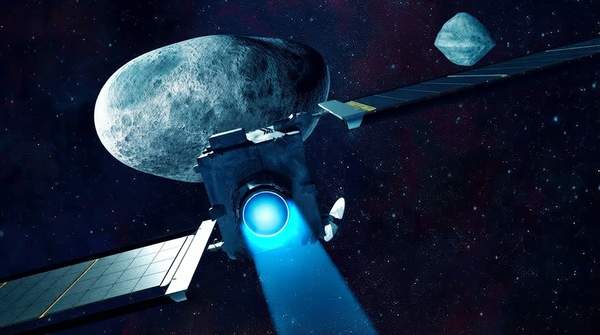
Planetary defense comes down to a single uncomfortable trade-off. The kinetic impactor — the only deflection method humanity has actually flown, demonstrated by NASA's DART mission — delivers its punch in an instant, but that same impulsive violence risks shattering the target into multiple harder-to-track fragments. Ion Beam Deflection (IBD), a slower, gentler concept, avoids that risk almost entirely, while the nuclear explosive device remains the last resort when warning time collapses. The right choice depends on how much time we have and what the asteroid is made of.
The Imperative of Planetary Defense: Why Deflection Matters
As asteroid missions multiply and impact risk becomes better understood — a point underscored by the Chelyabinsk meteor — planetary defense has grown from a fringe concern into a serious engineering discipline. A deflection mission has one clear objective, as a NASA technical analysis puts it: safely driving a threatening body as far as possible from a trajectory that intersects Earth.
Among the many proposed mechanisms, two of the most studied for short warning times are the kinetic impactor and the nuclear explosion device, according to that NASA analysis. A separate engineering review of a full planetary defense "system-of-systems" argues that with relatively modest investment over the coming decade in technology maturation and risk reduction demonstrations, humanity could have an effective defense capability starting as soon as the 2030s. The question is not whether we can move an asteroid — DART proved we can — but which tool to reach for, and when.