A speech brain-computer interface restores communication by reading electrical activity from the brain, decoding it into linguistic units, and converting those units into synthesized speech. For people with paralysis who cannot speak, the pipeline works in three stages: implanted electrodes record neural signals, machine learning algorithms translate those signals into phonemes and words, and a synthesizer voices the result. Recent research systems have reached decoding speeds approaching normal conversation.
Introduction: Restoring the Power of Speech
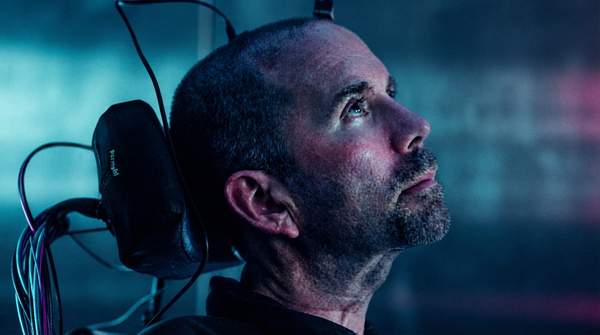
The technology exists for a specific population: people who have lost the ability to speak because of severe paralysis from conditions such as amyotrophic lateral sclerosis (ALS), brainstem stroke, or locked-in syndrome. A speech BCI is designed to detect neural signals from brain regions involved in speech planning and articulation, decode the intended linguistic content, and convert it into intelligible outputs like synthesized speech or text in real time. The goal is to bypass the damaged neuromuscular pathways that normally control the vocal tract, allowing communication directly through neural activity. UC Davis researchers describe the technology as interpreting brain signals when a user tries to speak and turning them into text that is spoken aloud by a computer.
Stage 1: Neural Signal Acquisition
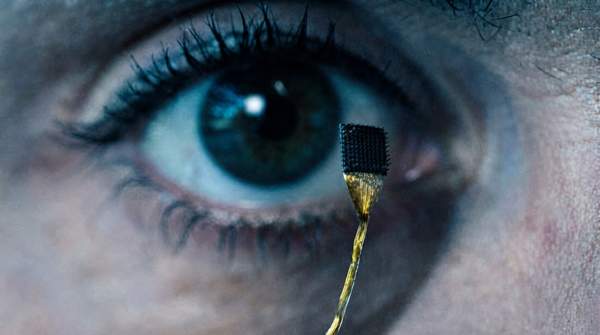
Recording begins with tiny arrays of microelectrodes, each array smaller than a baby aspirin, surgically implanted in the brain's surface layer to capture neural activity patterns directly. Stanford's researchers describe feeding these signals via a cable hookup to a computer. In the UC Davis system, four 64-electrode arrays measured electrical activity that was then processed to extract usable neural signals. The placement matters: the UC Davis team recorded from the part of the brain that sends commands to the speech muscles. As the neuroprosthetics researcher Sergey Stavisky explains, "We are recording from the part of the brain that's trying to send these commands to the muscles. And we are basically listening into that."
Stage 2: Decoding Neural Signals into Linguistic Units
The decoder's job is to translate raw neural patterns into language. The key unit is the phoneme—the smallest unit of speech. Machine learning trains the computer to recognize repeatable patterns of neural activity associated with each phoneme, then stitches the phonemes into sentences. In the UC Davis study, machine-learning techniques incorporating an artificial neural network decoded the extracted neural activity into an English phoneme every 80 milliseconds. Small-vocabulary systems map neural activity onto a fixed set of words, phonemes, or commands, and because the output space is restricted, their classification boundaries are well-defined, yielding low error rates under controlled conditions. Reviews of the field note that convolutional and recurrent neural networks refine the precision and reliability of these systems.
Stage 3: Synthesizing Audible Speech
Decoded linguistic units then become audible output. In a brain-to-text-to-speech architecture, signals are translated to text and then converted to speech. The UC Davis system turns interpreted brain signals into text that the computer speaks aloud. A UC San Francisco team took a streaming approach: researcher Gopala Anumanchipalli described it as bringing "the same rapid speech decoding capacity of devices like Alexa and Siri to neuroprostheses," enabling near-synchronous voice streaming and more naturalistic, fluent synthesis. Their system decoded and synthesized speech in less than 80 milliseconds—under a quarter of a second from brain activity to audible speech—and could produce novel words and new sentences, not just trained ones.
The Three Stages of Speech BCI: From Thought to Voice
| Stage | Technology / Method | Function | Key Finding |
|---|---|---|---|
| 1. Signal Acquisition | Implanted microelectrode arrays (e.g., four 64-electrode arrays in the UC Davis system) | Record neural activity from speech-related brain regions and transmit it to a computer | Arrays smaller than a baby aspirin record directly from the brain's surface layer |
| 2. Neural Decoding | Machine learning, including artificial neural networks, CNNs and RNNs | Translate neural patterns into phonemes, words, and sentences | One system decoded an English phoneme every 80 milliseconds |
| 3. Speech Synthesis | Text-to-speech and voice streaming algorithms | Convert decoded units into audible speech in real time | Speech synthesized in under 80 milliseconds, enabling fluent, novel sentences |
Tracing a single word through the table shows the full path: a phoneme-level neural pattern is captured by the array, classified by the decoder, and voiced by the synthesizer, bypassing the damaged neuromuscular pathway entirely.
Performance and Impact of Speech BCIs
The performance numbers come from specific research studies with participants who have paralysis. The UC Davis system translated brain signals into speech with up to 97% accuracy, and its participant, a man with ALS, communicated his intended speech within minutes of activating the system. The UC San Francisco team's device decoded a 125,000-word vocabulary at up to 78 words per minute with 99.1% accuracy, and a simpler 50-word set at 90.9 words per minute with a success rate above 99%—a dramatic advance over an earlier device that managed about 15 words per minute. A study published in Nature, cited in a review of the field, confirmed a system that decoded speech commands stably over three months without recalibration. Neurologist Eddie Chang noted the technology has "tremendous potential for improving quality of life for people living with severe paralysis affecting speech."
Future Outlook: The Promise of Restored Communication
Speech BCIs are rapidly advancing toward providing effective, natural communication for individuals with severe speech impairments. The measurable indicator of progress is continued improvements in decoding accuracy, words-per-minute rates, and vocabulary size in published research studies. Researchers also want to allow changes in tone, pitch, and volume so synthesized speech reflects a person's emotional state, and more study is needed to test these devices in more people. For now, the three-stage pipeline—record, decode, synthesize—remains the mechanism to watch as each stage improves.
Sources
- Give ‘Em Something to Talk About — Paradromics
- Brain–Computer Interfaces Restoring Speech in Paralysis: Are We Near Clinical Reality? - NHSJS
- New brain-computer interface allows man with ALS to ‘speak’ again — news
- NEWS
- Brain–computer interfaces: the innovative key to unlocking neurological conditions - PMC
- Brain-computer interface restores natural speech after paralysis — National Institutes of Health (NIH)