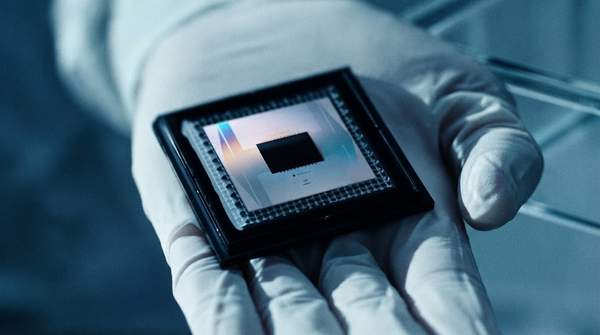
In a groundbreaking experiment, clusters containing over 7,000 atoms were observed to exist in multiple locations at once, their center-of-mass position delocalized by more than ten times their own diameter, according to Nature. The astonishing observation of clusters containing over 7,000 atoms existing in multiple locations at once, with their center-of-mass position delocalized by more than ten times their own diameter, shatters our classical understanding of reality, proving that even objects composed of thousands of particles can defy everyday expectations. It forces humanity to confront a universe where even "solid" objects are not what they seem, fundamentally challenging the bedrock of classical physics and common sense.
Our classical intuition demands that objects occupy a single state and interact locally. Yet, quantum particles can exist in multiple states simultaneously and influence each other instantaneously across vast distances. The profound tension between classical intuition and quantum particle behavior reveals a fundamental incompatibility between our everyday perception and the universe's true, awe-inspiring nature.
The harnessing of these counter-intuitive quantum phenomena, such as superposition and entanglement, is poised to unlock computational power far beyond classical limits. This will fundamentally reshape technology and scientific discovery.
What is Quantum Superposition?
Quantum superposition describes a particle's ability to exist in multiple states or positions simultaneously until an observation or measurement occurs. Imagine a coin spinning in the air; it is neither heads nor tails until it lands. A quantum particle exists in all possible states at once, not just one.
Quantum superposition underpins the very foundation of quantum computing. In a quantum computer, a quantum bit, or qubit, can represent both a 0 and a 1 at the same time. This differs from classical bits, which can only be a 0 or a 1. The simultaneous existence of qubits representing both a 0 and a 1 allows quantum systems to process vast amounts of information in parallel.
The ability of quantum particles to occupy a spectrum of possibilities until observed reveals a reality far more fluid than our daily experience. It implies that the very act of measurement actively collapses these multiple states into a single, definite outcome, a profound shift from classical determinism.