
All Stories

Choosing the Right Explainable AI Technique: A Decision Framework for Transparent Models
This article presents a decision framework for selecting Explainable AI (XAI) techniques, guiding users to match methods to their AI model's transparency and desired explanation scope. It covers inherently interpretable models versus black boxes and local versus global interpretability to foster trust and compliance.

Building Materials Hold the Biggest CO2 Market, Fuels Dominate the Pipeline: A Three-Pathway Guide to Carbon Utilization
Carbon capture and utilization (CCU) pathways offer distinct trade-offs, with building materials providing the largest CO2 volume opportunity but low product value, fuels dominating the near-term pipeline despite high costs, and biochemicals offering higher value with smaller volumes. This guide compares their feasibility, barriers, and investment considerations to inform strategic CCU decisions.

ML-KEM, ML-DSA, and SLH-DSA: How NIST's Three Post-Quantum Standards Differ and What Each Means for Your Migration
NIST has finalized three post-quantum cryptography standards: ML-KEM for key establishment, and ML-DSA and SLH-DSA for digital signatures, each based on different mathematical foundations. Understanding their distinctions is crucial for enterprises planning their quantum-resistant migration strategies.

How CRISPR Gene Drives Break the Rules of Inheritance — and Where They Break Down
CRISPR-Cas9 gene drives can rapidly spread genetic traits by overriding Mendelian inheritance, but their effectiveness is severely limited by the frequent evolution of resistance alleles that prevent the drive from copying itself. Overcoming this molecular failure mode is crucial for gene drives to move from laboratory research to real-world applications.

AI-Powered Software Testing: How ThinkSys Approaches Automation in Modern QA
In today's fast-paced development landscape, the pressure to ship software faster has never been higher. Yet, speed cannot come at the cost of quality. This is the central challenge that modern Quality Assurance (QA) tea…

Superconducting, Trapped Ion, or Neutral Atom: The Three-Way Trade-Off Shaping Quantum Computing
The race for quantum computing hardware is a three-way trade-off between superconducting circuits, trapped ions, and neutral atoms, with no single platform holding a decisive lead. Understanding the distinct advantages and disadvantages of each—speed versus coherence, fidelity versus scale—is key to critically evaluating progress in the field.

Four Ways Cobots Work Safely Beside Humans: The Standards and Modes Explained
Collaborative robots (cobots) can safely share workspaces with humans thanks to international standards like ISO/TS 15066, which defines four operational modes: safety-rated monitored stop, hand guiding, speed and separation monitoring, and power and force limiting. Each mode employs distinct safety mechanisms and requires specific system configurations and risk assessments, with ongoing human and organizational responsibilities crucial for safe integration.
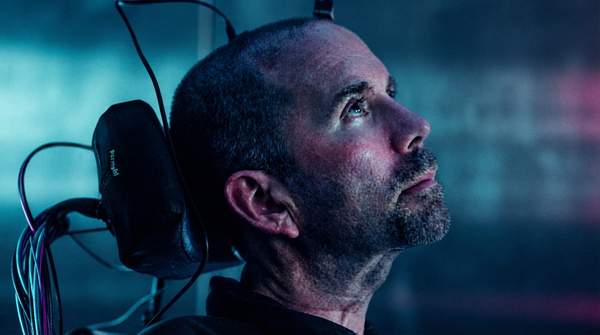
Brain-Computer Interfaces Raise Three Core Ethical Risks—And a Proposed "Neurorights" Framework Built to Answer Them
Brain-computer interfaces (BCIs) present significant ethical challenges related to mental privacy, autonomy, and equitable access. A proposed framework of five "neurorights" aims to safeguard individuals by establishing protections for mental privacy, personal identity, free will, cognitive enhancement equity, and against algorithmic bias.

CRISPR vs. TALENs vs. ZFNs: How to Choose the Right Gene-Editing Tool for Your Synthetic Biology Project
Choosing the right gene-editing tool for synthetic biology involves a trade-off between speed and scalability (CRISPR) versus engineered specificity (TALENs and ZFNs). The optimal choice depends on project needs like multiplexing, off-target tolerance, and protein engineering capacity.

How LifeWave Enhances Cellular Performance: 4 Ways That Matter for Natural Vitality
In the pursuit of peak performance and natural vitality, many people are exploring innovative technologies to support their body's inherent potential. Athletes have long used wearable healthcare technology to monitor phy…
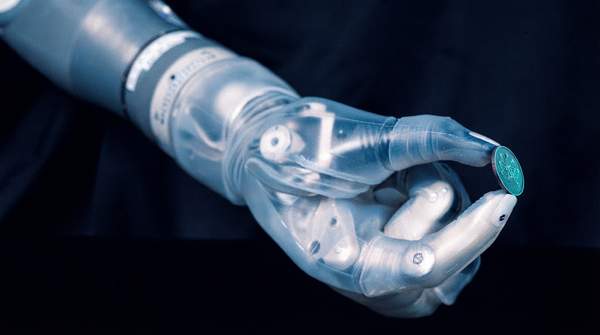
Why Thought-Controlled Prosthetics Still Aren't Everyday Medicine: The Three Barriers Holding Brain–Computer Interfaces Back
Thought-controlled prosthetics, or brain-computer interfaces (BCIs), show great promise but remain largely experimental due to complex signal processing, difficult usability, and a lack of standardization. Overcoming these three key barriers is crucial for BCIs to become everyday medical tools.

Fast Gates or Full Connectivity? The Trade-offs Splitting Quantum Computing's Three Leading Architectures
Quantum computing's leading architectures—superconducting circuits, trapped ions, and neutral atoms—each present distinct trade-offs between gate speed, qubit quality, connectivity, and operational requirements. The optimal choice for an algorithm depends on balancing these factors against specific computational demands and available resources.

U.S. Tells World Fusion Energy Group It Is Moving With Urgency to Put Fusion on the Grid
The United States has declared its urgent commitment to bringing commercially viable fusion energy to the grid, framing international cooperation as a central component of this effort. This policy, outlined at the IAEA World Fusion Energy Group meeting, emphasizes shared progress, regulatory clarity, and strategic partnerships to accelerate fusion development.

Two Different Assaults on the Body: How Microgravity and Space Radiation Each Shape Astronaut Health
Long-duration spaceflight exposes astronauts to two distinct stressors: microgravity, which impacts load-bearing systems like bones and the cardiovascular system, and space radiation, which damages DNA and poses cancer risks. Understanding their individual effects and potential synergistic interactions is crucial for monitoring astronaut health.

Looking for Coolsculpting in Warwick, NY? See Avidan Med Spa's Process
Avidan Med Spa in Warwick, NY, offers Coolsculpting as a medically guided, non-surgical solution for stubborn fat pockets, emphasizing personalized treatment and safety. They provide a structured process from initial assessment to natural fat elimination, helping to refine and contour the body.

Three Strategies for Keeping Orbit Safe: Surveillance, Rules, and Coordination Compared
Effective space traffic management requires integrating three core strategies: technological surveillance (SSA) for tracking, international regulatory frameworks for rules, and coordinated operational systems for live deconfliction. No single strategy is sufficient; they must complement each other to navigate orbital congestion safely.
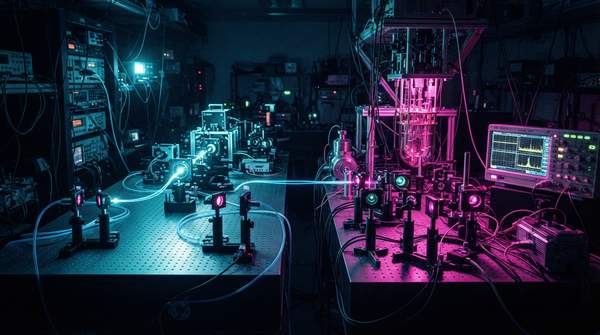
Bell Tests vs. Entanglement Witnesses: Two Ways of Proving Quantum Entanglement, and Why the Difference Matters
Quantum entanglement can be verified through foundational Bell tests, which disprove local realism, or practical entanglement witnesses, which efficiently certify entanglement in quantum devices. Understanding this distinction is crucial for interpreting claims about quantum entanglement and its role in advancing quantum technologies.

Full Fine-Tuning, LoRA, or QLoRA? Choosing the Right Way to Specialize an Enterprise LLM
Choosing the right LLM fine-tuning method for enterprises—Full Fine-Tuning, LoRA, or QLoRA—is primarily dictated by GPU memory constraints. This guide details their architectural differences, costs, and trade-offs to help teams select the optimal strategy for their specific use cases.
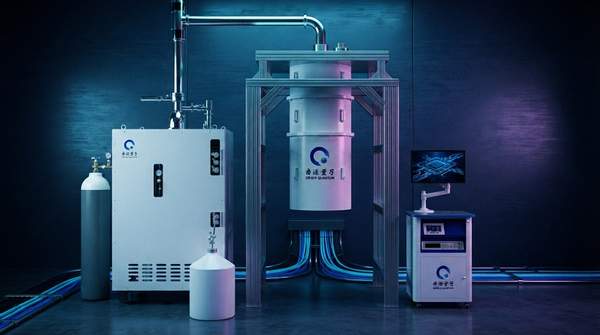
Scaling Quantum Computers to 100+ Qubits: How Photonic, Trapped-Ion, and Superconducting Architectures Trade Connectivity Against Error Correction
Scaling quantum computers to hundreds of qubits is an architectural challenge, not a manufacturing race. Leading platforms like photonic, trapped-ion, and superconducting qubits each address distinct scaling problems related to connectivity, error correction, and classical control.

5 Marine Power Blunders That Hurt Off-Grid Boaters—And EcoVantage Marine's Fix
For the growing number of off-grid boaters, energy independence is the ultimate freedom. Yet, achieving a reliable power system is fraught with potential pitfalls. Many of the mistakes to avoid in marine power stem from …

Three Ways to Drug Aging: Senolytics, mTOR Inhibitors, and NAD+ Precursors Compared
This article compares three prominent pharmacological approaches to longevity: senolytics that clear aged cells, mTOR inhibitors that modulate cellular metabolism, and NAD+ precursors that replenish essential cofactors. It details their mechanisms, compounds, and current clinical development stages, exploring their potential for synergistic combinations.
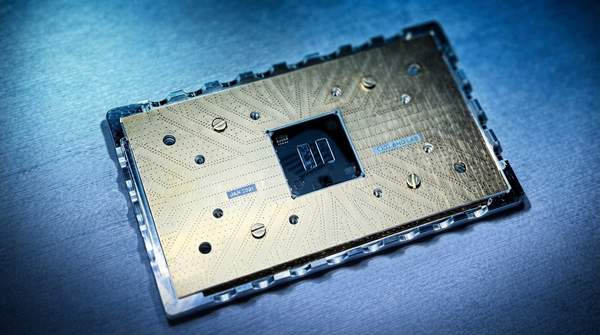
How an Andreev Qubit's Own Supercurrent Could Read Out Quantum States Without Collapsing Them
A theoretical proposal outlines a novel method to read a qubit's state using its intrinsic supercurrent, avoiding state collapse and the need for ancilla qubits. Simulated with accuracies up to 99.85%, this approach could significantly advance scalable quantum computing.
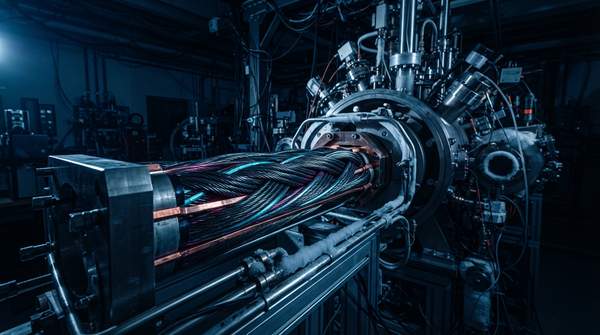
How High-Temperature Superconductors Shrink Fusion Reactors — and What Still Stands in the Way
High-temperature superconductors (HTS) are enabling a new generation of compact fusion reactors by generating stronger magnetic fields than conventional superconductors, allowing for significantly smaller devices. However, engineering challenges like mechanical stress and neutron damage must be overcome for practical implementation.

NV Centers vs. OPMs: How Two Quantum Sensor Platforms Split the Sensing Market
Quantum sensing platforms like NV centers in diamond and optically pumped magnetometers (OPMs) are complementary, not interchangeable, with distinct strengths in spatial resolution versus magnetic sensitivity. Understanding these trade-offs is key to selecting the right platform for applications ranging from biomedical imaging to remote sensing.