Despite a surge in innovation, nearly 80% of emerging neurotechnologies for brain health and resilience remain years away from FDA approval, most still in early developmental stages. This creates a tension: neurotechnology is rapidly expanding with diverse applications, yet the vast majority of these innovations lack regulatory clearance. While the future of brain health looks promising, widespread clinical impact and accessibility remain a distant, complex challenge, leaving many patients without immediate, proven options.
Understanding the Neurotechnology Landscape
A comprehensive horizon scan identified 81 unique neurotechnologies, according to pmc. These address diverse needs: 23 for mental health, 31 for healthy aging, and 42 for physical disability. Despite this vibrant array, 79% of these technologies lack FDA approval, with 77.4% in early development. Innovation currently outpaces clinical readiness and regulatory oversight. Patients and investors should temper expectations; widespread clinical impact from this burgeoning field remains a distant prospect.
A Glimpse into Tomorrow's Brain Health Solutions
1. Optogenetics
Best for: Experimental research into precise neural circuit control and potential future therapies for neurological disorders.
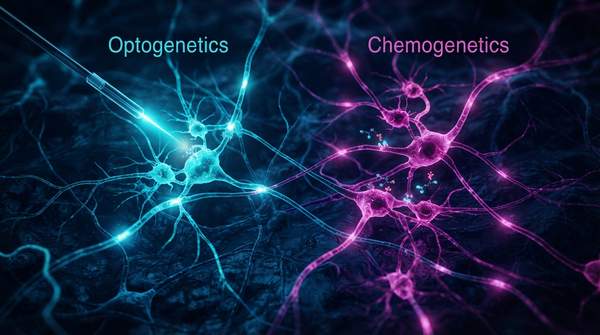
This "futuristic stimulation method" makes nerve cells photosensitive, allowing external control via light, according to pmc.
Strengths: Extremely precise neural circuit control; high potential for targeted therapies. | Limitations: Highly invasive, requires genetic modification, experimental, not yet approved for human use. | Price: High, experimental.
2. Deep Brain Stimulation (DBS)
Best for: Patients with severe, medication-resistant neurological conditions like Parkinson's Disease or essential tremor.
DBS involves implanting electrodes to excite or inhibit specific brain regions, used to alleviate symptoms of diseases like Parkinson's, according to pmc.
Strengths: Proven efficacy for certain severe neurological conditions; significant symptom relief. | Limitations: Invasive surgical procedure, risks associated with surgery and device implantation, requires ongoing medical management. | Price: High, specialized medical procedure.
3. Non-invasive Neurotechnology
Best for: Accessible monitoring of brain activity, communication aids for individuals with severe motor impairments (e.g. ALS), and potential cognitive training.
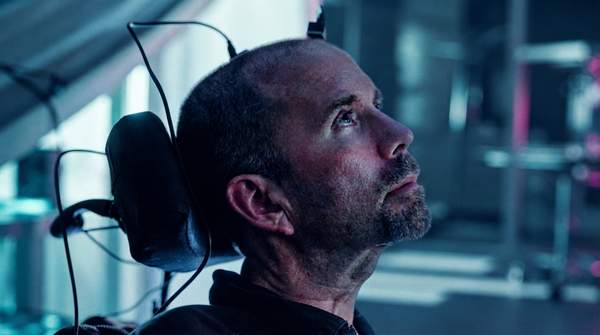
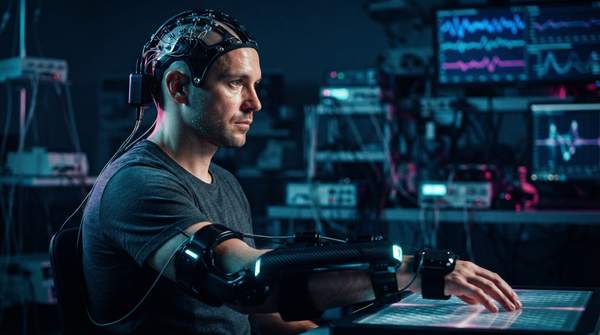
Non-invasive neurotechnology uses electrode caps on the head to record electrical fields generated by the brain, such as for communication in ALS patients, according to pmc.
Strengths: High accessibility, minimal risk, often portable, suitable for widespread use and continuous monitoring. | Limitations: Lower spatial resolution than invasive methods, signal interference, limited direct therapeutic intervention. | Price: Varies, generally accessible for consumer devices, higher for clinical systems.
4. Invasive Neurotechnology
Best for: Individuals requiring direct neural interfaces for prosthetic control, severe epilepsy management, or restoring lost motor function.
Invasive neurotechnology uses electrodes implanted deep inside the brain, often in the motor cortex, to record signals for controlling complex devices like prosthetic arms, according to pmc.
Strengths: High precision for recording and stimulating specific brain regions, enables direct brain-computer interfaces. | Limitations: Significant surgical risks, potential for infection or tissue damage, long-term safety and biocompatibility concerns. | Price: Extremely high, specialized medical procedure.
5. Advanced Imaging
Best for: Researchers and clinicians needing detailed structural and functional brain maps to understand neurological diseases and healthy aging.
Advanced Imaging is leveraged by the Brain Resilience Lab as a 'state-of-the-art technology' to map molecular changes, understand healthy brain aging, and protect against neurodegeneration.
Strengths: Provides detailed insights into brain structure and function, non-invasive for many modalities, crucial for diagnosis and research. | Limitations: High cost of equipment and operation, may require specialized facilities, limited direct therapeutic application. | Price: High, clinical and research use.
6. Functional MRI (fMRI)
Best for: Non-invasive assessment of brain activity, mapping brain regions involved in specific tasks, and understanding cognitive processes.
Functional MRI (fMRI) provides excellent spatial resolution of 2-3 mm, according to World Brain Mapping.
Strengths: Excellent spatial resolution, non-invasive, widely available in clinical settings, valuable for research and diagnostics. | Limitations: Poor temporal resolution compared to EEG, high cost, sensitivity to patient movement, indirect measure of neural activity. | Price: High, clinical and research use.
7. Electroencephalography (EEG)
Best for: Real-time monitoring of brain electrical activity, diagnosing epilepsy, sleep disorders, and supporting brain-computer interface development.
Electroencephalography (EEG) offers millisecond temporal precision, according to World Brain Mapping.
Strengths: High temporal precision for real-time brain activity, non-invasive, relatively portable and affordable for basic setups. | Limitations: Poor spatial resolution, susceptible to noise and artifacts, requires expertise for interpretation. | Price: Varies from moderate for research/clinical to low for consumer devices.
| Neurotechnology | Invasiveness | Key Benefit | Current Status | Precision (Spatial/Temporal) |
|---|---|---|---|---|
| Optogenetics | Highly Invasive | Precise neural circuit control | Experimental, Pre-clinical | High (Spatial & Temporal) |
| Deep Brain Stimulation (DBS) | Invasive | Alleviates severe neurological symptoms | FDA Approved (for specific conditions) | High (Spatial), Moderate (Temporal) |
| Non-invasive Neurotechnology | Non-invasive | Accessible brain activity monitoring | Varies (Consumer to Clinical) | Low (Spatial), Moderate (Temporal) |
| Invasive Neurotechnology | Invasive | Direct brain-computer interface | Experimental to Clinical Trial | Very High (Spatial), High (Temporal) |
| Advanced Imaging | Non-invasive | Detailed brain structure/function maps | Clinical & Research Use | High (Spatial), Varies (Temporal) |
| Functional MRI (fMRI) | Non-invasive | Excellent spatial resolution for activity | Clinical & Research Use | High (Spatial: 2-3 mm), Low (Temporal) |
| Electroencephalography (EEG) | Non-invasive | Millisecond temporal precision | Clinical & Research Use | Low (Spatial), High (Temporal: ms) |
Navigating the Development Pathway
Bringing a novel neurotechnology to widespread clinical use demands extensive research, development, and rigorous testing. This pathway is especially complex for brain-interacting devices, where safety and efficacy are paramount. Ethical considerations—patient autonomy, data privacy, unintended consequences—are central. Clinical trials, costly and time-consuming, span multiple phases to prove safety and effectiveness. Only after successful trials can a technology seek regulatory approval, like from the FDA. This stringent process ensures patient safety but also contributes to lengthy development cycles.
The Digital Frontier: AI's Limited Role (So Far)
Despite common digital elements in neurotechnologies, a surprising horizon scan found only three of 81 identified technologies included an AI component, according to pmc. This suggests that while digital interfaces are prevalent, advanced AI integration remains in its infancy, marking a significant future growth area. The field underutilizes advanced analytical capabilities, potentially slowing the development of transformative brain health solutions. Greater AI integration could accelerate data analysis, personalize treatments, and improve device responsiveness. For more, see our Neurotechnologies for Mental Health Treatment.
This limited AI adoption also presents an opportunity. As computational power grows, integrating AI into more neurotechnologies could dramatically enhance their capabilities. Advanced machine learning, for instance, might refine brain signal interpretation for conditions like ALS, offering more intuitive communication methods by 2030, according to researchers at leading neuro-engineering labs.
What are the latest advancements in neurotechnology for mental wellness?
Latest advancements include personalized neuromodulation techniques like transcranial magnetic stimulation (TMS) and transcranial direct current stimulation (tDCS). These non-invasive methods, tailored to individual brain activity, are being explored for depression, anxiety, and broader mental health solutions.upport.
How can neurotech improve cognitive function and resilience?
Neurotechnology aims to improve cognitive function and resilience through targeted brain stimulation and real-time neurofeedback. Devices designed to enhance neural plasticity could strengthen cognitive pathways, improving memory, focus, and emotional regulation against stress.
What are the ethical considerations of emerging neurotechnologies?
Ethical concerns include data privacy, informed consent for invasive procedures, and equitable access to therapies. Discussions also address cognitive enhancement and ensuring advancements do not create new societal divides or compromise individual autonomy.