
All Stories

Three States, Three Playbooks: How Colorado, Utah and California Now Regulate AI
US states are adopting divergent strategies for AI regulation, with Colorado focusing on algorithmic discrimination, Utah on transparency, and California on automated decision-making. This patchwork of laws presents significant compliance challenges for multi-state businesses.

Base Editing vs. Prime Editing: How CRISPR Learned to Rewrite DNA Without Cutting It
Base editing and prime editing are advanced CRISPR technologies that rewrite DNA without making double-strand breaks, offering safer and more precise genetic modifications than traditional CRISPR-Cas9. While base editing excels at specific single-base changes, prime editing provides a broader 'search-and-replace' capability for various edits including small insertions and deletions.

What Growing Businesses Should Look for in a Cybersecurity and IT Support Partner
Growing businesses need a proactive approach to IT and cybersecurity to manage increasing complexity, mitigate risks, and support long-term goals. Choosing the right partner means moving beyond reactive 'break-fix' models to embrace continuous monitoring and comprehensive security strategies.

Three Hurdles Stand Between Today's Quantum Computers and Fault Tolerance
Achieving fault-tolerant quantum computing faces three major hurdles: qubit fragility and high error rates, the challenge of scaling to millions of qubits, and complex system control and software. Solutions involve quantum error correction, modular architectures, and co-designed hardware and software.

Perovskites Lead on Efficiency, Organic Cells on Lifetime, Quantum Dots on Tunability: How Three Emerging Solar Technologies Compare
Perovskite, organic, and quantum dot solar cells offer distinct advantages in efficiency, lifetime, and tunability, respectively, but each faces significant commercialization hurdles like stability, toxicity, and scalability. While not yet ready to replace silicon, these emerging technologies show promise for specialized applications and tandem cell designs.
Retina or Cortex: How the Two Main Bionic Eye Strategies Differ, and Who Each One Is For
Bionic eye technologies diverge into two main strategies: retinal implants that stimulate surviving neurons within the eye, and cortical implants that bypass the eye to stimulate the brain's visual cortex. The choice between them depends critically on the location and cause of vision loss.
Pruning vs. Quantization vs. Distillation: How to Pick the Right Compression Technique for Your Edge AI Project
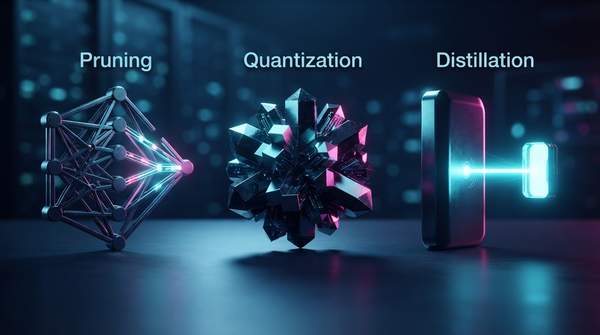
This article explores three key AI model compression techniques for edge deployments: pruning, quantization, and knowledge distillation. It details their mechanisms, trade-offs, and offers a decision framework to help developers choose the optimal method based on critical constraints like memory, latency, and accuracy.

Why Proactive Managed IT Support Saves Small Businesses Time, Money, and Downtime
Proactive managed IT support helps small businesses save time, money, and reduce downtime by continuously monitoring and maintaining their technology, moving away from the costly reactive break-fix model. This preventative approach helps businesses avoid unexpected expenses, lost productivity, and cybersecurity risks.

IBM advances quantum error correction for fault-tolerant computing
Researchers have dramatically increased logical qubit survival rates from below 90 percent to more than 96 percent per error-correction cycle, according to The Quantum Insider .

How Quantum Computers Get Cold: The Multi-Stage Descent to Millikelvin
Quantum computers require extremely low temperatures, near absolute zero, to prevent decoherence and maintain qubit stability. Achieving these millikelvin temperatures involves a multi-stage cooling process, starting with pulse tube cryocoolers and culminating with dilution refrigerators.

How BCI Training Rewires the Brain: Feedback Loops, Hebbian Learning and Co-Adaptation
Brain-computer interface (BCI) training leverages neuroplasticity by creating a synchronized feedback loop between user intent and sensory consequences, enabling Hebbian learning and functional brain reorganization. Co-adaptive systems further enhance this process by allowing both the user and the BCI decoder to adapt simultaneously.

From Bio-Prospecting to Engineered Enzymes: How Synthetic Biology Builds Plastic-Eating Microbes
Synthetic biology is engineering microbes to efficiently degrade plastics by discovering natural degraders, analyzing their pathways, enhancing enzymes, and optimizing performance with computational tools. This four-stage workflow aims to create scalable solutions for plastic pollution and a circular plastic economy.

Protect Business Email From Phishing and Spoofing With AnyTech Solutions
For UK small and medium-sized businesses (SMEs), email remains the primary tool for communication and commerce, but it is also the most significant vulnerability. Sophisticated phishing and spoofing attacks can lead to d…

Three Ways AI Is Actually Accelerating Fusion Energy Research
Artificial intelligence is a practical tool accelerating fusion energy research, with key applications in real-time plasma control, materials discovery for extreme environments, and AI-driven reactor design and simulation. Leading institutions are leveraging techniques like reinforcement learning and machine learning to overcome fusion's core challenges and speed up progress.

Four Interlocking Walls: Why Scaling Quantum Computers Beyond 100 Qubits Is a Systemic Problem, Not a Parts Count
Scaling quantum computers beyond a few hundred qubits is a systemic problem, not just a parts count issue. Four interdependent challenges—qubit fragility, error correction, control complexity, and interconnectivity—must be addressed holistically for progress.

Speed, Coherence, and Scale: How the Leading Qubit Architectures Trade Against Each Other
No single qubit architecture currently dominates for fault-tolerant quantum computing due to inherent trade-offs between coherence, gate speed, connectivity, and scalability. Leading platforms like superconducting qubits, trapped ions, and silicon spin qubits each resolve these tensions differently, with improvements in one area often costing another.

TensorFlow Lite vs. OpenVINO vs. ONNX Runtime: Which Edge AI Framework Fits Your Project?
Choosing an edge AI framework like TensorFlow Lite, OpenVINO, or ONNX Runtime depends on your project's hardware target, optimization needs, and portability requirements. Each framework offers distinct advantages for mobile, Intel-based systems, or cross-platform deployments.

How to Find High-Protein, Low-Carb Meals at Any Restaurant with Menu-Order AI (Insider Tips)
Menu-Order AI is an innovative app that uses AI to scan restaurant menus, offering instant, personalized recommendations for high-protein, low-carb meals. It eliminates the guesswork and stress of dining out, especially for those on GLP-1 medication or specific diet plans.

A Guide to Brain-Computer Interfaces for Motor Restoration
Brain-computer interfaces (BCIs) offer diverse pathways to restore motor function, with applications tailored to specific neurological conditions and patient needs. Understanding the distinctions between invasive and non-invasive systems is crucial for selecting the most appropriate technology for motor restoration.
Logitech Launches New Enterprise Hardware for AI-Powered Meeting Rooms
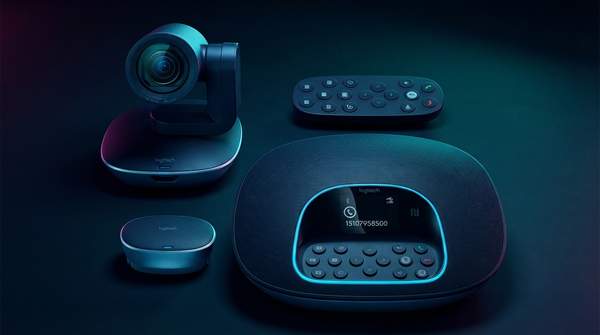
Logitech has launched a new portfolio of enterprise video collaboration hardware, including the Rally Bar 2 and Rally System 2 Pro, designed to equip meeting rooms for the AI era with enhanced on-device AI processing and advanced features.

SpaceX rocket impact creates new double crater on moon
On March 4, 2022, a discarded SpaceX Falcon 9 upper stage, initially thought to be a single piece of space junk, slammed into the Moon's far side, unexpectedly carving not one, but two distinct crater

Oracle Cloud Integrates Quantinuum's Helios Quantum Computer
In a monumental leap bringing the future of computing into today's enterprise, Oracle will physically install Quantinuum's 98-physical-qubit Helios quantum computer directly inside a US Oracle Cloud I

How Do Membrane-Active Compounds Work? A Bill's Galaxy Deep Dive for Virology Researchers
This article explores how membrane-active compounds, like BHT, interact with lipid-enveloped viruses such as herpes simplex, by disrupting their outer membrane. It clarifies the scientific research behind these compounds for individuals seeking non-prescription options and understanding viral mechanisms.

Why Materials Science Is the Bottleneck for Quantum Computing
Quantum computing's scalability is hindered not by theory, but by fundamental materials science challenges. Microscopic defects, nuclear spins, and environmental instabilities in qubit materials destroy delicate quantum states, making materials purity and stability the decisive engineering constraint.